BHYP Is Live: What a Spot HYPE ETF Means for Perp Traders
By CMM Team - 20-May-2026
BHYP Is Live: What a Spot HYPE ETF Means for Perp Traders
Five days ago, Bitwise rang the opening bell at NYSE for BHYP, the first U.S. spot Hyperliquid ETF with in-house staking. Headlines focused on the usual ETF talking points: fee wars, custodial structures, regulatory milestones. But for anyone trading perps on Hyperliquid, the more interesting story is happening a layer deeper.
Unlike Bitcoin and Ethereum ETFs, where underlying holdings sit in cold storage wallets that rarely move, HYPE ETF holdings live on a fully transparent L1 blockchain. The tokens get staked, the staking activity is visible onchain, and the wallets holding those tokens can be classified, tracked, and analyzed. That creates a new kind of signal for perp traders who rely on wallet-level analytics to read the market.
This article breaks down what BHYP actually is, how the ETF landscape is shaping up, and why onchain ETF holdings change the game for cohort-based analytics on Hyperliquid.
The BHYP Fund: Structure and Key Numbers
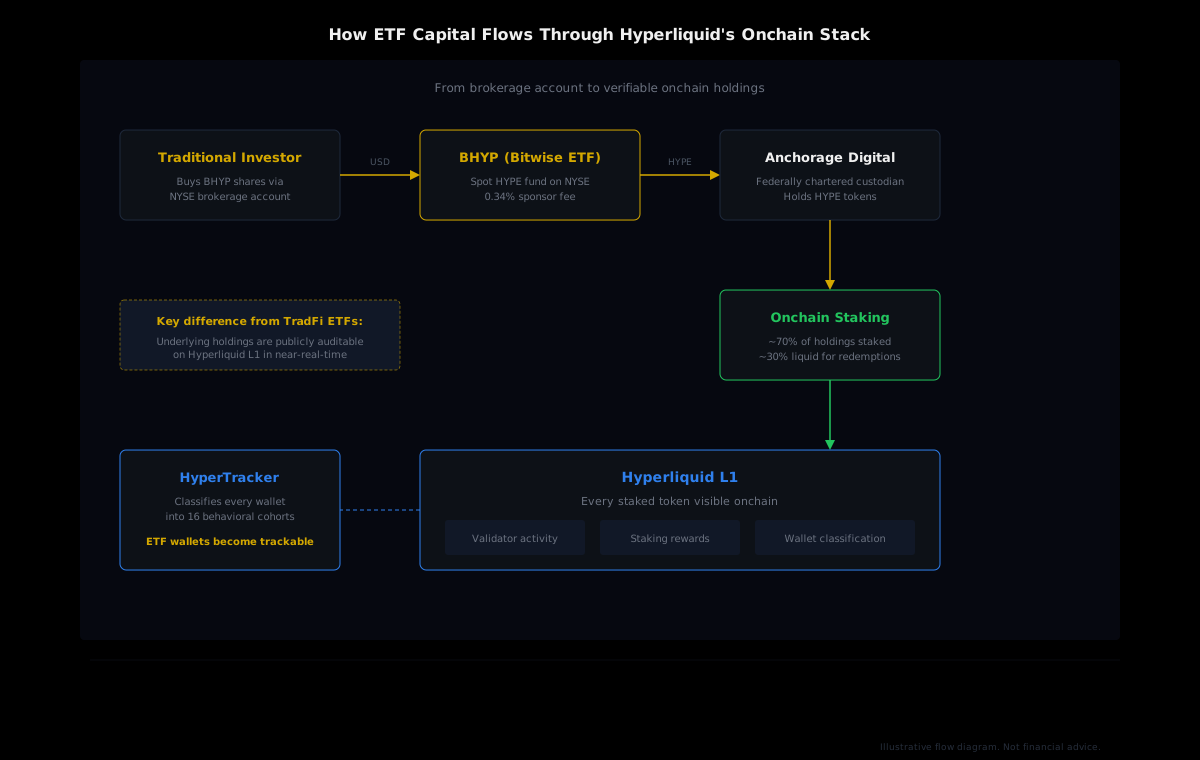
Bitwise launched BHYP on the New York Stock Exchange on May 15, 2026. The fund holds actual HYPE tokens (spot exposure, no derivatives or synthetic structures) with custody at Anchorage Digital Bank, a federally chartered digital asset bank.
The sponsor fee is 0.34%, with a promotional waiver of 0% for the first month on the fund's initial $500 million in assets. Bitwise plans to stake approximately 70% of the fund's HYPE holdings through its in-house staking division, Bitwise Onchain Solutions, keeping roughly 30% liquid for redemptions. The fund retains 15% of staking rewards, with the remainder flowing back to the fund's NAV.
Pricing is based on the CF Hyperliquid-Dollar US Settlement Price, calculated by CF Benchmarks. That is the same benchmark provider used for several major BTC and ETH ETFs, which adds credibility for institutional allocators who care about pricing methodology.
Three Issuers, Three Approaches
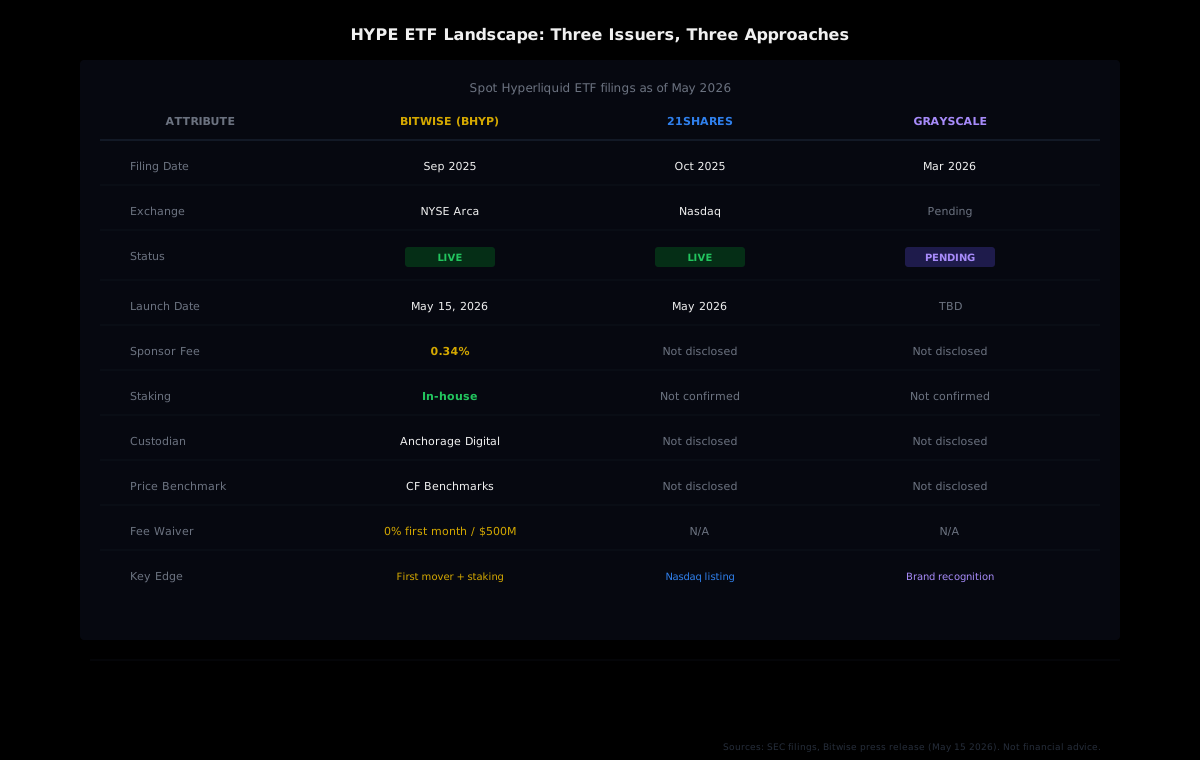
Bitwise is not alone. The HYPE ETF race has three confirmed entrants, each taking a different path to market.
Bitwise filed first, back in September 2025, and was the first to launch. 21Shares filed roughly a month later and is listing on Nasdaq, having registered its Common Units of Beneficial Interest under Section 12(b) of the Securities Exchange Act. Grayscale entered the race later, filing in late March 2026, and its product is still pending.
The key differentiator so far is staking. Bitwise is the only issuer confirmed to be staking in-house, which matters because staking rewards flow back to the fund and boost the NAV for shareholders. Whether 21Shares and Grayscale will offer staking in their products is not yet publicly confirmed.
Why HYPE Is Tenth and Why That Matters
HYPE has climbed to the tenth-largest cryptocurrency by market cap, with a valuation over $11 billion. It reached this level in under two years of trading.
That growth was not driven by speculative narratives alone. Hyperliquid processed $2.9 trillion in trading volume in 2025, representing a 400% year-over-year increase. The exchange commands roughly 60% of onchain derivative open interest and processes approximately 200,000 orders per second.
For ETF investors, these metrics signal a protocol with real usage and revenue, which is the kind of fundamental backstop that attracts institutional capital. For perp traders, it signals growing legitimacy that is likely to accelerate regulatory attention and institutional participation on the platform.
The Onchain Transparency Edge
This is the part of the BHYP story that most coverage has missed, and it is the part that matters most for perp traders.
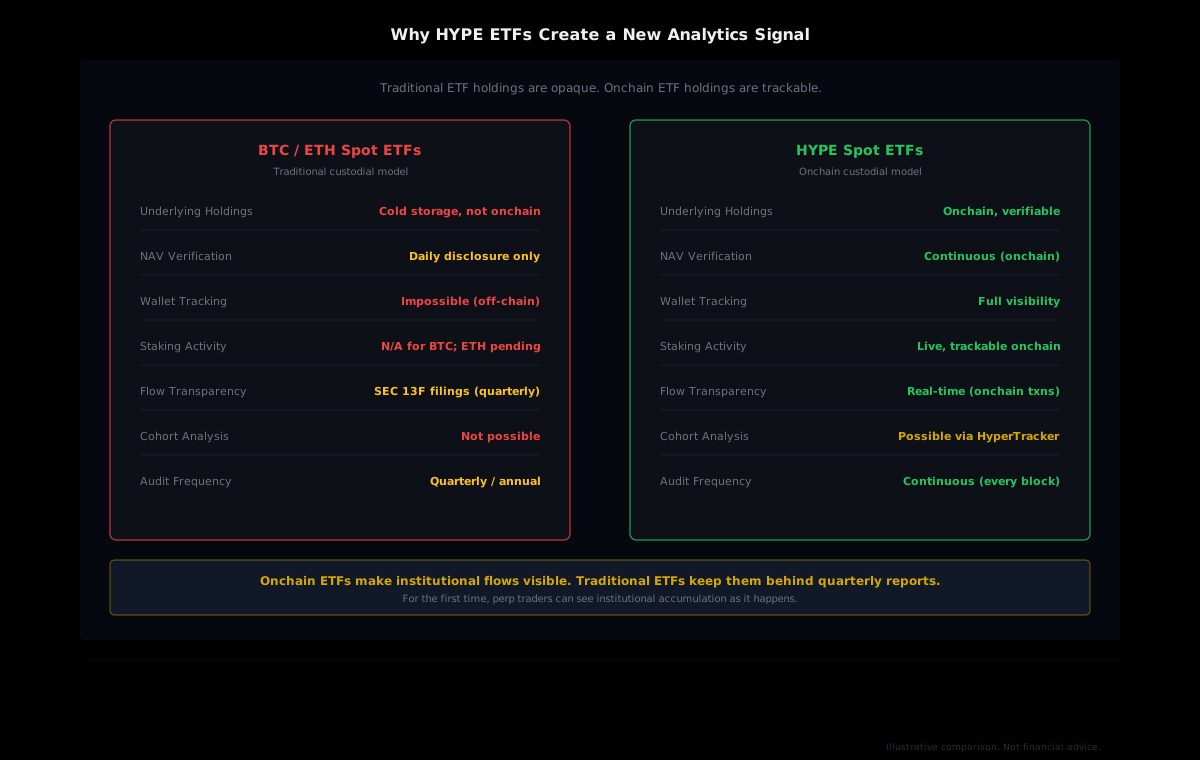
When BlackRock holds Bitcoin for its iShares ETF, those BTC sit in cold storage wallets that rarely transact. You can see the wallet balance, but there is no onchain activity to analyze. The tokens do not move, do not stake, do not interact with protocols. They are inert.
HYPE ETF holdings are fundamentally different. Because Bitwise stakes roughly 70% of the fund's tokens on Hyperliquid L1, those holdings become active participants in the network. Staking activity is visible onchain. Token movements related to staking rewards, unstaking for redemptions, and validator interactions all leave a traceable footprint.
That transparency creates a genuinely new analytics signal. Traditional ETF flows require waiting for quarterly 13F filings or daily NAV disclosures. Onchain ETF flows are visible to anyone with the right tools, as they happen.
What This Means for Wallet-Level Analytics
Every wallet on Hyperliquid is classifiable. Our data breaks the entire market into 16 behavioral cohorts: 8 based on position size (from Shrimp wallets holding under $250 to Leviathans above $5M) and 8 based on all-time PnL performance (from Money Printers with over $1M in profit to Giga-Rekt wallets below -$1M in lifetime losses).
As ETF-related wallets start appearing on Hyperliquid's L1, they introduce a new class of participant. These are not retail traders opening 10x longs on memecoins. They are custodial wallets managed by federally regulated entities, holding tokens on behalf of traditional finance investors.
Three signals perp traders should watch
- Staking and unstaking cadence. When ETF custodians unstake tokens, it could signal upcoming redemption pressure. When they increase staked balances, it suggests net inflows. Either way, the activity is visible onchain before it shows up in fund disclosures.
- Cohort composition shifts. Large custodial wallets will likely register as Tidal Whales ($1M-$5M) or Leviathans ($5M+) in our size-based cohort system. As ETF AUM grows, the weight of these cohorts in the overall market structure increases. Monitoring how institutional-sized wallets shift the balance between cohorts gives perp traders early context on whether the market is becoming more institutional or more retail-driven.
- Correlation with perp positioning. ETF flows into the spot HYPE token do not directly create perp positions, but they affect the broader market dynamics. If ETF inflows push HYPE's spot price higher, perp traders will adjust their positioning. Watching custodial wallet activity alongside our cohort positioning data lets you see both sides of that equation.
Regulatory Tailwinds (and Headwinds)
The ETF launch did not happen in a vacuum. It arrived during a period of compressed SEC approval timelines under Chairman Paul Atkins, where approval windows reportedly dropped from roughly 240 days to about 75 days. At least 31 spot altcoin ETF applications were submitted in the first half of 2025, and the floodgates have widened further since.
But institutional legitimacy cuts both ways. CME and ICE are lobbying U.S. regulators to impose restrictions on Hyperliquid's commodity-linked contracts. The Hyperliquid Policy Center, led by former Blockchain Association head Jake Chervinsky, is the protocol's proactive response to that pressure. The outcome of this regulatory tug-of-war will shape how aggressively institutions allocate through these ETF products.
For perp traders, the implication is straightforward: if the regulatory environment stays favorable, expect more institutional capital onchain. If it tightens, expect volatility in both HYPE's spot price and perp market dynamics. Either scenario creates tradeable signals visible through wallet-level analytics.
Reading the New Market Structure
The arrival of spot HYPE ETFs marks a structural shift for Hyperliquid's ecosystem. For the first time, traditional finance capital is flowing directly into a perp DEX's native token through a regulated product, and the underlying holdings are verifiable onchain.
This creates an analytics feedback loop that did not exist before. ETF flows affect spot price, spot price affects perp funding rates and positioning, perp positioning creates opportunities for traders who can read the data, and the data is all onchain.
The question is no longer whether institutional money is coming to Hyperliquid. The question is whether you have the tools to see it when it arrives.
Track Institutional Flows with HyperTracker
Our API classifies every wallet on Hyperliquid into 16 behavioral cohorts, updated every 5 minutes. As ETF-related wallets enter the ecosystem, our cohort analytics let you see how institutional capital shifts market structure in real time. Plans start at $179/mo.