Inside Echo's $76M Mint Exploit: A Bridge Security Wake-Up Call
By CMM Team - 19-May-2026
Inside Echo's $76M Mint Exploit: A Bridge Security Wake-Up Call
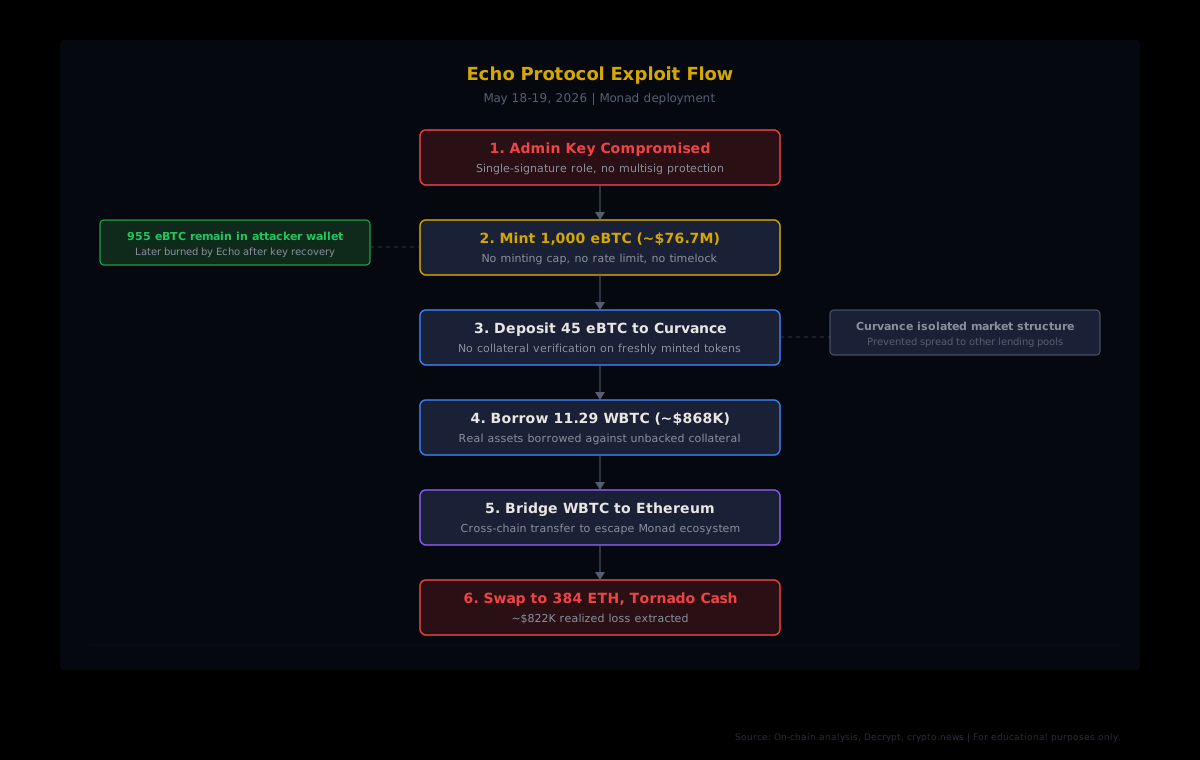
On May 18, someone minted 1,000 eBTC out of thin air on Monad. The tokens were worth roughly $76.7 million. No smart contract vulnerability made it possible. No zero-day exploit in the EVM. A single compromised admin key did the job, because Echo Protocol's minting function had no timelock, no multisig requirement, and no issuance cap.
Within hours the attacker deposited 45 of those freshly minted eBTC into Curvance as collateral, borrowed 11.29 WBTC worth approximately $868,000, bridged the assets to Ethereum, swapped to ETH, and funneled roughly 384 ETH through Tornado Cash. The realized loss sits around $822,000. The remaining 955 eBTC never left the attacker's wallet and have since been burned by the Echo team after regaining admin access.
The headline figure is $76.7 million. The actual damage is closer to $822,000. But the gap between those two numbers is the story, because it exposes a systemic weakness in how cross-chain bridges handle minting authority, collateral validation, and downstream risk propagation. For perp traders who deposit collateral through bridges or interact with synthetic assets, this is not an abstract infrastructure problem. It is the specific risk vector that keeps draining capital from DeFi in 2026.
How the Echo exploit unfolded, step by step
Echo Protocol is a Bitcoin liquidity and yield platform originally built on Aptos. It expanded to Monad, deploying a synthetic BTC token called eBTC that is supposed to be backed by real Bitcoin reserves. The eBTC contract on Monad had an admin role controlling the mint function, and that role was held by a single private key.
Blockchain developer Marioo analyzed the exploit and pointed to four design failures that allowed a single key compromise to cascade into a $76.7 million unauthorized mint:
- Single-signature admin role. No multisig. One key, total control over minting.
- No timelock. The mint executed immediately. No delay window for governance or monitoring to intervene.
- No minting cap or issuance rate limit. The contract allowed 1,000 eBTC to be minted in a single transaction with no ceiling.
- No collateral verification on Curvance. The lending protocol accepted the freshly minted eBTC as collateral without checking whether it was backed by anything.
Monad CEO Keone Hon confirmed the exploit did not touch Monad's consensus layer or the broader network. This was a protocol-level design flaw in Echo's deployment, running on top of a chain that functioned exactly as designed.
Bridge exploits are the dominant attack vector of 2026
The Echo incident is not an outlier. It is the latest entry in what has become the defining security pattern of 2026: cross-chain bridge failures driven by operational compromise rather than code bugs.
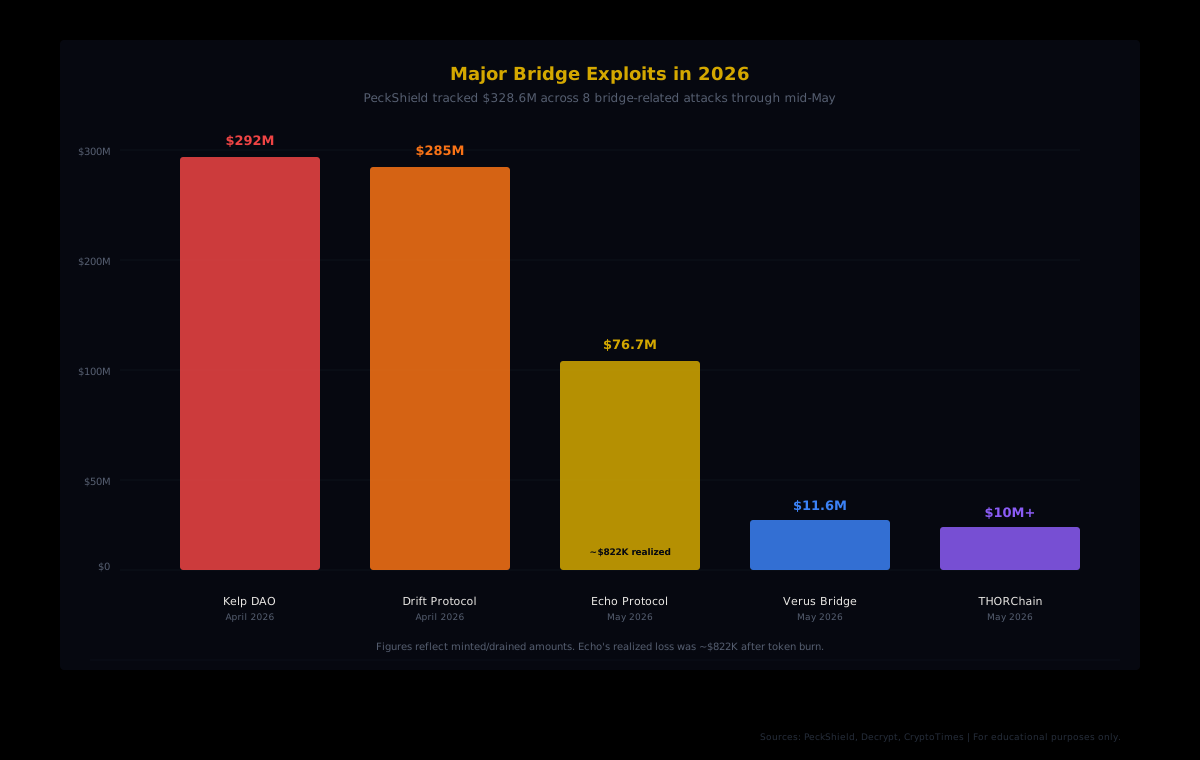
Security firm PeckShield tracked eight bridge-related attacks through mid-May that collectively drained roughly $328.6 million. The two largest individual exploits this year were both bridge-related. The Kelp DAO attack in April drained approximately $292 million by exploiting a single-signature DVN (Decentralized Validator Network) vulnerability in LayerZero's bridge contract. The Drift Protocol breach, also in April, saw roughly $285 million stolen through an admin key compromised via a six-month social engineering campaign.
The pattern across these incidents is consistent. Traditional smart contract bugs are declining as audits improve. The attack surface has shifted to operational security: compromised admin keys, social engineering of core team members, and inadequate governance around privileged functions like minting and bridging. In Echo's case, the code worked as designed. The design itself was the vulnerability.
Why the $76.7M headline understates the real risk
The attacker minted $76.7 million in eBTC but only extracted roughly $822,000 in real value. That sounds like a good outcome, and in one narrow sense it is. Echo recovered admin access, burned the remaining tokens, and Curvance's isolated market structure prevented contagion to other lending pools.
But focus on what almost happened. If Curvance had not caught the anomaly quickly, if the attacker had posted more of the 955 remaining eBTC as collateral across multiple lending protocols, or if other protocols had listed eBTC without independent collateral checks, the damage could have cascaded well beyond a single lending market. When the Kelp DAO bridge broke in April, Aave lost billions in TVL from user withdrawals even though Aave's own contracts were never touched. A synthetic asset minted from nothing and accepted as collateral across multiple venues creates the same kind of downstream risk.
Echo also paused its Aptos bridge operations as a precaution, even though the Aptos deployment was not directly affected. The protocol reported that current Aptos exposure was limited to approximately $71,000. That defensive move signals how uncertain the team was about whether other components shared the same key management weakness.
What this means for perp traders on Hyperliquid
Hyperliquid operates its own Layer-1 chain with a native bridge from Arbitrum. It is a fundamentally different architecture from Echo Protocol on Monad, but the risk category is the same: any protocol that bridges assets across chains introduces a trust dependency on the bridge's security model.
For traders on Hyperliquid and other perp DEXes, three lessons apply directly:
1. Collateral provenance matters
When you deposit USDC into Hyperliquid through the Arbitrum bridge, you are trusting that the bridge's validators correctly attest to your deposit on L1. Hyperliquid's bridge has been audited by Zellic and Certora, but the Echo exploit shows that audits catch code bugs while missing operational weaknesses like single-key admin controls. If you are trading on any platform that accepts synthetic or bridged collateral (wrapped BTC, bridged stablecoins, liquid staking tokens), understand that the collateral itself carries bridge risk.
2. Watch the wallets that move first
In the Echo exploit, on-chain analytics platform Lookonchain flagged the unauthorized mint before Echo acknowledged it publicly. Wallet monitoring tools caught the anomaly because the minting pattern was unusual: 1,000 eBTC appearing from a contract address with no corresponding deposit activity. For perp traders, the equivalent signal is watching for large, sudden shifts in cohort-level positioning that do not correspond to any market catalyst. When Whale and Leviathan wallets start moving aggressively in one direction, the move often precedes the news.
Our data classifies every wallet on Hyperliquid into one of 16 behavioral cohorts based on account size and all-time PnL. That classification system turns raw on-chain activity into readable signals. When Money Printer wallets (cumulative PnL above $1M) start de-risking en masse, it registers in the cohort positioning data before it shows up in the price. The same principle applies to monitoring for exploits: abnormal wallet behavior is the first signal, and cohort-level aggregation makes it visible.
3. Diversify your chain exposure
The Echo exploit affected only Monad. Curvance's isolated market structure contained the damage. But if you have positions and collateral spread across multiple chains through multiple bridges, each bridge is an independent failure point. Concentrated exposure to a single bridge means a single compromised key can freeze or drain your collateral. Splitting exposure across independently audited venues reduces the blast radius of any single bridge failure.
The operational security checklist every DeFi user should run
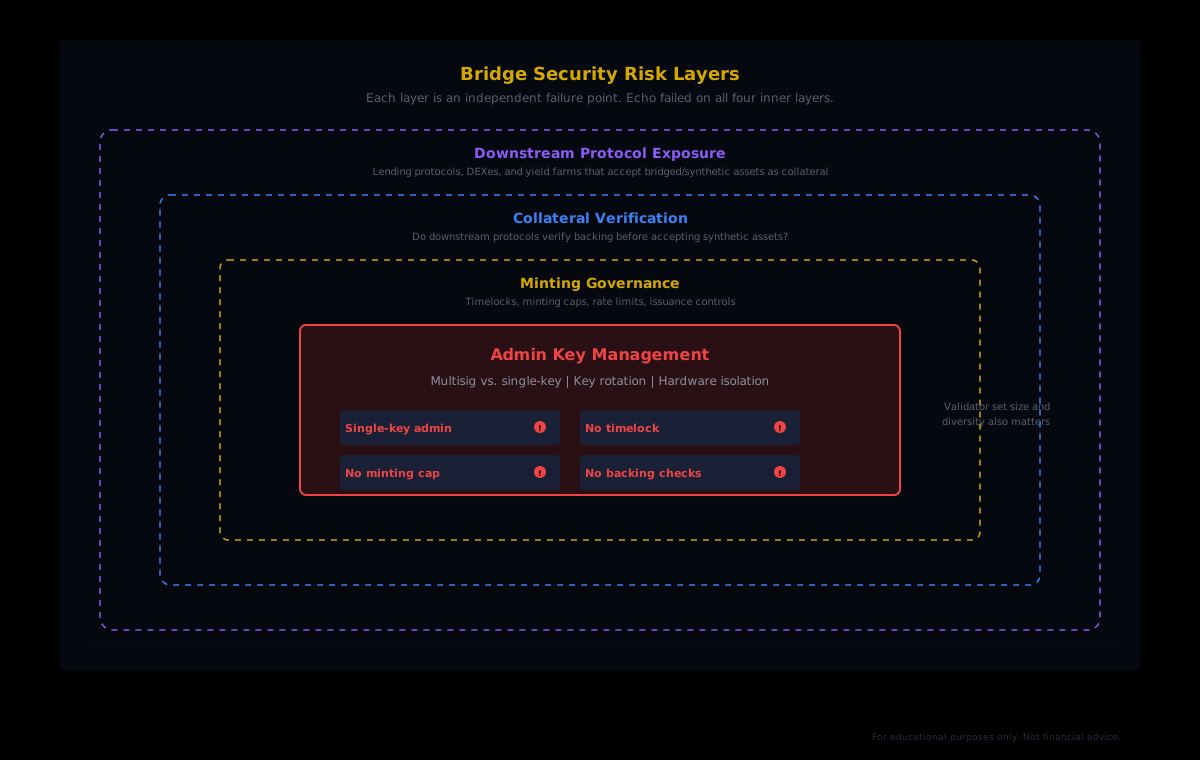
Smart contract audits are necessary but insufficient. The exploits that are doing real damage in 2026 target the people and processes around the contracts, not the code itself. Before depositing significant capital into any protocol that touches a bridge, run through these checks:
- Admin key management: Is the mint/bridge function controlled by a multisig? How many signers, and are they publicly known? If it is a single key, that is a red flag regardless of how clean the audit report looks.
- Timelock governance: Can privileged operations (minting, upgrading, pausing) execute immediately, or is there a mandatory delay? A 24-48 hour timelock gives the community time to react before damage is done.
- Minting caps: Is there a per-transaction or per-day limit on how many tokens can be minted? Echo had none, which is why 1,000 eBTC appeared in a single call.
- Collateral verification: Do downstream lending protocols independently verify that bridged or synthetic assets are actually backed? Curvance accepted the eBTC without checking backing, which enabled the attacker to borrow real assets against fake collateral.
- Validator decentralization: For bridges with validator sets, how many validators are required and how diverse are they? Hyperliquid's bridge, for example, has faced scrutiny over its relatively small validator pool.
None of these checks guarantee safety. But they separate the protocols that have thought about operational security from the ones that have not. Echo Protocol failed on all four of the first criteria, and the exploit was predictable in hindsight.
Monitor wallet behavior before the headlines hit
HyperTracker's cohort analytics classify every Hyperliquid wallet into 16 behavioral segments by account size and all-time PnL. When smart money moves, our data shows it in the positioning shifts before the price catches up. Track Money Printer de-risking, Whale accumulation patterns, and abnormal cohort-level flows with a single API call.
What happens next
Echo Protocol says it has regained control of the compromised admin keys and completed a contract upgrade to restrict affected operations. Curvance has paused the affected eBTC market. The 955 unbacked eBTC that remained in the attacker's wallet have been burned.
But the broader question is whether the industry learns anything from the pattern. Bridge exploits have drained over $328 million this year across eight major incidents, and the common thread is not novel code vulnerabilities. It is operational sloppiness: single-key admin controls, missing timelocks, absent rate limits, and downstream protocols that accept synthetic assets on faith.
For perp traders, the practical takeaway is simpler. Know where your collateral lives, how it gets there, and who controls the keys along the way. Monitor wallet behavior at the cohort level, because abnormal on-chain movements surface before disclosure announcements. And treat bridge security as a portfolio-level risk factor, not a background assumption you never revisit.
The next bridge exploit will not look exactly like Echo. But the operational failures that enabled it are everywhere, and the wallets that move first will tell you something is wrong before the post-mortem confirms it.