
Bitcoin Broke $80K. The Whales Were Already In.
By CMM Team - 04-May-2026
Bitcoin Broke $80K. The Whales Were Already In.
Bitcoin reclaimed $80,000 this morning for the first time since January. The headlines made it sound sudden. On-chain data tells a different story: the largest wallets on the network had been accumulating for months, buying through the dip while retail sentiment sat in fear territory. By the time the breakout triggered, the whales were not reacting. They were already positioned.
This article breaks down the whale accumulation pattern that preceded the breakout, why the derivatives setup created a classic short-squeeze condition, and how cohort-level analytics on Hyperliquid help detect these positioning shifts before the crowd catches on.
The pattern keeps repeating: the wallets with the best track records position first, and everyone else shows up after the move. Understanding the mechanics behind that pattern is what separates reactive trading from informed trading.
The accumulation that nobody talked about
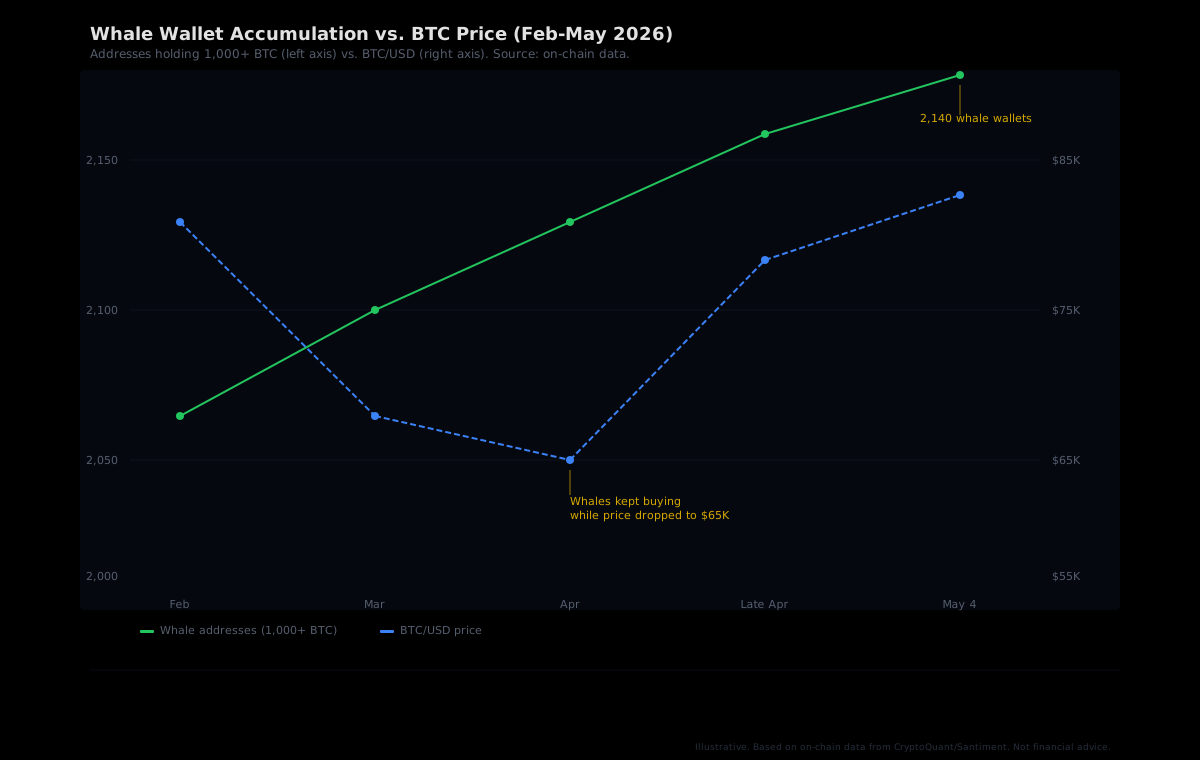
Through Q1 2026, Bitcoin spent most of its time grinding lower from its late-2025 high. The largest wallets did the opposite of what price suggested. They were buying. On-chain analytics platforms like CryptoQuant and Santiment reported sustained net accumulation by wallets holding 1,000 or more BTC, while exchange reserves continued a multi-year decline.
What makes this notable is the price context. Much of this accumulation happened during periods of bearish retail sentiment, when the Fear and Greed Index sat in fear territory and short-term holders were realizing losses. The whales were on the other side of every one of those sales.
Why the derivatives market was a loaded spring
The on-chain accumulation was only half the story. The derivatives market was building a complementary setup that made a sharp move almost inevitable once price found a catalyst.
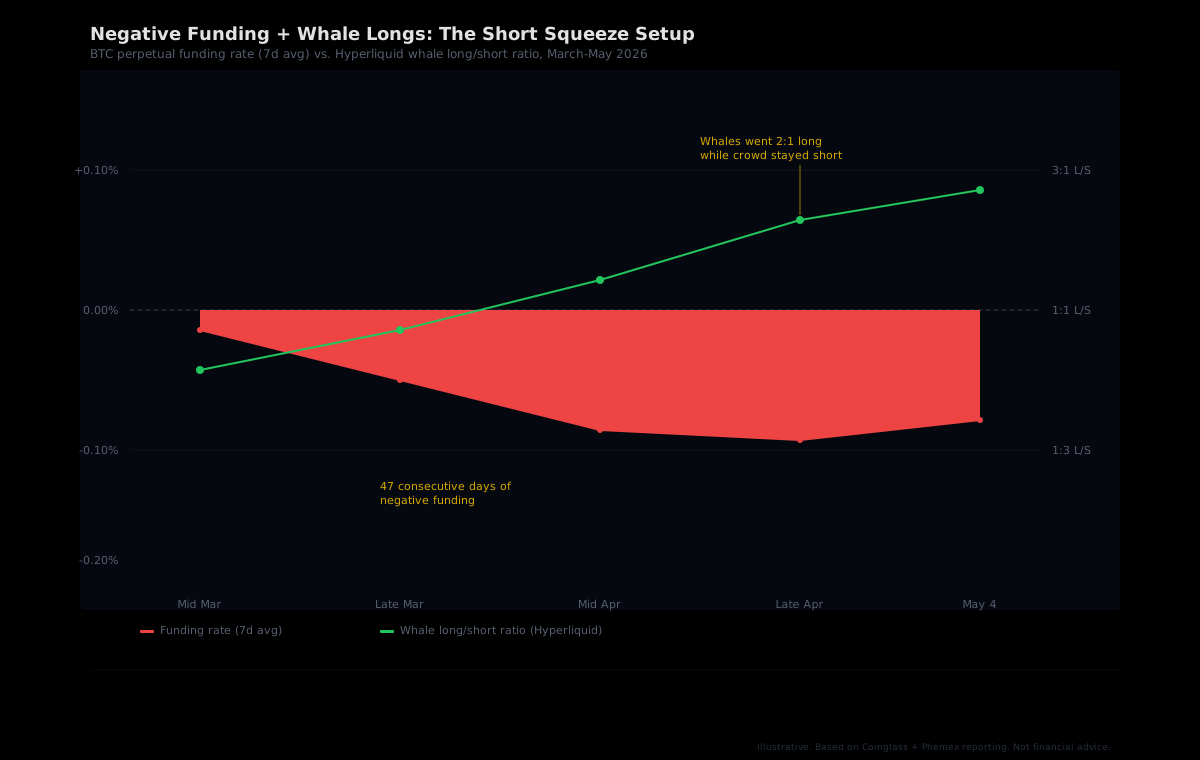
BTC perpetual funding rates had been persistently negative heading into the breakout. That means short positions were paying longs to stay open, a signal of overwhelmingly bearish positioning in the futures market. When funding stays negative for an extended stretch, it usually reflects a crowded short trade, and crowded shorts are squeeze fuel.
The mechanics are straightforward. Every short position has a liquidation price above its entry. When shorts pile in at similar levels, the liquidation density above current price increases. If price pushes through that cluster, forced buybacks from liquidated shorts accelerate the move, which triggers more liquidations, which accelerates the move further. It is a cascade, and it requires crowded positioning to build the fuel.
Historically, sustained periods of negative funding have preceded sharp upside moves in BTC, though the magnitude and timing varies by cycle. The pattern is not deterministic, but it shifts the probability distribution.
What Hyperliquid whale positioning revealed
While broader on-chain data showed the accumulation trend, the Hyperliquid-specific picture was even more telling, because on Hyperliquid, wallet-level positioning data is publicly verifiable.
Large traders on Hyperliquid (those running significant size) shifted from net short to net long Bitcoin positioning over the weeks leading into the breakout. The bias built steadily rather than appearing in a single day, and it built while overall funding remained negative — a signal that the largest wallets disagreed with the broader market's positioning.
This matters because Hyperliquid has emerged as one of the most active venues for decentralized perpetual futures, and wallet-level positioning data on the platform is verifiable address-by-address. That makes it a uniquely useful dataset for studying whale behavior in real time.
The divergence between whale positioning and the overall funding environment was the key signal. The crowd was short. The largest, most profitable wallets were long. This setup has historically resolved in favor of the whales more often than not.
How cohort analytics detect these signals early
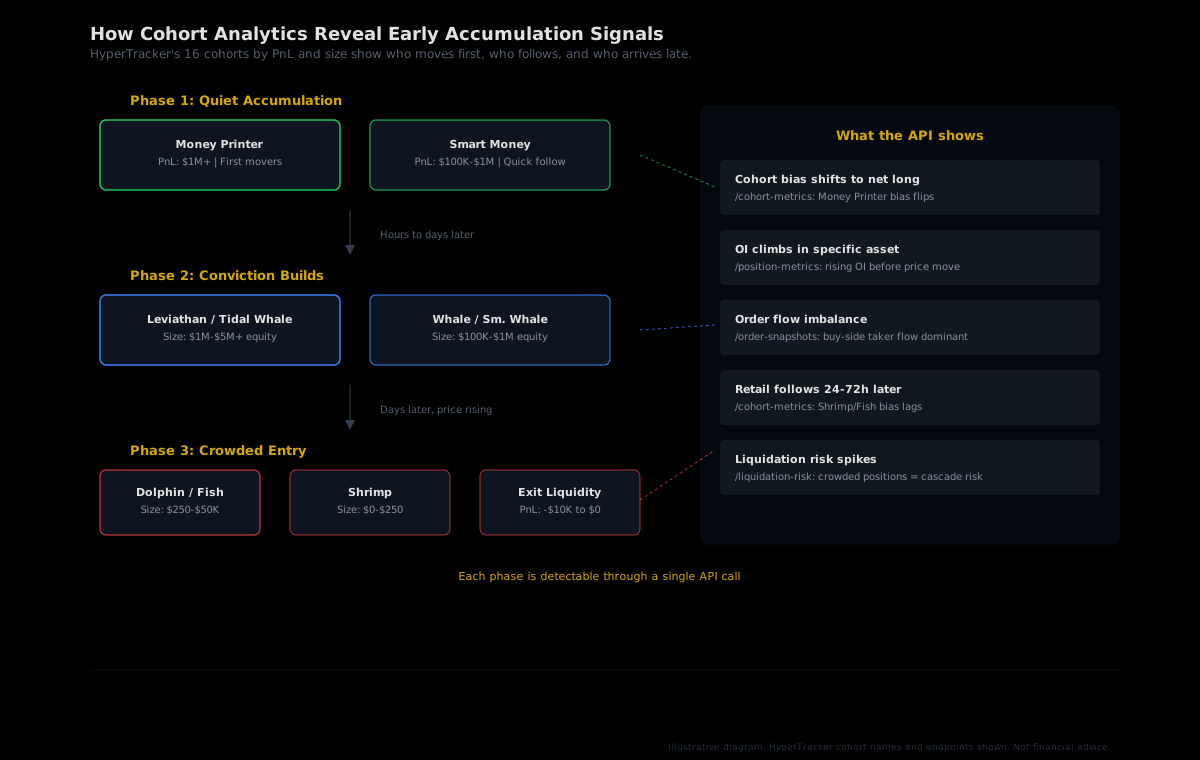
The whale accumulation pattern that preceded the $80K breakout follows a sequence that repeats across major crypto moves. The highest-conviction wallets position first, larger wallets follow, and retail arrives last, usually at worse prices. Cohort-level analytics make this sequence visible in real time.
HyperTracker classifies every wallet on Hyperliquid into 16 behavioral cohorts: eight by account size (from Shrimp at $0-$250 up through Leviathan at $5M+) and eight by all-time PnL (from Money Printer at $1M+ profit down to Giga-Rekt at below -$1M). This classification system turns the opaque question of "who is buying?" into a data-driven signal.
Here is how the accumulation sequence typically unfolds:
- Phase 1, quiet accumulation: Money Printer and Smart Money cohorts (classified by PnL) shift their positioning. The cohort bias metric flips to net long on a specific asset or across the board. This typically happens while price is still declining or range-bound.
- Phase 2, conviction builds: Leviathan and Tidal Whale cohorts (classified by size) begin building directional exposure. Open interest starts climbing in the asset. This phase usually lags Phase 1 by hours to days.
- Phase 3, crowded entry: Dolphin, Fish, and Shrimp cohorts arrive on the long side, usually after price has already moved significantly. By this point, the highest-PnL cohorts may be reducing exposure into strength.
Building a whale signal system with the API
You do not need to predict macro catalysts to benefit from the accumulation pattern. You need a system that detects when the highest-conviction cohorts are building unusual directional exposure. Here is a practical approach using the HyperTracker API.
Monitor cohort bias shifts
The /cohort-metrics endpoint returns positioning data for all 16 cohorts. Poll it on your preferred cadence and track the bias metric for Money Printer (cohort ID 8) and Smart Money (cohort ID 9). When both flip from neutral or short to net long simultaneously, that is a Phase 1 signal.
GET /api/external/cohort-metrics?coin=BTC&cohort=8
# Returns: bias, net position, OI contribution for Money Printer cohort
Track open interest divergences
The /position-metrics endpoint shows aggregate open interest by asset. When OI climbs while price is flat or declining, it means new positions are being opened into the dip. Cross-reference this with the cohort bias data: if OI is rising and the top PnL cohorts are going long, the signal strengthens considerably.
Watch order flow imbalance
The /order-snapshots endpoint provides rolling 5-minute snapshots of order flow. A sustained buy-side taker imbalance, particularly in larger order sizes, often precedes the visible price move. This data shows whether accumulation is happening through aggressive market buys or passive limit orders.
Set alerts on liquidation risk
The /liquidation-risk endpoint scores each asset by how crowded its positioning is. When short liquidation risk climbs above historical norms for BTC, the conditions for a squeeze are building. Combine this with negative funding data (available from Hyperliquid's native API) for a complete picture.
Track whale positioning across 16 cohorts
HyperTracker's API classifies every wallet on Hyperliquid by size and PnL, giving you cohort-level positioning data through a single API call. Start with the free tier and see what the smart money is doing before the next move.
The caveat: when whale signals mislead
No signal is infallible, and whale accumulation data has known failure modes that every trader should understand before building a system around it.
CryptoQuant's head of research, Julio Moreno, has warned that some on-chain metrics interpreted as large-scale buying may actually reflect internal exchange wallet consolidation. Exchanges periodically reorganize their storage, moving funds from multiple smaller deposit addresses into fewer, larger cold storage wallets. These technical transfers can mimic the footprint of genuine accumulation.
Additionally, concentrating analysis on a single platform (even one as dominant as Hyperliquid) introduces selection bias. Whale behavior on Binance, OKX, and CME futures could tell a different story, and centralized exchange wallet-level data is harder to verify because positioning is not publicly visible the way it is on-chain.
The strongest signals come from confluence: on-chain accumulation (exchange outflows, whale wallet growth) confirming the same direction as derivatives positioning (cohort bias shifts, funding rate extremes) and institutional flows (ETF inflows). When all three align, the probability of a directional move increases significantly. When they diverge, caution is warranted.
What comes next
The $80K breakout is not the end of the story. The cohort data will matter more in the coming weeks than it did during the buildup. If the highest-PnL wallets begin reducing long exposure into strength, that is a classic distribution signal. If they continue adding, the bid has structural support. Our data shows these positioning shifts in real time through the cohort analytics dashboard and through the API for builders who want to automate the detection process.
The $80K breakout looked sudden on the chart. In the data, it had been building for months. The whales knew. The funding rate knew. The exchange reserves knew. The only question now is whether the same signals will tell you when the next move is forming, or whether you will be reading about it in the headlines again.