BitMEX Is Dead. The Perp DEX Era Killed It.
By CMM Team - 23-Jul-2026
BitMEX Is Dead. The Perp DEX Era Killed It.
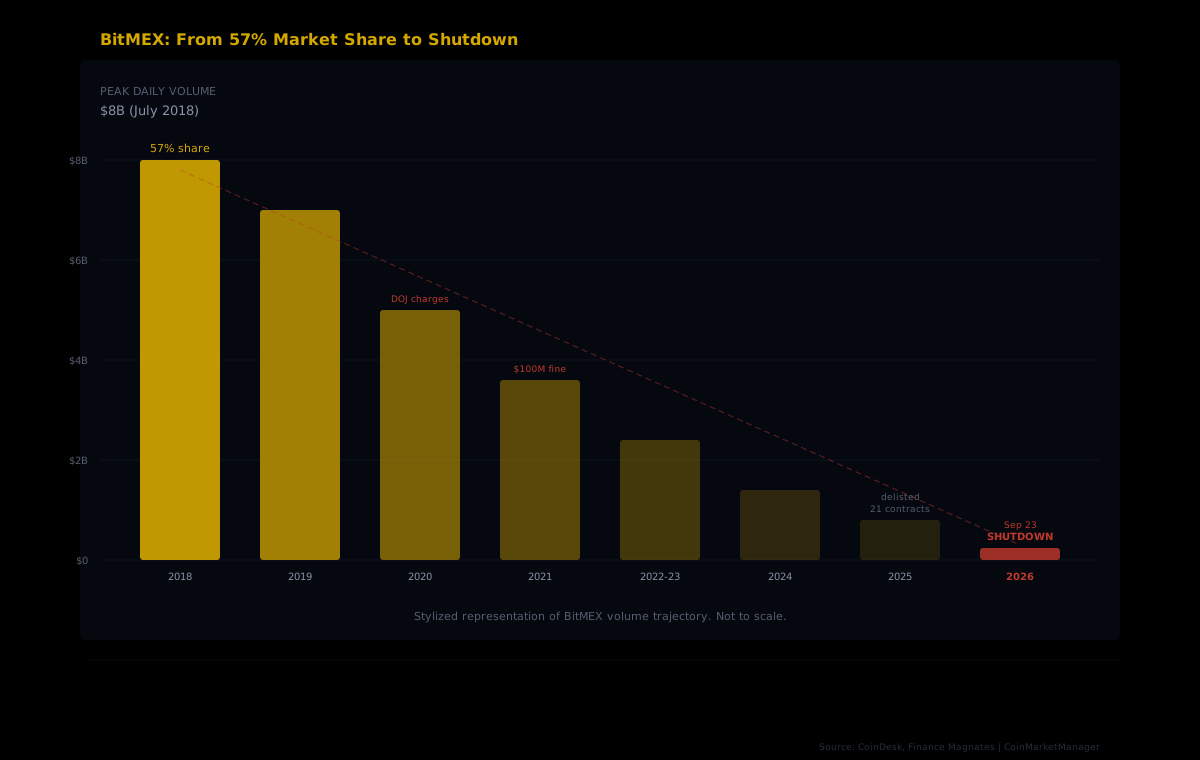
BitMEX announced today that it will shut down operations on September 23, 2026, ending an 11-year run. The exchange that invented the perpetual swap, that once processed $8 billion in daily volume and held roughly 57% of the global crypto derivatives market, is done. Its platform token BMEX crashed over 92% in 24 hours.
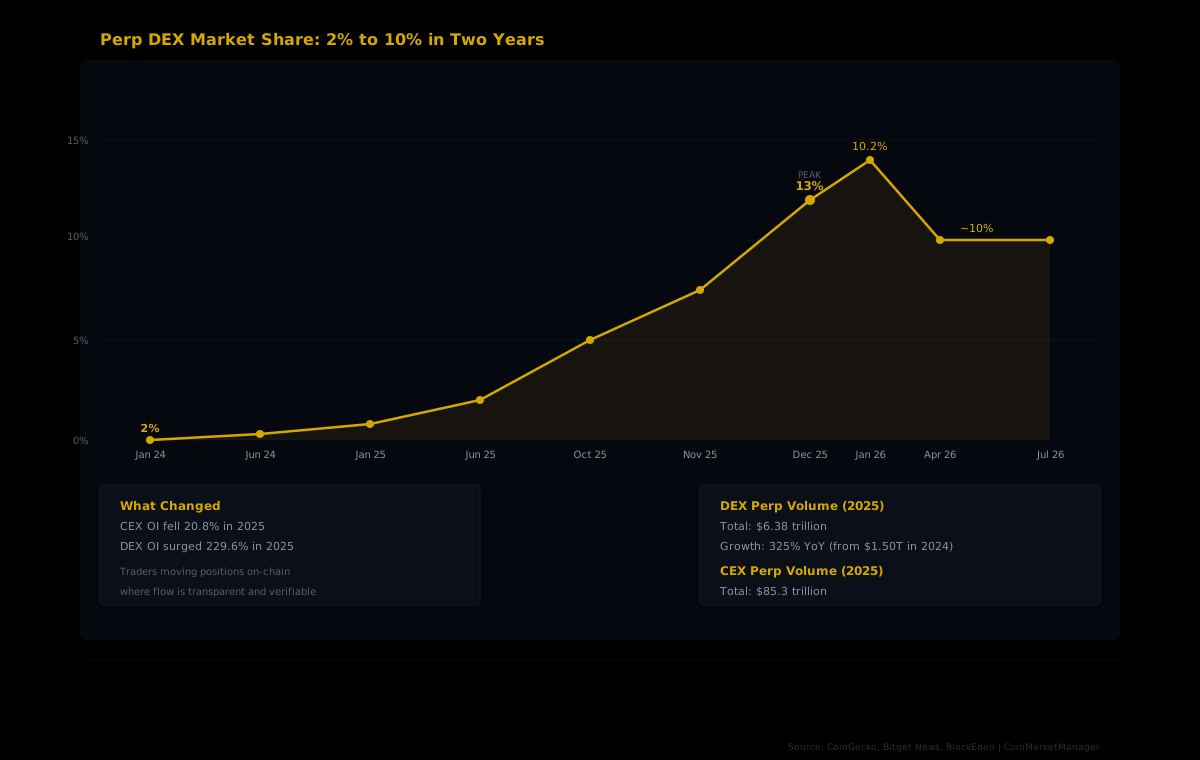
The timing is almost poetic. BitMEX is closing just as the instrument it invented, the perpetual swap, is having its biggest year ever on decentralized exchanges. On-chain perp volume grew from $1.50 trillion in 2024 to $6.38 trillion in 2025, and the DEX share of perpetual futures volume rose from 2% to over 10% in two years. BitMEX didn't just lose the race. It got lapped by a category of exchange it never saw coming.
How BitMEX Lost the Plot
In 2016, BitMEX launched the perpetual swap: a futures contract with no expiry date, funded by a periodic rate that keeps the contract pegged to spot. It was elegant and instantly addictive. Traders could go 100x long on Bitcoin from a laptop in any country, with no KYC and no expiry to roll. By 2018, the exchange was processing over $1 trillion in annual volume from a Seychelles-registered entity with a small team.
Then the floor fell out. In 2020, the U.S. Department of Justice charged co-founders Arthur Hayes, Ben Delo, and Samuel Reed with violating the Bank Secrecy Act. BitMEX had failed to implement basic anti-money laundering measures while operating what was arguably the most leveraged trading venue in crypto. All three founders pleaded guilty in 2022. The exchange paid $100 million in fines to the CFTC and FinCEN, followed by another $100 million criminal penalty in January 2025.
But enforcement alone didn't kill BitMEX. What killed it was irrelevance. By the time the legal drama settled, the crypto derivatives market had moved on. Binance, OKX, and Bybit absorbed the offshore CEX volume. And a new wave of decentralized perp exchanges started taking share from all of them.
The Perp DEX Takeover, by the Numbers
The shift from centralized to on-chain perpetual futures is the most underappreciated structural change in crypto markets over the past two years. In January 2024, perp DEXes processed about 2% of total perpetual futures volume. By December 2025, that number hit 13%. It has settled around 10% as of mid-2026, which still represents a fivefold increase in share.
The raw volume tells only part of the story. Open interest, the measure of money actually committed to positions, shifted even more dramatically. DEX open interest surged 229.6% in 2025, while CEX open interest declined 20.8%. Capital wasn't just flowing through decentralized venues. It was parking there.
Meanwhile, BitMEX was delisting contracts for "insufficient trading interest." Eight in May, 21 more in July. The exchange that created the category had become so illiquid it couldn't sustain its own products. Three weeks before the shutdown announcement, BitMEX lost its CEO, CFO, and head of growth.
Why On-Chain Perps Win on Intelligence
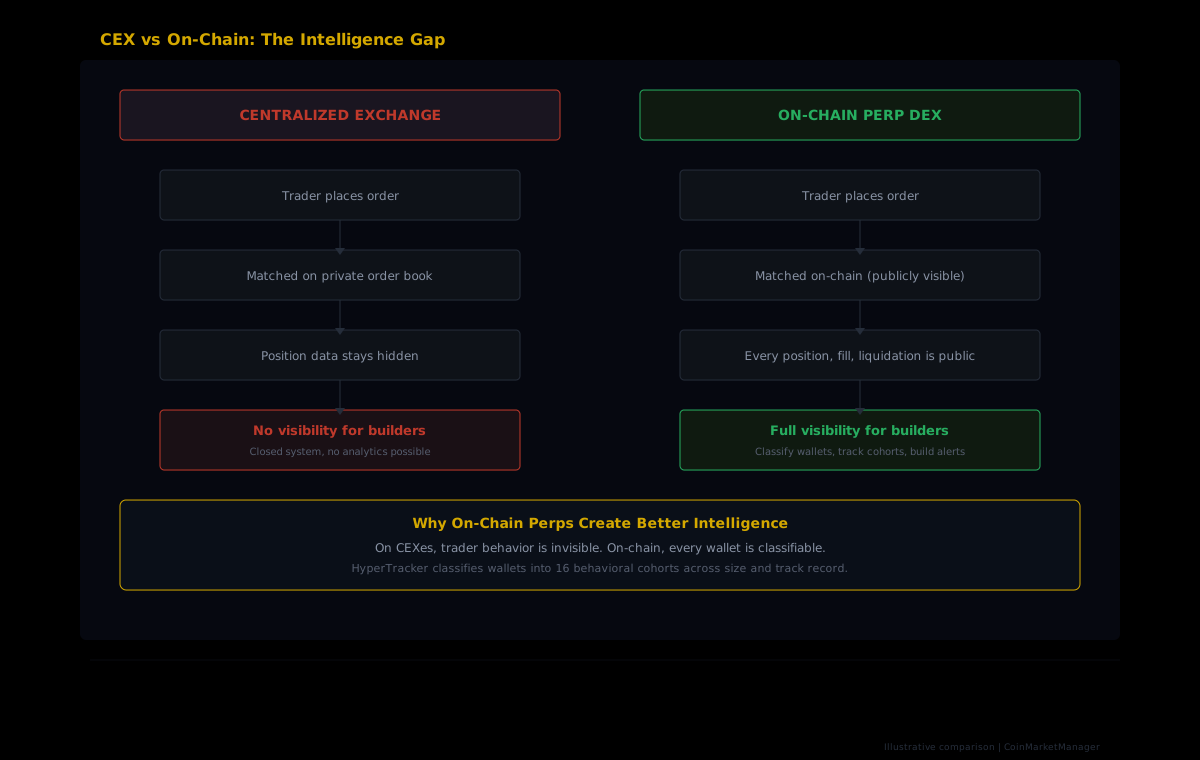
The market share data matters because it represents something deeper than preference. When trading moves on-chain, the information economics of the entire market change. On a centralized exchange like BitMEX, positions and fills are private. The exchange sees everything; traders see almost nothing. The only public data is a delayed price feed and whatever aggregated metrics the exchange chooses to share.
On-chain perp DEXes flip this entirely. Every position, every fill, every liquidation settles on a blockchain. That data is public, verifiable, and programmable. Builders can aggregate it, classify it, and turn it into intelligence that was simply impossible in the CEX era.
This is the structural advantage that matters for traders and builders. When Hyperliquid processes a trade, our data shows which behavioral cohort opened that position. Was it a Leviathan (a wallet with over $5M in perp equity) adding to a BTC long? Or was it Exit Liquidity (wallets with a negative all-time PnL under $10K) chasing a pump? On BitMEX, that distinction was invisible. On-chain, it's one API call.
The intelligence gap: On centralized exchanges, trader behavior is hidden behind the exchange's walls. On-chain perp DEXes make every position public and classifiable, which means any builder can analyze the full flow of the market, segmented by wallet size and track record.
Hyperliquid as the Anti-BitMEX
Hyperliquid sits at the center of this shift. Running its own Layer 1 blockchain, Hyperliquid controls the full stack and processes billions in daily volume. In April 2026, it ranked as the ninth-largest perpetual exchange globally with $190.28 billion in monthly volume, ahead of KuCoin and within striking distance of BingX.
Where BitMEX was a closed system built for speculation, Hyperliquid is an open system built for builders. The difference isn't philosophical. It's structural. Hyperliquid settles trades on its own chain, making every position change publicly verifiable. This creates a data layer that CEXes simply cannot replicate, because doing so would expose their matching engines and internal flow to competitors.
For traders, this means access to analytics that were historically reserved for exchange operators. Position distributions, cohort-level sentiment, liquidation clusters, order flow patterns. All derivable from public on-chain data, all available through API endpoints that any builder can query.
What Builders Should Take from the BitMEX Shutdown
The lesson isn't just "centralized exchanges can fail." Traders already knew that. The lesson is about where the next generation of trading infrastructure is being built, and what kind of intelligence it creates.
The regulatory moat is narrowing
BitMEX operated from the Seychelles. Hyperliquid operates as an on-chain protocol. The regulatory challenges are different, but the trend line is clear: offshore CEXes that relied on regulatory arbitrage are losing that advantage. Regulated entities like Kalshi and Coinbase have introduced domestic perpetual products in the U.S., which erodes the competitive position of offshore platforms from both sides.
On-chain flow creates better products
When the entire trade lifecycle lives on-chain, builders can construct analytics layers that were impossible in the CEX era. Our data classifies every wallet on Hyperliquid into one of 16 behavioral cohorts, split across two dimensions: wallet size (from Shrimp at under $250 to Leviathan at over $5M) and all-time performance (from Money Printer at over $1M lifetime profit to Giga-Rekt at below negative $1M). This classification runs continuously and refreshes every five minutes.
That kind of segmentation requires public, verifiable trade data. It requires a chain where every position change is settled transparently. CEXes could theoretically offer similar analytics, but they never did, because exposing that data meant exposing their competitive advantage. On-chain protocols have no such incentive to hide.
Volume alone doesn't protect you
BitMEX had $8 billion in daily volume at peak. It still died. Volume without a defensible moat, whether that's technology, regulatory compliance, or ecosystem lock-in, means nothing when the market shifts. The CEX platforms that survived (Binance at 33% market share, OKX at 15%) did so by investing in compliance, building out product suites, and expanding into new markets. BitMEX stood still.
The Builder Opportunity in the Perp DEX Era
The collapse of BitMEX isn't a cautionary tale about exchanges. It's a signal about where derivative market intelligence is heading. As more volume moves on-chain, the builders who can aggregate, classify, and act on that data gain an edge that compounds over time.
Consider the data that becomes available when perp DEXes process 10% of global futures volume and growing. Cohort-level positioning across markets. Liquidation risk scoring at the asset level. Smart money aggregates that tell you whether experienced wallets are adding or cutting exposure. All of this is derivable from on-chain data, and all of it was locked behind closed doors during the BitMEX era.
HyperTracker exists because this data layer matters. We compute 16 behavioral cohorts across Hyperliquid, provide order flow analysis with rolling five-minute snapshots, and expose it all through a REST API starting at $179 per month. For builders who want to understand what's happening on-chain before it shows up in price, this is the infrastructure layer.
Build on the intelligence layer, not the exchange layer
HyperTracker gives you cohort analytics, order flow, and liquidation risk scoring across Hyperliquid. 16 behavioral segments. One API call.
What Comes Next
BitMEX enters reduce-only mode on August 26, 2026, and will force-close remaining positions by September 23. Users who don't withdraw will face monthly maintenance fees of $50 or 1% annually on their remaining balance, whichever is higher.
The exchange will leave behind a legacy that shaped an entire asset class. Perpetual swaps now trade on dozens of platforms, CEX and DEX alike, processing trillions of dollars annually. The instrument survived. The exchange that invented it did not.
And that's the cleanest signal the market has sent in years. The future of derivatives trading isn't behind closed doors on a Seychelles server. It's on-chain, it's public, and it's programmable. BitMEX proved the demand. Perp DEXes proved the model. The question for builders now is simple: what do you build on top of it?