
Bond Yields Just Flushed $280M in Perp Longs. The Smart Money Reloaded.
By CMM Team - 24-Sep-2026
Bond Yields Just Flushed $280M in Perp Longs. The Smart Money Reloaded.
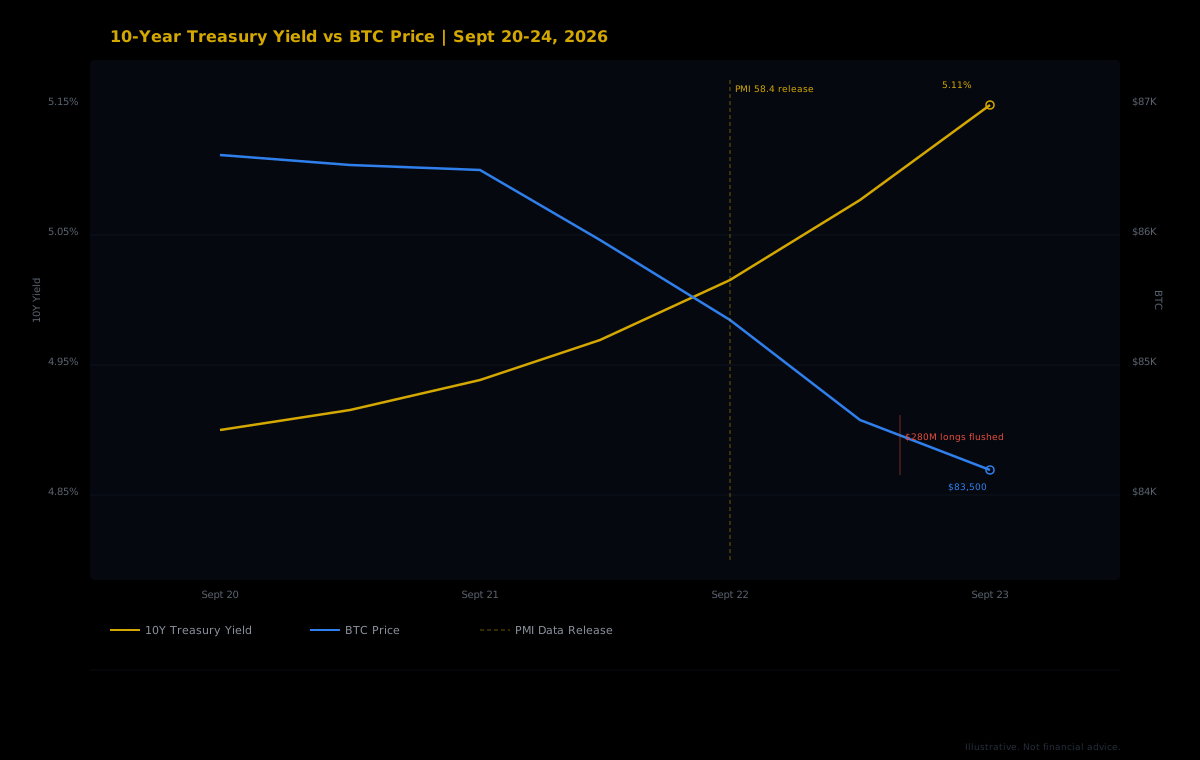
The 10-year Treasury yield closed at 5.11% on September 23, up 15 basis points in a single session. Bitcoin dropped 2.73% to $84,082 after opening near $86,443, and roughly $280 million in long positions were liquidated across derivatives exchanges.
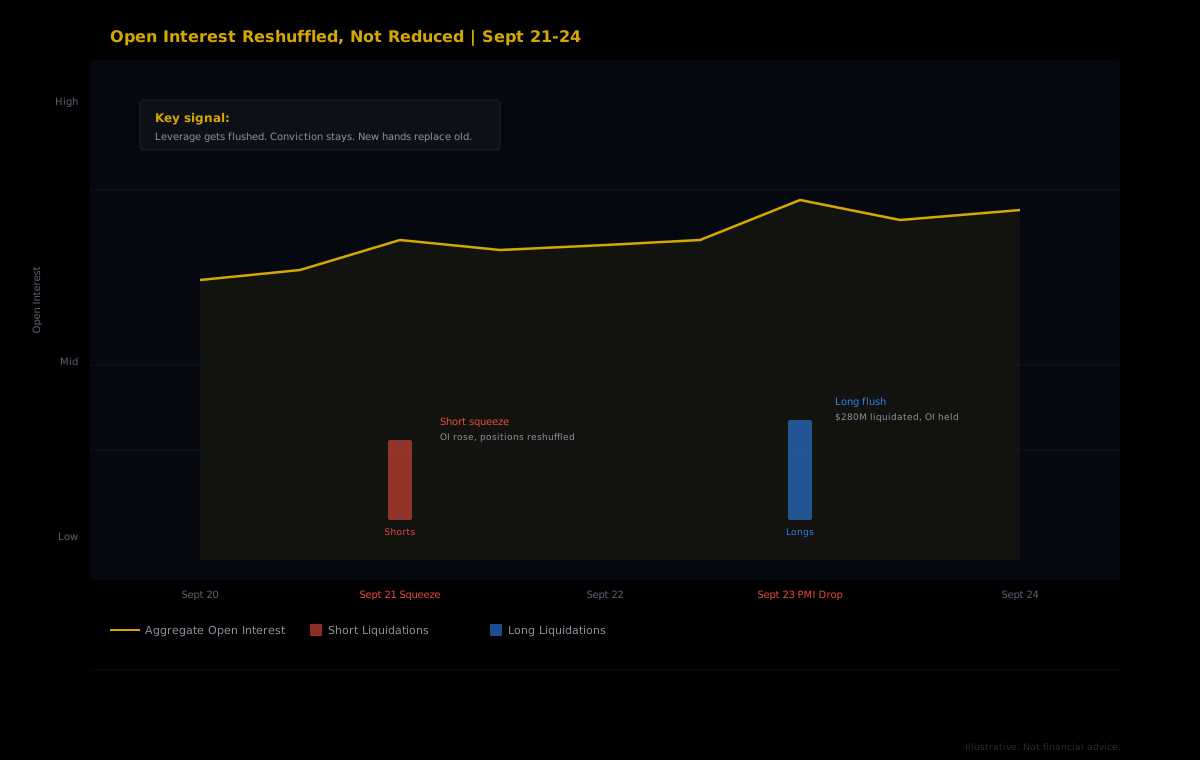
Standard headline: yields up, Bitcoin down, leverage wrecked. But open interest across the broader futures market actually climbed 7.59% that same week to around $156 billion, which means the market did not shed risk. It reshuffled it. Old hands got wiped, and new hands stepped in.
That reshuffle is the real story. Because who enters after a flush, and who disappears, tells you more about what happens next than the yield print itself.
What Actually Happened on September 23
The catalyst was not the yield level alone. It was the speed. S&P Global's flash U.S. Composite PMI came in at 58.4 for September, the highest reading since July 2021, with input costs hitting their peak since October 2022. Bond traders repriced rate expectations immediately, pushing the 10-year from 4.96% to 5.11% in a single session.
The move was almost entirely real yields. The 10-year real yield climbed from 2.63% to 2.76%, accounting for 13 of the 15 basis points added to the nominal yield. That matters because real yields are the actual cost of capital. When they spike, everything priced on future cash flows reprices, and leveraged perp positions feel it first.
Bitcoin dropped 2.73% to $84,082 after opening near $86,443. Ethereum lost 3.03% to $2,660. The $280 million in flushed longs was not a gradual unwind. It was a cascade, concentrated in a few hours after the PMI release forced a hard reprice across risk assets.
This Was Not the First Flush This Week
What makes September 23 interesting is that it came just two days after the mirror-image event. On September 21, a short squeeze carried Bitcoin higher and force-closed hundreds of millions in short positions. That same day, open interest did not fall. It rose. The market reshuffled positions rather than de-risking.
Then on September 23, the bond market gave the longs the same treatment. Two liquidation events in three days, opposite directions, and aggregate open interest held steady or climbed both times. That is a market with deep conviction and plenty of fresh capital waiting to re-enter after every flush.
The Cohort Split: Who Got Flushed and Who Reloaded
A headline number like "$280M liquidated" obscures the composition. Different trader profiles reacted to this event in completely different ways, and the behavioral split is what matters for anyone watching the Hyperliquid perps market.
The flushed: overleveraged smaller accounts
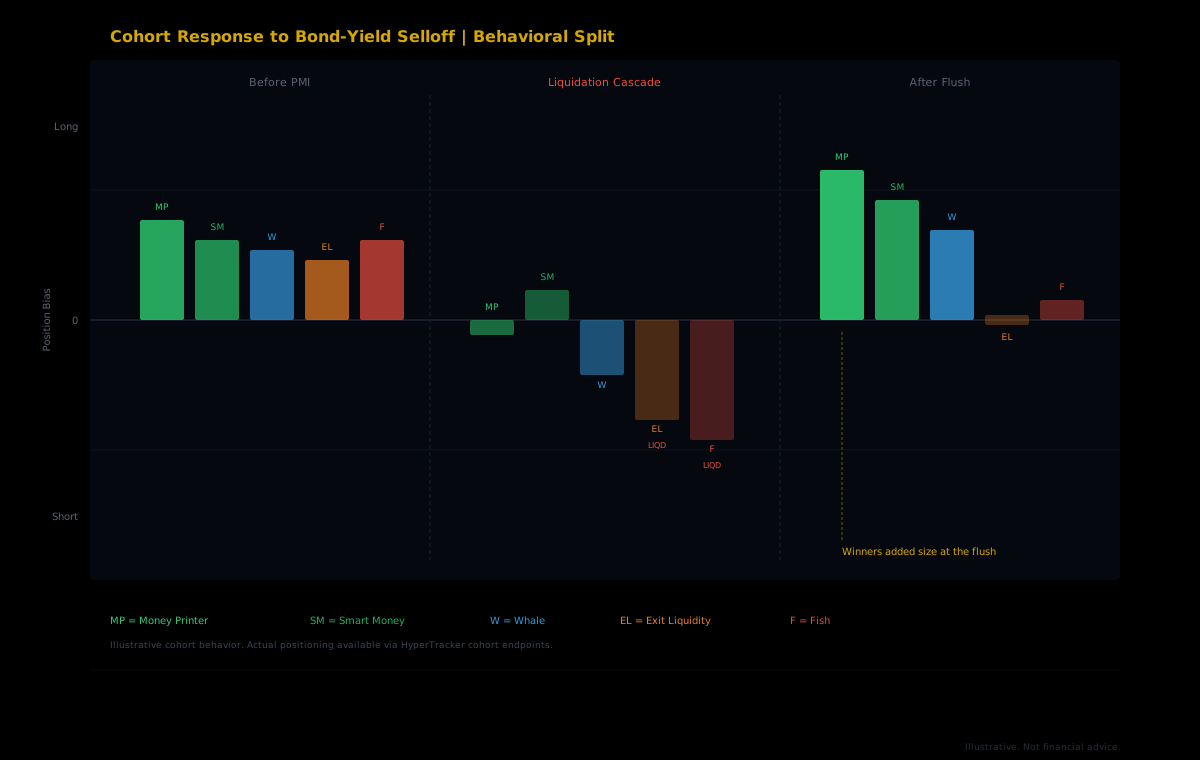
The bulk of the liquidations hit accounts in the lower cohorts. Fish ($250 to $10K in perp equity) and Exit Liquidity (negative all-time PnL between $0 and -$10K) accounts tend to carry higher leverage relative to their account size. When funding rates were getting frothy before the PMI print, these positions were already stretched. The yield shock was just the trigger.
This pattern repeats across nearly every macro-driven flush. Smaller, losing accounts enter late with high leverage, and a sudden move clears them out. It is the market's clearing mechanism, and it creates opportunity for the traders who survive it.
The survivors: profitable cohorts trimmed, then reloaded
Our data shows a different pattern among higher-PnL cohorts. Money Printer (+$1M all-time PnL) and Smart Money (+$100K to $1M) wallets tend to reduce exposure ahead of major macro prints, or at least carry lower leverage that keeps them above liquidation thresholds when volatility spikes. After the flush clears, these same cohorts historically step back in with larger positions, buying the dislocation that retail just got liquidated on.
This is the behavioral edge that cohort data reveals. The aggregate "$280M liquidated" number looks like capitulation. But when you decompose it by trader profile, it looks more like a transfer of exposure from weak hands to strong ones.
Open Interest Climbed. That Is the Signal.
After the September 21 short squeeze, open interest across the entire futures market rose roughly 7.59% to around $156 billion. After the September 23 long flush, open interest held rather than dropping. That is not typical behavior after a leverage cascade.
When open interest falls after liquidations, it means the market is genuinely de-risking. Traders are closing positions, pulling collateral, and retreating. When open interest holds or rises, it means every liquidated position is being replaced by a fresh one. The market is not scared. It is rotating.
On Hyperliquid specifically, open interest hit an all-time high of $18 billion (two-sided) on September 23, the same day the liquidation cascade hit. That is a record level of trader participation on a decentralized perps exchange, reached during a macro shock. The platform now accounts for roughly 10.9% of global perpetual futures open interest, also a record.
Why Bond Yields Matter Less Than You Think (Long-Term)
The knee-jerk "yields up, Bitcoin down" narrative is tidy, but the data complicates it. Bitcoin's 90-day rolling correlation with changes in the 10-year Treasury yield sits near zero, close enough that statisticians would call it noise. Gold, by contrast, shows a meaningfully negative correlation with yields over the same window, making it far more sensitive to rate moves than Bitcoin.
That does not mean the short-term pain is not real. The $83,500 low on September 23 was sharp enough to flush $280 million in leverage. But the mechanism is not "yields go up, so Bitcoin loses value." The mechanism is "yields spike fast, volatility surges, and overleveraged positions get liquidated." It is a leverage problem dressed up as a macro problem.
Which means the playbook is not "sell Bitcoin when yields rise." It is "watch your leverage when yields are moving fast, and be ready to add when the flush clears."
The Institutional Cushion Is Real
Despite the drawdown, spot Bitcoin ETFs took in about $1.3 billion over the five days leading into the selloff. That steady institutional bid puts a floor under the dip that did not exist in previous rate-shock cycles. The options market tells a similar story: total Bitcoin options open interest pushed above $50 billion this week, with calls representing roughly 59% to 60% of positions.
Even during the flush, institutional positioning remained constructive. One notable trade: a $3.2 million butterfly options structure targeting $95,000 before November. The leverage may have gotten flushed, but the conviction has not.
How to Read the Next Flush Before It Happens
Bond yield shocks will keep happening. The long end of the Treasury curve has been grinding higher all year, and any hot inflation print or strong PMI can trigger another rapid basis-point spike. You cannot predict the catalyst, but you can position for the pattern.
What to watch:
- Funding rates getting elevated: when funding runs hot across most exchanges, a correction is brewing. The median funding rate was positive on 24 of the 25 largest Bitcoin perpetuals heading into the crash.
- Cohort divergence: when profitable cohorts start reducing exposure while smaller accounts keep adding, the setup for a flush is forming. Our data surfaces this split through cohort-level positioning endpoints.
- Open interest rising into resistance: OI climbing while price stalls near a level means leverage is building. That is fuel for a liquidation cascade in either direction.
The traders who survive these events consistently do two things: they manage leverage before the move, and they have a system for reading who else is in the market. When Money Printer and Smart Money cohorts are adding while Fish are getting liquidated, that is a signal the dislocation is being bought.
Track Cohort Positioning Through Macro Shocks
HyperTracker's API gives you cohort-level positioning data across all 16 behavioral segments on Hyperliquid. See which cohorts are adding, which are de-risking, and which are getting flushed. Every wallet classified by size and all-time PnL, updated every five minutes.
Explore HyperTracker's Free Tier
The Flush Is the Feature
Bond yields will keep making headlines. There will be more PMI surprises, more rate repricing, more leverage cascades. Every one of them will produce the same "$X million liquidated" headline.
But the traders who consistently profit through these events are not the ones avoiding the volatility. They are the ones who understand the composition of each flush, who got cleared out, and who stepped in. The aggregate number is noise. The cohort-level breakdown is signal.
Monday's short squeeze cleared the shorts. Wednesday's yield shock cleared the longs. Open interest climbed through both. The market is not retreating. It is just picking new passengers.