Circle Got a Bank Charter. Perp Builders Should Pay Attention.
By CMM Team - 12-Jul-2026
Circle Got a Bank Charter. Perp Builders Should Pay Attention.
On July 10, Circle received final approval from the Office of the Comptroller of the Currency to establish Circle National Trust, a federally supervised national trust bank. The first major stablecoin issuer to secure a federal bank charter. Not a conditional approval or a pending application. Done.
If you build on Hyperliquid, this matters more than you might think. Every perpetual futures position on the platform, every margin deposit, every PnL settlement and funding payment, denominates in USDC. The collateral layer your entire product sits on top of just got a federal regulator. That changes the risk profile for builders, for their users, and for the institutional capital waiting on the sideline.
Circle CEO Jeremy Allaire called it "a defining step in bringing blockchain technology and digital assets into the core of the U.S. financial system," adding that "federal oversight of our trust bank sets a new standard for transparency, governance, and scale."
The Regulatory Stack That Got Us Here
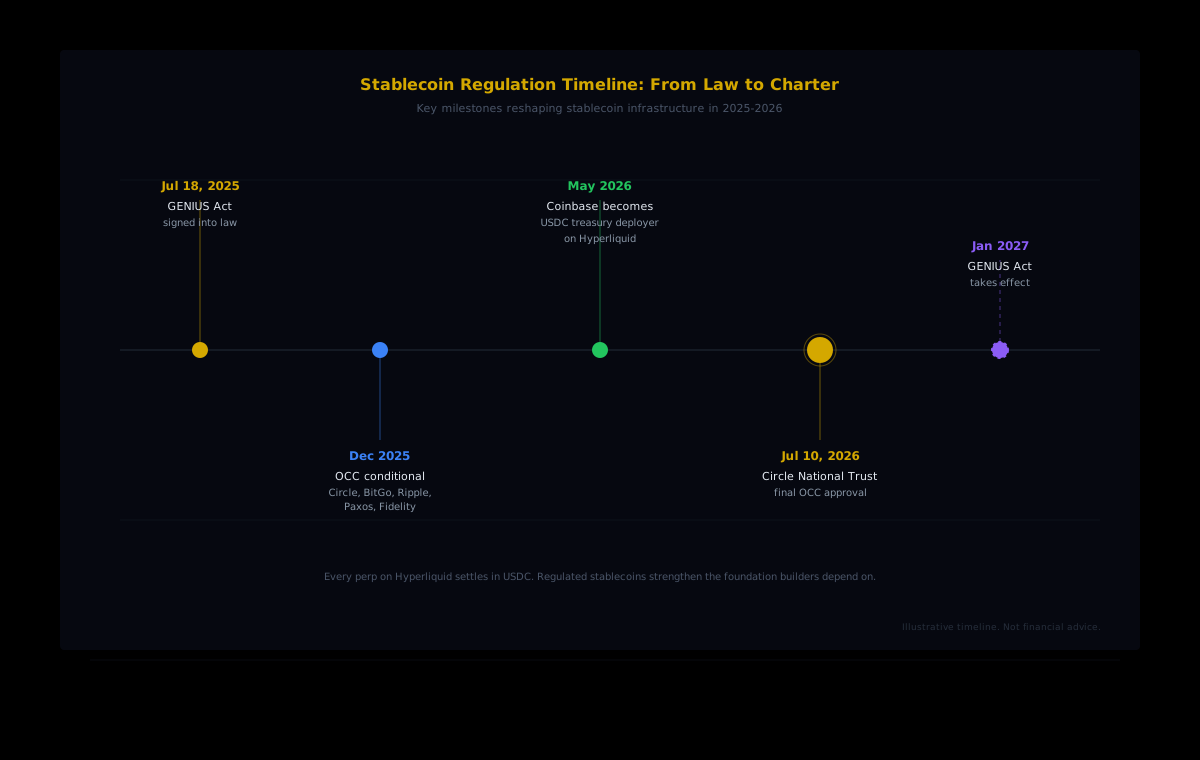
Circle's charter did not happen in isolation. It is the culmination of a regulatory sequence that started a year ago with the GENIUS Act, the first federal law specifically governing payment stablecoins in the United States.
President Trump signed the GENIUS Act on July 18, 2025. The law requires stablecoin issuers to maintain 100% reserve backing with liquid assets like U.S. dollars or short-term Treasuries, publish monthly reserve disclosures, and comply with the Bank Secrecy Act for anti-money laundering. In insolvency, stablecoin holders get priority over all other creditors. That is a consumer protection guarantee that did not exist before.
The law also created a two-track system: issuers with more than $10 billion in outstanding stablecoins must submit to federal oversight, while smaller issuers can operate under state-level regimes if those regimes are deemed "substantially similar" to the federal framework. Circle, with USDC's market capitalization near $73.2 billion, falls squarely in the federal category.
Then came December 2025, when the OCC issued conditional approvals to Circle, BitGo, Ripple, Paxos, and Fidelity Digital Assets. Circle's final approval on July 10 makes it the first of that cohort to cross the finish line. The bank will initially provide fiduciary digital asset custody services for Circle and its affiliates, with plans to manage the USDC reserve directly under federal oversight.
Circle shares jumped 8.4% on the announcement. The market understood what this means: USDC is no longer a crypto product operating under state money transmitter licenses. It is a banking product supervised by a federal regulator.
Why Perp Builders Cannot Ignore Collateral Quality
When you build a trading bot, a copy-trading platform, or a dashboard on Hyperliquid, you tend to think about the execution layer. Latency, fill quality, API rate limits, WebSocket reliability. Those matter. But the collateral layer underneath all of it determines whether your product can credibly serve institutional users, and whether the margin your users deposit is as safe as they assume.
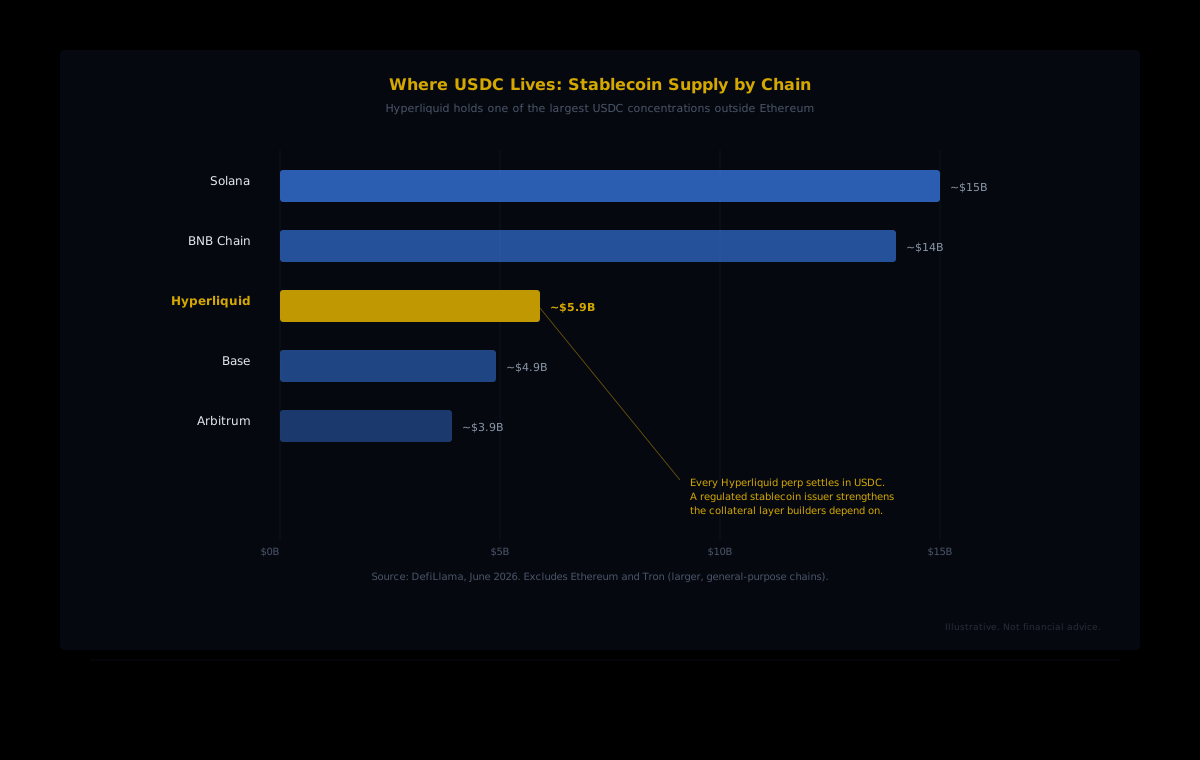
Hyperliquid runs on USDC. The platform holds approximately $5 billion in USDC supply, a figure that has roughly doubled year over year, making it one of the largest USDC concentrations on any chain outside Ethereum and Tron. That is collateral backing every open position on the exchange. If something goes wrong with USDC, the redemption mechanism, the reserve quality, the issuer's solvency, it propagates through every trade on the platform.
A federal bank charter addresses several of those risks directly.
Reserve Transparency Gets a Federal Backstop
Before the charter, Circle relied on third-party banks and custodians to hold the cash and Treasury bills backing USDC. Reserve attestations were published, but they were voluntary disclosures. Under OCC supervision, reserve management moves inside a federally regulated entity. Monthly attestations by a CPA firm, quarterly public reports, and annual full audits become regulatory requirements rather than marketing gestures.
For a builder shipping a product that holds user capital in USDC, the difference between "Circle says the reserves are fine" and "a federal banking regulator verifies the reserves are fine" is the difference between trust and proof.
Redemption Guarantees Strengthen
The GENIUS Act requires stablecoin issuers to honor redemptions within one business day. Combined with a federal charter, this means USDC redemption is now backed by both statutory mandate and prudential bank supervision. If a large liquidation event on Hyperliquid triggers a wave of USDC redemptions, the regulatory framework is designed to ensure those redemptions clear promptly.
That matters for builders running automated systems. A copy-trading bot that needs to liquidate positions and withdraw capital cannot afford to wait three days for a stablecoin redemption to settle. Regulatory guarantees reduce the tail risk that automated withdrawal flows break during market stress.
Institutional Confidence Increases
Funds, family offices, and institutional desks have been watching Hyperliquid's volume numbers grow. But the question that keeps coming up is collateral risk. "You want me to park $10 million in a stablecoin issued by a company with a patchwork of state licenses?" A federal bank charter changes that conversation. USDC under OCC supervision is a fundamentally different risk profile than USDC under state money transmitter rules.
For builders targeting institutional users (think: analytics dashboards for quant funds, or API products serving algorithmic trading firms), this is a selling point. The collateral your users deposit is now supervised by the same regulator that oversees JPMorgan's national bank charter.
The Broader Stablecoin Landscape Is Shifting Too
Circle is not moving alone. The GENIUS Act created a land rush for federal stablecoin compliance, and the competitive dynamics are reshaping the builder ecosystem.
USDC accounted for roughly 70% of adjusted stablecoin transaction volume in the first half of 2026, according to Visa's onchain dashboard, while USDT held about 25%. That is a dramatic shift from two years ago, when USDT dominated transaction volume. Regulated stablecoins are winning the volume war, because institutional counterparties and compliant venues prefer assets with clear legal frameworks.
In May 2026, Coinbase became the official treasury deployer of USDC on Hyperliquid, managing stablecoin liquidity through the protocol's Aligned Quote Asset framework. Circle itself will stake 500,000 HYPE tokens as it moves toward validator status on the network. The stablecoin issuer, the custody provider, and the exchange are increasingly intertwined. That integration means builders get a more cohesive infrastructure stack, but it also means regulatory changes to any one layer propagate through the others.
What Builders Should Do With This Information
Stablecoin regulation is not something most builders think about day to day. You are focused on shipping features, improving latency, and growing users. But the collateral layer affects everything above it, and the regulatory shift underway creates both opportunities and things to watch.
Build for Institutional Readiness
If your product touches USDC (and if you build on Hyperliquid, it does), you can now credibly tell institutional prospects that the collateral layer is federally supervised. That is a selling point worth surfacing in your docs, your pitch deck, and your compliance materials. The builders who articulate this advantage clearly will attract institutional capital before the builders who ignore it.
Monitor GENIUS Act Implementation Deadlines
The GENIUS Act takes effect no later than January 18, 2027. Between now and then, federal regulators will publish implementing rules that fill in the details: exact reserve composition requirements, audit standards, anti-money laundering procedures. Some of those rules may affect how USDC integrates with DeFi protocols. Builders should track the rulemaking process, because surprises in implementation could affect how stablecoins flow through Hyperliquid's infrastructure.
Understand the Multi-Stablecoin Future
Circle is first, but BitGo, Ripple, and Paxos all hold conditional OCC approvals. Fidelity Digital Assets is in the queue. Each of these companies could issue a regulated stablecoin that competes with USDC for on-chain settlement volume. For Hyperliquid builders, this could eventually mean supporting multiple collateral assets, each with its own regulatory profile and redemption characteristics.
Right now, Hyperliquid runs on USDC exclusively. Whether that changes depends on protocol governance decisions and the competitive dynamics among regulated stablecoin issuers. Builders who design flexible collateral handling into their systems will be better positioned if the landscape fragments.
Use the Transparency
One of the quieter benefits of regulated stablecoins is data. Federal reserve disclosures, monthly attestations, and public audit reports create a stream of verifiable information about the collateral backing your users' positions. Builders can incorporate this data into their products, surfacing reserve health indicators alongside trading analytics. In a market where trust is hard-won, transparency features differentiate.
The Intelligence Layer Still Matters Most
Regulated collateral is necessary. It is not sufficient. A federally supervised stablecoin makes the foundation stronger, but what builders ship on top of that foundation is what actually creates value for traders.
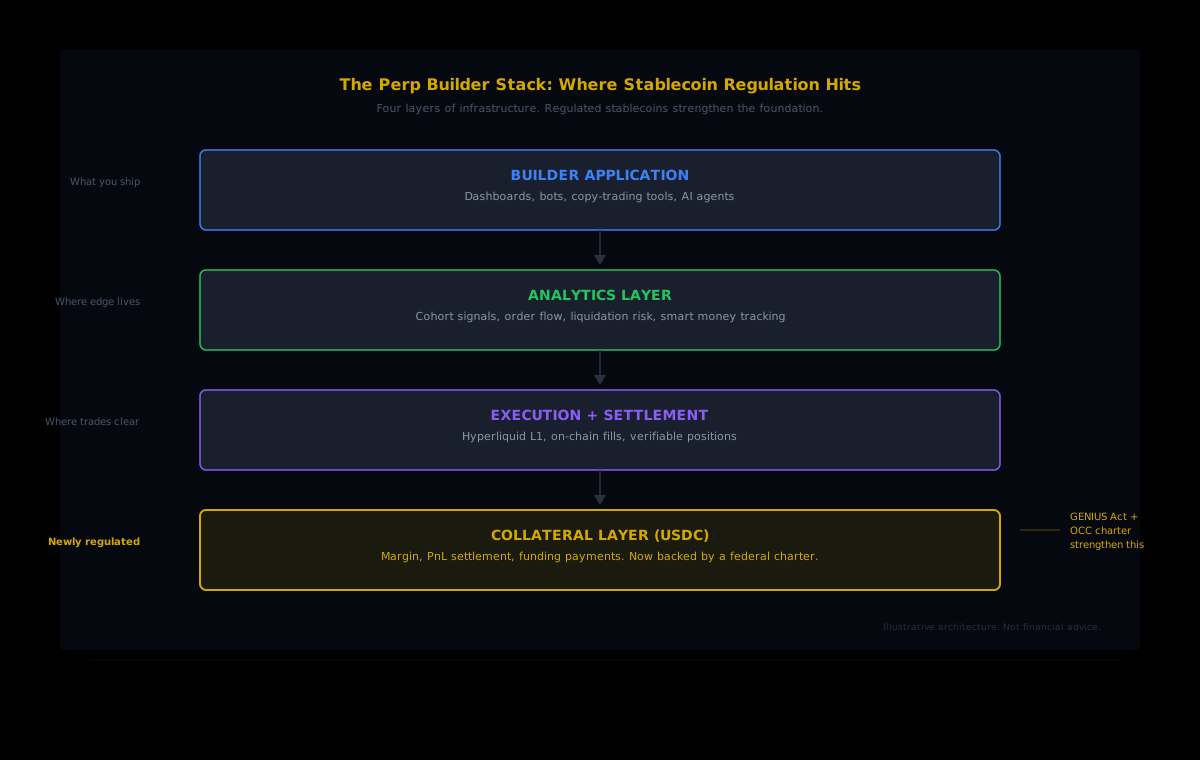
The builder stack has four layers: collateral at the bottom (now regulated), execution above that (Hyperliquid's L1), analytics above execution, and the builder's application at the top. Stablecoin regulation strengthens the foundation. But the analytics layer, where you turn raw on-chain data into actionable intelligence, is where competitive advantage lives.
Our API gives builders access to exactly that layer. HyperTracker classifies every Hyperliquid wallet into one of 16 behavioral cohorts: eight by perp equity size (Shrimp through Leviathan) and eight by all-time PnL (Money Printer through Giga-Rekt). One API call returns what the profitable wallets are doing on aggregate, where liquidation risk is building, and how order flow is shifting across cohort segments.
A regulated stablecoin tells you the collateral is safe. Our data tells you what the smart money is doing with it.
Build on Hyperliquid's Intelligence Layer
HyperTracker's API delivers cohort analytics, order flow, and liquidation risk scoring for every wallet on Hyperliquid. Start with the free tier and scale to the data your product needs.
Circle's charter is a milestone, one that strengthens everything built on top of USDC. But for perp builders, the real edge was never about who issues the collateral. It is about who understands what traders are doing with it.