
Coinbase Just Cleared Its Own Trades. Perp DEX Builders Should Pay Attention.
By CMM Team - 29-Sep-2026
Coinbase Just Cleared Its Own Trades. Perp DEX Builders Should Pay Attention.
On September 28, the CFTC registered Coinbase Clearing LLC as a derivatives clearing organization. That sentence sounds like regulatory boilerplate, and most of crypto Twitter will scroll right past it. But if you build on a perp DEX, particularly on Hyperliquid, this is the kind of structural shift that changes what your users look like within a few quarters.
Here is the short version. Coinbase can now broker, match, and clear its own derivatives trades without renting anyone else's infrastructure. Kraken's parent, Payward, is building something similar but routing execution through Hyperliquid's on-chain order book via HIP-3. Two of the largest U.S. exchanges are building regulated pipelines into the same markets where your code already runs. The question for builders is whether you are ready for the flow they will bring.
The Three Registrations That Complete the Stack
Before this approval, Coinbase already held two of the three federal registrations required to operate a standalone derivatives business in the U.S. Coinbase Financial Markets, Inc. is a Futures Commission Merchant (the brokerage layer), and Coinbase Derivatives, LLC is a Designated Contract Market (the exchange layer, originally operating as LMX Labs and later FairX before Coinbase acquired it).
The missing piece was the clearinghouse. Until this week, Coinbase relied on Nodal Clear to handle post-trade settlement for products listed on Coinbase Derivatives. With the DCO registration, Coinbase Clearing LLC takes over that role and introduces USDC-native collateral with 24/7 settlement capabilities.
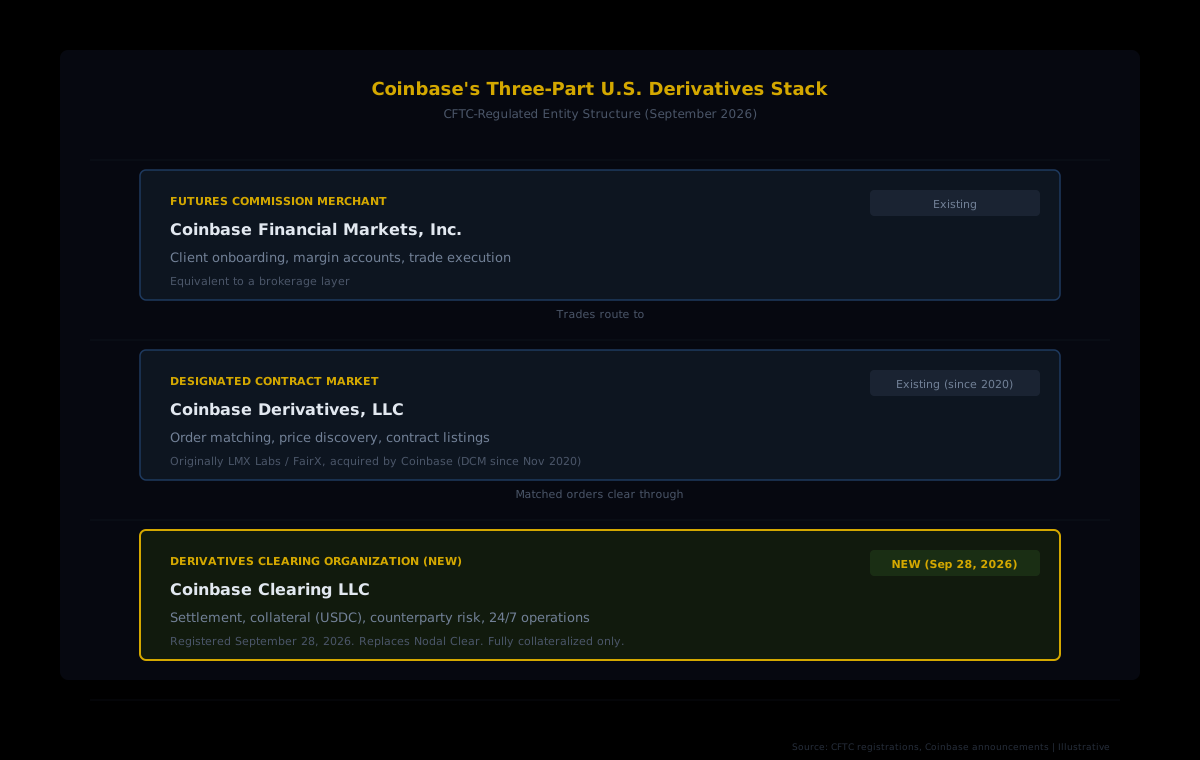
Molly Abraham, Coinbase's general counsel, described the milestone as completing "Coinbase's end-to-end derivatives infrastructure, enabling us to bring more regulated derivatives products to market with native USDC collateral and 24/7 settlement."
What the approval covers (and what it does not)
The scope matters. Coinbase Clearing is authorized to clear fully collateralized futures, options on futures, and swaps. It cannot clear margined or leveraged products. Single-stock perpetual contracts for names like Nvidia, Tesla, and Microsoft will continue using third-party clearing partners.
In other words, this is a custody and settlement upgrade. Coinbase is not launching leveraged perps through its own clearinghouse, at least not yet. But the infrastructure to do so now exists inside one corporate umbrella, and that is the precedent that matters for perp DEX builders.
The Kraken Play: Regulated Execution on Hyperliquid
Coinbase went vertical. Kraken went hybrid. The difference matters because one approach keeps everything off-chain, while the other plugs directly into a decentralized order book.
On September 16, Payward (Kraken's parent company) announced plans to offer U.S. clients on-chain perpetual futures using Hyperliquid infrastructure. The architecture involves three separate regulated entities working together: Bitnomial Exchange (a CFTC-regulated DCM) deploys and administers the markets, Bitnomial's clearinghouse handles settlement, and NinjaTrader Clearing (a registered FCM) carries client accounts.
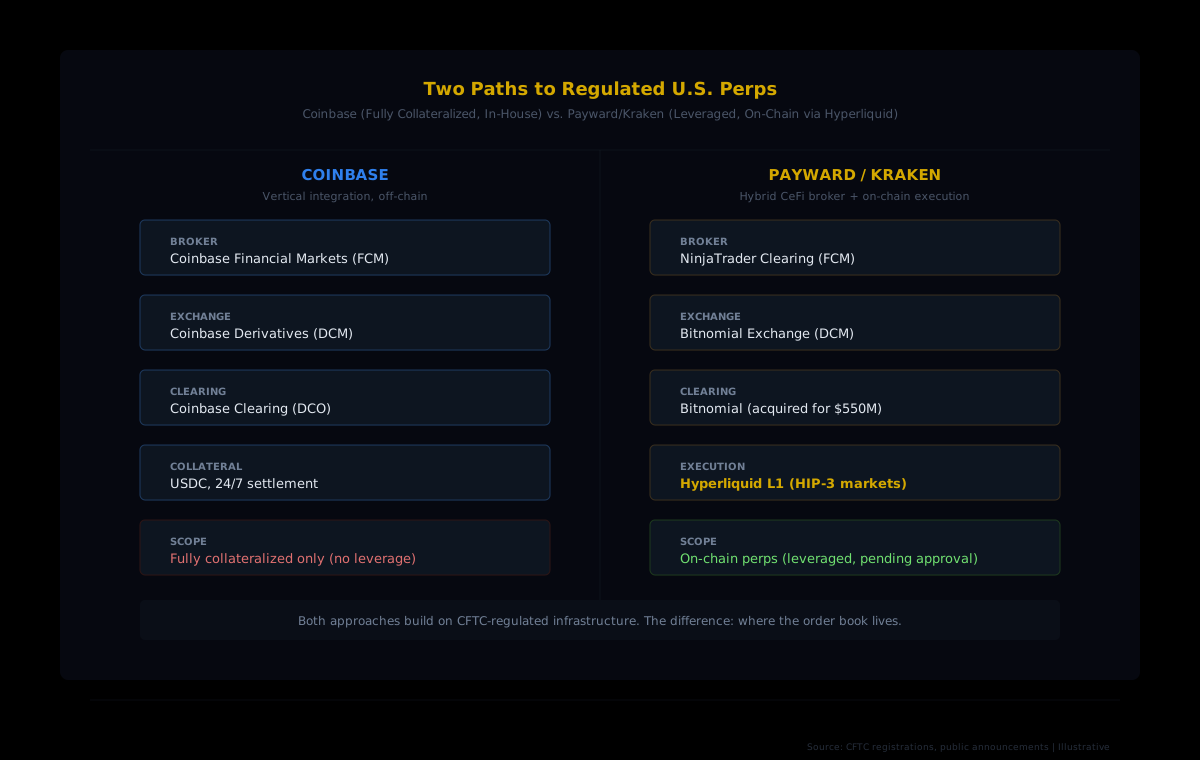
Payward acquired Bitnomial for $550 million to get the full CFTC-licensed stack of exchange, clearinghouse, and brokerage licenses. But instead of building a walled garden, they chose to route execution through Hyperliquid's HIP-3 framework, which allows builder-deployed permissioned markets on the protocol's L1.
How the access controls work
A U.S. customer opens a futures account through NinjaTrader Clearing, which handles KYC and compliance. That account gets approved for specific Bitnomial markets. The associated wallet address is then added to the HIP-3 permissioned access list. Only addresses on that list can interact with those specific perpetual contracts.
This means the Hyperliquid order book itself stays on-chain and transparent, but access to regulated contract markets on it gets gated through traditional compliance infrastructure. The contracts are subject to CFTC oversight. The execution engine is a decentralized L1. That is a genuinely novel hybrid, and it remains subject to final regulatory approval.
Why Builders Should Care About Institutional Plumbing
If you are shipping trading bots, dashboards, or analytics tools on Hyperliquid, none of this changes your code today. The Payward plan is still awaiting CFTC approval and has no announced launch date. But the structural implication is significant: regulated institutional flow may soon land on the same order book where your users already trade.
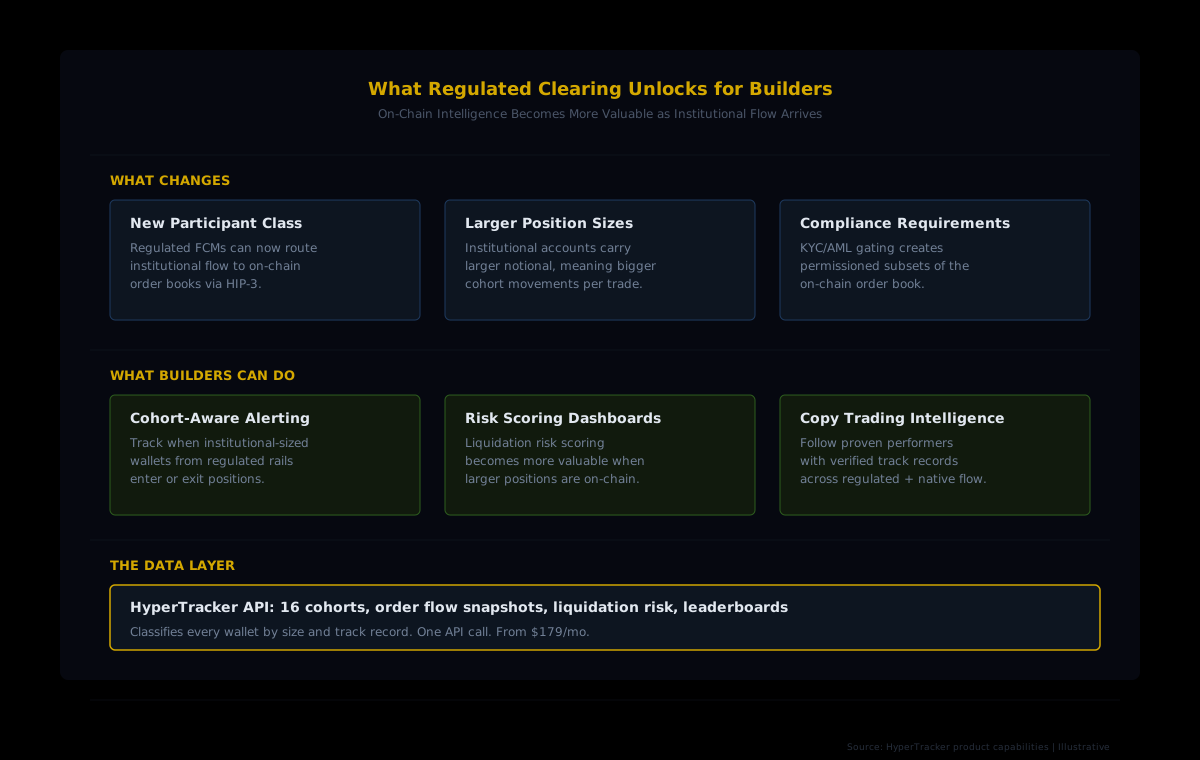
That changes the composition of activity your tools analyze. Institutional participants carry larger position sizes and tend to move in cohorts that differ from native crypto traders. When a Futures Commission Merchant routes a fund's order through HIP-3, that order shows up on-chain just like any other. But the wallet behind it represents a different risk profile, different holding periods, and different response to market events.
Bigger positions, sharper signals
The practical effect for builders is that cohort-level analytics become more valuable, because the range of participants widens. When the only wallets on a perp DEX belong to crypto-native traders, the behavioral spread is narrower. Add institutional desks with compliance mandates and longer time horizons, and the behavioral signal from cohort separation gets more informative.
Consider what changes for specific use cases:
- Copy trading tools gain a new signal source. Wallets entering through regulated rails may carry verifiable track records, making performance filtering more reliable.
- Risk dashboards need to account for position sizes that may be multiples of what native crypto wallets carry. Liquidation cascades scale with position concentration.
- Alert systems can flag when institutional-sized wallets shift exposure, which historically precedes broader market moves.
- Market-making bots face different adverse selection profiles when a portion of flow comes through regulated, KYC-gated channels.
The Competitive Landscape Is Splitting
Coinbase and Kraken are taking different bets on where crypto derivatives infrastructure should live. Coinbase keeps everything in-house, clearing USDC-collateralized contracts through its own DCO. Kraken outsources execution to a decentralized protocol but wraps it in CFTC-regulated brokerage and clearing.
They are not the only ones moving. The CFTC's registry now includes several entities authorized for fully collateralized instruments: Gemini Olympus, Electron Exchange DCO, ProphetX, and Polymarket Clearing. Each represents a different slice of the regulated derivatives market expanding into crypto-native territory.
For perp DEX builders, the takeaway is that the line between "regulated" and "on-chain" is dissolving. Builders who treat these as separate ecosystems will miss the convergence. Those who instrument their tools to track both native and institutionally-routed flow will be positioned for the next wave of volume.
What This Does Not Change
It is worth naming the limitations clearly. Coinbase's clearinghouse approval is restricted to fully collateralized products. It does not cover leveraged perpetual futures. No margined trading runs through Coinbase Clearing today.
The Payward/Hyperliquid arrangement is still a proposal, subject to regulatory approval with no announced timeline. The contracts would operate under Bitnomial's rules, and formal CFTC sign-off has not been granted.
Coinbase has not announced any plans to integrate with Hyperliquid or any other on-chain protocol for its derivatives clearing. Its stack is currently closed and proprietary. The convergence between CeFi clearing and DeFi execution is happening through Kraken's Bitnomial play, not through Coinbase's DCO.
And the Hyperliquid ecosystem already processes substantial volume without any regulated overlay. On-chain activity continues independently of whether institutional pipelines materialize.
Building for the Next Participant Class
The pattern is familiar from traditional markets. When CME launched electronic futures, the first wave of volume came from existing pit traders moving to screens. The second wave came from entirely new participants, algorithmic funds and quantitative shops, who could not operate on an open-outcry floor. Each wave expanded the market and created demand for new tooling.
Perp DEXs may be approaching a similar inflection. The first wave was crypto-native traders migrating from centralized exchanges. The second wave, enabled by regulated clearing infrastructure like what Coinbase and Kraken are building, could be institutional desks that need CFTC-compliant rails to access on-chain liquidity.
If that second wave materializes, builders who already have cohort analytics, order flow monitoring, and liquidation risk scoring will have a head start. Our data layer, which classifies wallets by size and track record, becomes the intelligence layer that institutional participants need to navigate a market they are entering for the first time.
Track Every Cohort on Hyperliquid
HyperTracker's API classifies every wallet across 16 behavioral cohorts by size and all-time PnL. Monitor smart money positioning, liquidation risk, and order flow with one API call. From $179/mo.
Coinbase just proved it can build the full clearing stack. Kraken is proving it can plug regulated rails into a decentralized order book. Whichever model wins, the perp DEX ecosystem gets a new class of participants. The builders who are already instrumenting that ecosystem will be the ones those participants rely on.