Dormant Whale Wallets Are Waking Up: How Cohort Data Spots Them First
By CMM Team - 02-Jun-2026
Dormant Whale Wallets Are Waking Up: How Cohort Data Spots Them First
Mt. Gox moved 10,422 BTC to a new wallet this morning. Within an hour, BTC dropped from $71,000 toward $70,000, leveraged long positions got unwound, and crypto Twitter flooded with sell-off predictions. The transfer turned out to be an internal wallet shuffle, with no coins reaching any exchange. But the damage to overleveraged traders was already done.
This is the pattern that keeps repeating. A dormant wallet moves coins, on-chain alerts fire, social media panics, and prices dip before anyone can confirm whether the transfer is actually a distribution. The fear comes from the information gap between "coins moved" and "coins are being sold," which usually lasts a few hours but can persist for days. Traders who can narrow that gap, even slightly, gain an edge over the crowd that is reacting purely to headlines.
Cohort-level analytics offer a structural advantage here. Instead of watching individual wallets and guessing their intent, you can monitor shifts in aggregate positioning across entire behavioral segments. When the Leviathan cohort ($5M+ in perp equity) starts reducing exposure, that tells you something fundamentally different than a single entity moving coins from cold storage to a new address.
The Mt. Gox playbook: what actually happened
Today's Mt. Gox transfer followed a familiar script. The defunct exchange sent roughly $739 million in BTC across two transactions. The larger chunk, 10,306 BTC valued at approximately $731 million, went to a previously unseen address. A smaller 116 BTC slice was routed to their known hot wallet.
Arkham Intelligence confirmed that the receiving address is not associated with any known exchange. The coins are labeled "unspent," which means they have not moved again since arriving. Mt. Gox still holds roughly 34,500 BTC worth approximately $2.4 billion, and the estate faces an October 31, 2026 deadline to finish repaying its roughly 19,500 creditors.
Here is the critical detail most coverage misses: the market moved before any selling happened. Algorithmic monitors flagged the transfer, headlines propagated, and leveraged longs were liquidated on the fear alone. By the time analysts confirmed the coins had not reached an exchange, the damage was done.
Why individual wallet alerts create false signals
The standard approach to tracking dormant whales is straightforward: monitor large wallets for on-chain movement and fire an alert when coins transfer. Services like Whale Alert, Arkham Intelligence, and Nansen all do this well. The problem is not detection. It is interpretation.
A transfer from cold storage tells you one thing: coins moved. It does not tell you whether those coins are heading to an exchange for liquidation, moving to a new cold wallet for security rotation, being transferred to an OTC desk for a private sale, or simply being consolidated. Each of these scenarios has radically different market implications, and the on-chain data alone cannot distinguish between them.
This creates a predictable failure mode. Every large transfer generates an alert. Every alert produces fear. Fear drives selling. But only a fraction of these transfers actually result in coins hitting the open market. The rest are noise that the market prices in and then reverses, which means traders who sell on the alert and buy back after the bounce end up paying the spread for nothing.
Cohort analytics: the aggregate signal
Instead of watching individual wallets and guessing intent, cohort analytics monitors the collective behavior of entire market segments. HyperTracker classifies every wallet on Hyperliquid into one of 16 behavioral cohorts: eight based on account size (Shrimp through Leviathan) and eight based on all-time PnL (Money Printer through Giga-Rekt). When you track positioning at the cohort level, individual wallet noise disappears and structural trends emerge.
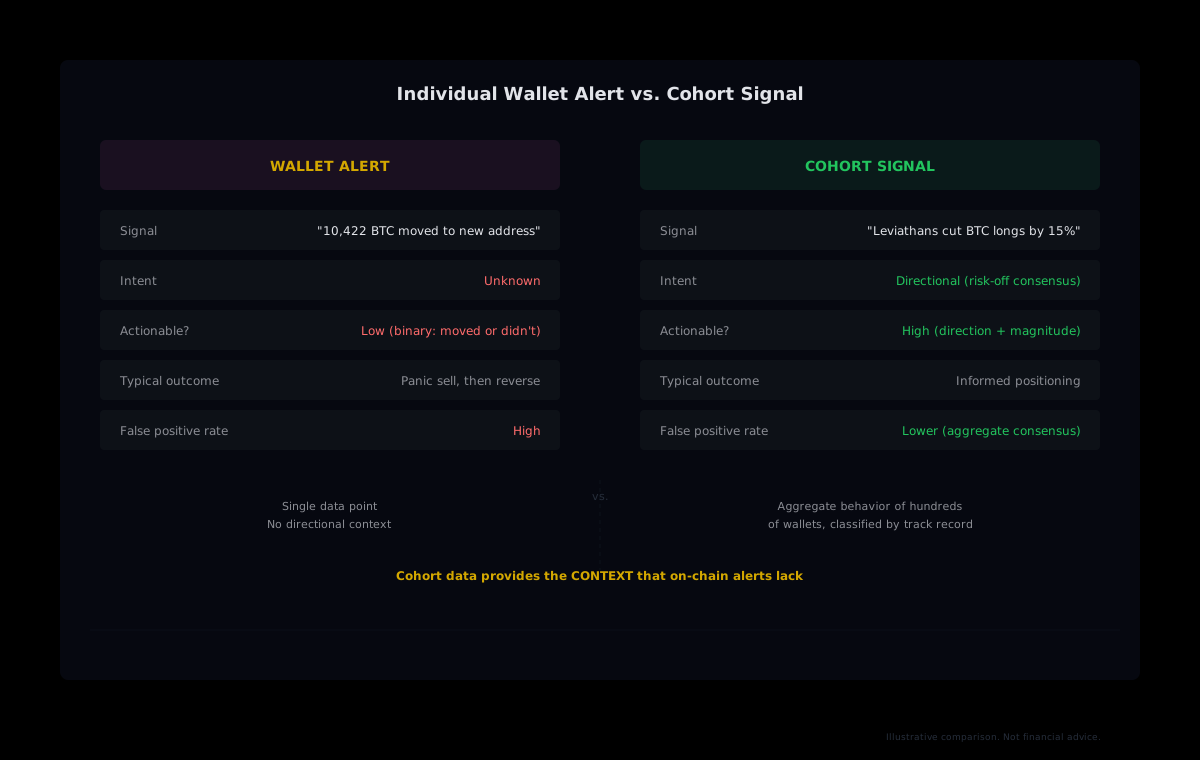
Consider the difference between these two signals:
- Wallet alert: "A wallet holding 5,000 BTC just transferred to an unknown address." This could mean anything. Panic or ignore?
- Cohort signal: "The Leviathan cohort ($5M+ perp equity) reduced net long BTC exposure by 15% over the past 6 hours, while the Money Printer cohort ($1M+ cumulative profit) also trimmed longs." This is a consensus move by the market's most capitalized and most profitable participants. Much harder to dismiss.
The first signal is binary: something happened. The second signal is directional: the smart money is repositioning, and you can see which way. Cohort analytics does not replace on-chain monitoring. It provides the context that on-chain alerts lack.
What each cohort tells you about a dormant wallet event
When a Mt. Gox-scale transfer hits the wire, the cohorts you want to watch are the ones with the most capital at risk and the most consistent track records. The Leviathan and Tidal Whale cohorts (size-based) tell you whether the largest accounts are hedging or holding steady. The Money Printer and Smart Money cohorts (PnL-based) tell you whether historically profitable traders are treating the event as a signal to act or a reason to stay put.
If both the size-based and PnL-based top cohorts are reducing exposure simultaneously, that is a stronger signal than any single wallet transfer. It means the participants with the most to lose and the most skill at protecting it are all moving in the same direction. When those cohorts hold steady or increase exposure after a whale alert, that is equally informative: the professionals are not worried.
Building a dormant wallet response system
The practical application of cohort data during whale events follows a three-step workflow: detect the event, check cohort positioning, then decide whether to act.
Step 1: Detect the transfer via on-chain monitoring.
Use Arkham Intelligence, Whale Alert, or any on-chain monitoring service to receive the initial alert. This gives you the raw fact: how many coins moved, from which address, to which address. Do not trade on this alone.
Step 2: Pull cohort positioning data from HyperTracker.
import requests

API_BASE = "https://ht-api.coinmarketman.com/api/external"
headers = {"Authorization": "Bearer YOUR_JWT_TOKEN"}

# Pull Leviathan cohort positioning on BTC
leviathan_metrics = requests.get(
    f"{API_BASE}/coins/metrics",
    headers=headers,
    params={
        "coin": "BTC",
        "segment": 7,  # Leviathan ($5M+ equity)
        "start": "2026-06-02T00:00:00.000Z"
    }
).json()

# Pull Money Printer cohort positioning on BTC
money_printer_metrics = requests.get(
    f"{API_BASE}/coins/metrics",
    headers=headers,
    params={
        "coin": "BTC",
        "segment": 8,  # Money Printer ($1M+ PnL)
        "start": "2026-06-02T00:00:00.000Z"
    }
).json()
Step 3: Compare cohort sentiment before and after the event.
# Check if top cohorts are reducing or holding exposure
for label, data in [("Leviathan", leviathan_metrics), ("Money Printer", money_printer_metrics)]:
    if data:
        latest = data[-1]
        long_pct = latest.get("longPercent", 0)
        short_pct = latest.get("shortPercent", 0)
        net_bias = long_pct - short_pct
        print(f"{label}: {long_pct:.1f}% long, {short_pct:.1f}% short, net bias {net_bias:+.1f}%")
        # Compare to prior reading to detect shift direction
If the Leviathan and Money Printer cohorts are holding steady or increasing long exposure after the transfer, the market's most informed participants are not treating it as a distribution event. If both cohorts are cutting exposure, that is a consensus risk-off signal from the traders who historically get it right most often.
Historical patterns: what cohorts did during past whale events
Dormant wallet reactivations are not new. Earlier this year, a Bitcoin whale that had been inactive since 2012 moved 2,100 BTC to a new address. In May 2026, another wallet that had been silent since November 2013 moved 500 BTC worth roughly $40 million. Each time, the cycle repeated: alert fires, social media panics, price dips, then recovers once the transfer is confirmed as non-exchange.
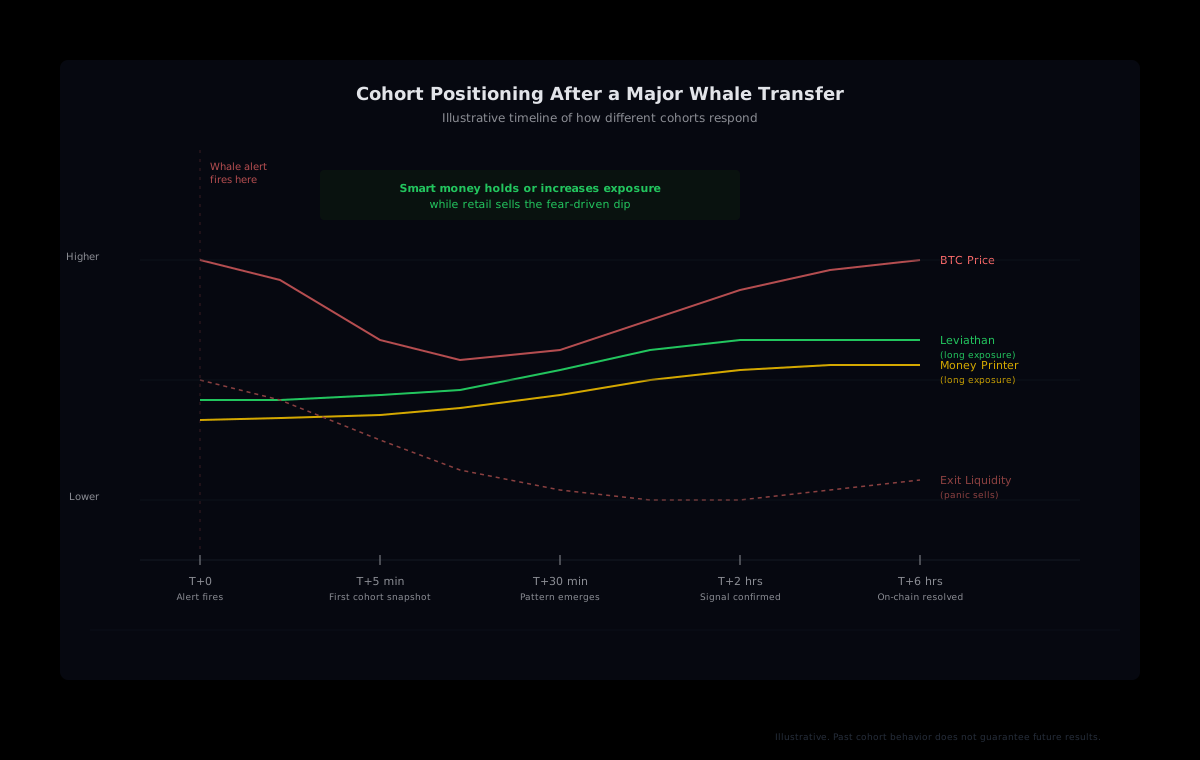
The pattern across these events is consistent. Bitcoin's largest holders and most profitable traders tend to do one of two things during a dormant wallet scare:
- Hold steady. The cohort positioning data does not shift meaningfully, which signals that informed participants view the transfer as noise. Price typically recovers within hours.
- Use the dip. Some cohorts increase long exposure on the fear-driven dip, effectively buying the panic that retail is selling. This shows up as a divergence between price action (declining) and smart money positioning (increasing).
The third scenario, where top cohorts actively reduce exposure during a whale alert, is the one that warrants defensive action. It is also the rarest. Most dormant wallet transfers resolve without any actual selling pressure, and the cohort data reflects that in real time.
The information edge and its limits
Cohort analytics narrows the gap between "coins moved" and "should I act," but it does not close it completely. Our data updates every 5 minutes, which means there is a window between the on-chain alert (instant) and the cohort positioning snapshot (next refresh cycle) where you are still operating on incomplete information. For Mt. Gox-scale events, this gap matters because the first few minutes after the alert are when most of the volatility occurs.
The practical implication: cohort data is better suited for the second-order decision than the first. It does not tell you whether to sell the instant you see a whale alert. It tells you whether to buy back after the dip, or whether the dip is likely to continue. That is a different and arguably more valuable signal, because the initial reaction is driven by fear and algorithms, while the recovery (or continuation) is driven by the positioning decisions of participants who have actually analyzed the situation.
There are also scope boundaries. HyperTracker's cohort analytics cover Hyperliquid perpetual futures, so the positioning data reflects how traders on that specific venue are responding. A Mt. Gox transfer involves spot BTC on the Bitcoin blockchain, which is a different market entirely. The signal is indirect: you are watching how the most sophisticated perp traders react to the news, using their reaction as a proxy for whether the transfer is likely to result in real selling pressure. This works because perp positioning tends to lead spot price action during fear events, but it is an inference, not a direct observation.
Track Cohort Shifts During Whale Events
HyperTracker classifies every wallet on Hyperliquid into 16 behavioral cohorts. When a dormant whale moves coins, our data shows you whether the market's most profitable traders are panicking or holding steady. Query cohort positioning, compare pre- and post-event snapshots, and make informed decisions instead of reacting to headlines.
A framework for the next dormant whale event
Mt. Gox still holds roughly 34,500 BTC. The October 2026 deadline means more transfers are coming. Beyond Mt. Gox, dormant Bitcoin wallets from the 2012-2014 era continue to reactivate as BTC trades well above the prices at which those coins were acquired. Each reactivation will produce the same cycle: alert, panic, price dip, resolution.
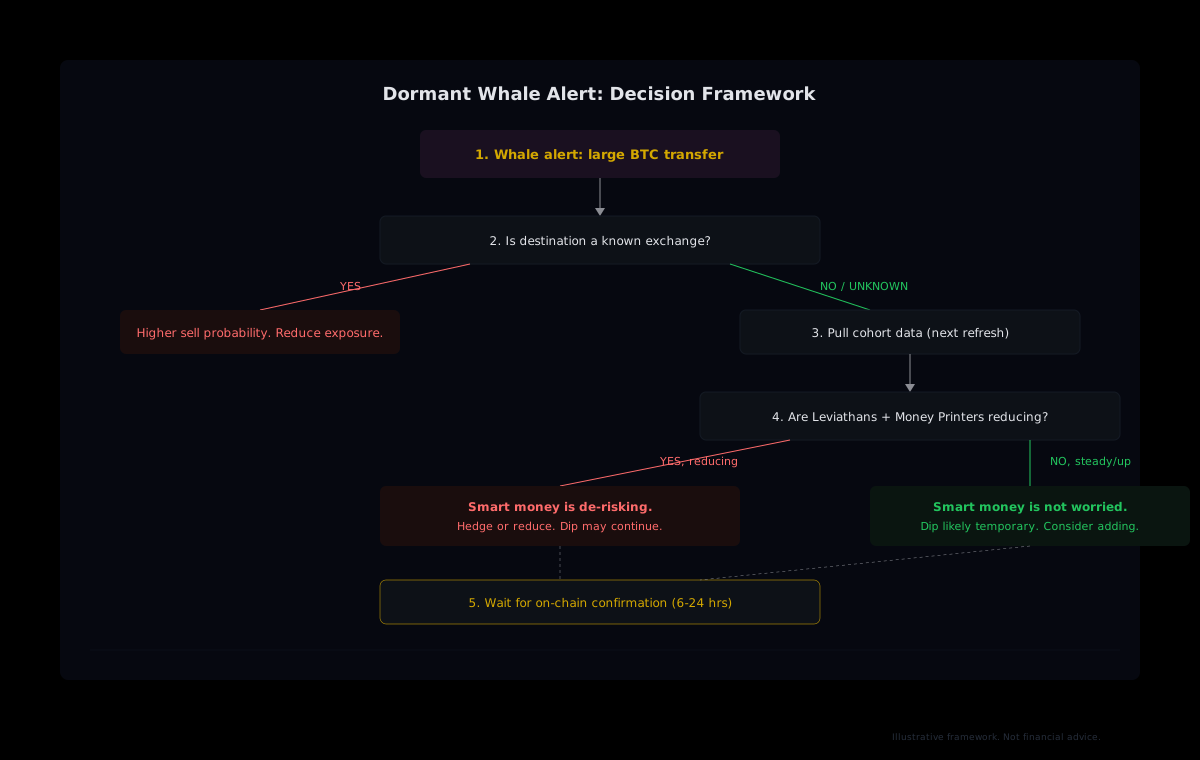
When the next alert fires, here is the decision tree:
- Receive the on-chain alert. Note the amount, source wallet, and destination. If the destination is a known exchange, the probability of actual selling pressure increases significantly. If it is an unknown address, proceed to step 2.
- Pull cohort data within the next refresh window. Check Leviathan, Tidal Whale, Money Printer, and Smart Money positioning on the affected asset. Compare to the snapshot from before the alert.
- If top cohorts hold or increase exposure: The smart money is not worried. The dip is likely fear-driven and temporary. Consider adding to existing positions or entering new ones on the dip.
- If top cohorts reduce exposure: The smart money is de-risking. The dip may have more room to run. Reduce exposure or hedge accordingly.
- Wait for confirmation. On-chain analysts typically determine the transfer's destination within 6-24 hours. Use that window to plan, then act on confirmed information rather than speculation.
The traders who consistently profit from whale events are not the ones with the fastest alerts. They are the ones who combine the raw on-chain signal with the aggregate intelligence of how the market's best participants are actually responding. That second layer, the cohort signal, is what separates informed positioning from panic trading. Next time Mt. Gox moves coins, check what the Money Printers are doing before you check what Twitter thinks.