
Hyperliquid Builder Codes API: Tracking Volume and Revenue per Builder
By CMM Team - 07-May-2026
Hyperliquid Builder Codes API: Tracking Volume and Revenue per Builder
Builder codes are the most underexplored corner of Hyperliquid analytics. Every trade on the platform can carry a builder identifier — a short tag that links the trade back to whoever built the interface, bot, or strategy that originated it. Builders earn a slice of the trading fees on flow they refer. The exchange exposes who they are, how much volume they have routed, and what they have earned. Almost nobody is reading it.
That gap is the opportunity. A few hundred lines of code against the builder endpoints gives you a real-time view of which interfaces and bot operators are growing share, where the next builder-led volume waves are coming from, and which builders are credible enough to partner with. This guide walks through what builder codes are, what HyperTracker's builder endpoints expose, and how to turn that data into actionable analytics.
The builder economy on Hyperliquid is bigger than most traders realize. By the end of this guide you will know how to pull builder lists, profile individual builders, and use builder activity as a leading indicator for which interfaces are about to drive the next wave of volume.
What a builder code actually is
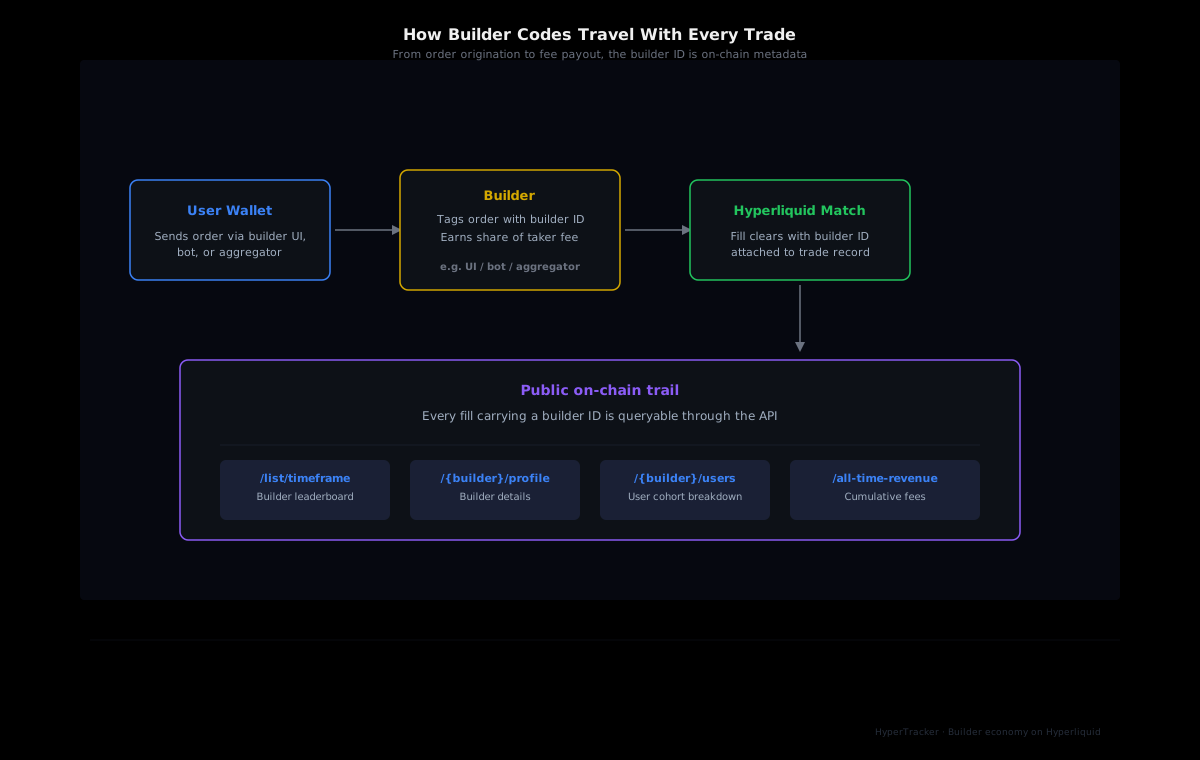
When a trade is sent to Hyperliquid, the order can include a builder field that identifies the entity originating the flow. This could be a hosted UI like a copy-trading frontend, a private trading bot operator, an embedded perpetuals integration in a wallet, or a DeFi aggregator routing perp orders. The builder identifier is on-chain metadata that travels with the trade.
Builders earn a configurable share of the taker fee on trades they originate, paid in real time as fills clear. The economics give builders a direct incentive to drive volume to Hyperliquid, which is why the platform's builder ecosystem has grown into one of the most active in DeFi perps. The flip side is that builder codes leave a public trail. Every fill carrying a builder ID is queryable. Every payout is visible. Every shift in market share between builders is data.
For traders, this matters in a few ways. First, builders are a leading indicator. New builders driving sudden volume often mean a new interface, a new bot strategy, or a new audience entering Hyperliquid before the rest of the market notices. Second, builder behavior is itself a signal. A builder whose flow has high taker concentration tends to drive market impact differently from a builder whose flow is mostly maker. Third, builder activity is filterable: you can analyze cohort positioning at the builder level, not just the wallet level, and see which interfaces are routing which kinds of strategies.
The four builder endpoints
HyperTracker exposes builder analytics through four endpoints under /api/external/builders.
/builders/list/timeframe/{timeframe}
Returns the ranked list of builders by volume over a configurable window. The timeframe parameter accepts allTime, month, week, or day. Each entry tells you the builder address or label, total volume routed, fill count, and fee revenue earned. This is the leaderboard equivalent for builders, sorted by activity.
GET /api/external/builders/list/timeframe/week
The weekly view is the most useful for spotting trends. New builders entering the top 50 over a few consecutive weeks are usually building a real audience rather than running a one-off campaign.
/builders/{builder}/profile
Returns the detailed profile for a specific builder: cumulative volume, all-time fee revenue, user count, fill type breakdown (perp vs spot), and metadata. Profile data is where you go after the leaderboard tells you which builder to investigate.
GET /api/external/builders/0xBUILDER_ADDRESS/profile
/builders/{builder}/users/timeframe/{timeframe}
Returns the wallets that have routed flow through this builder over the time window. Each entry includes the wallet address, fill count, volume, and the cohort assignment. This is the most powerful endpoint for understanding builder audiences. You can answer questions like: "what is the cohort distribution of users on builder X?" or "are builder X's users mostly Money Printers, or mostly Fish?"
/builders/all-time-revenue
Returns the cumulative fee revenue for every builder ever registered on Hyperliquid. Useful for ranking builders by economic size rather than recent activity. Some legacy builders have low recent volume but enormous all-time revenue from a peak period.
Building a builder leaderboard tracker
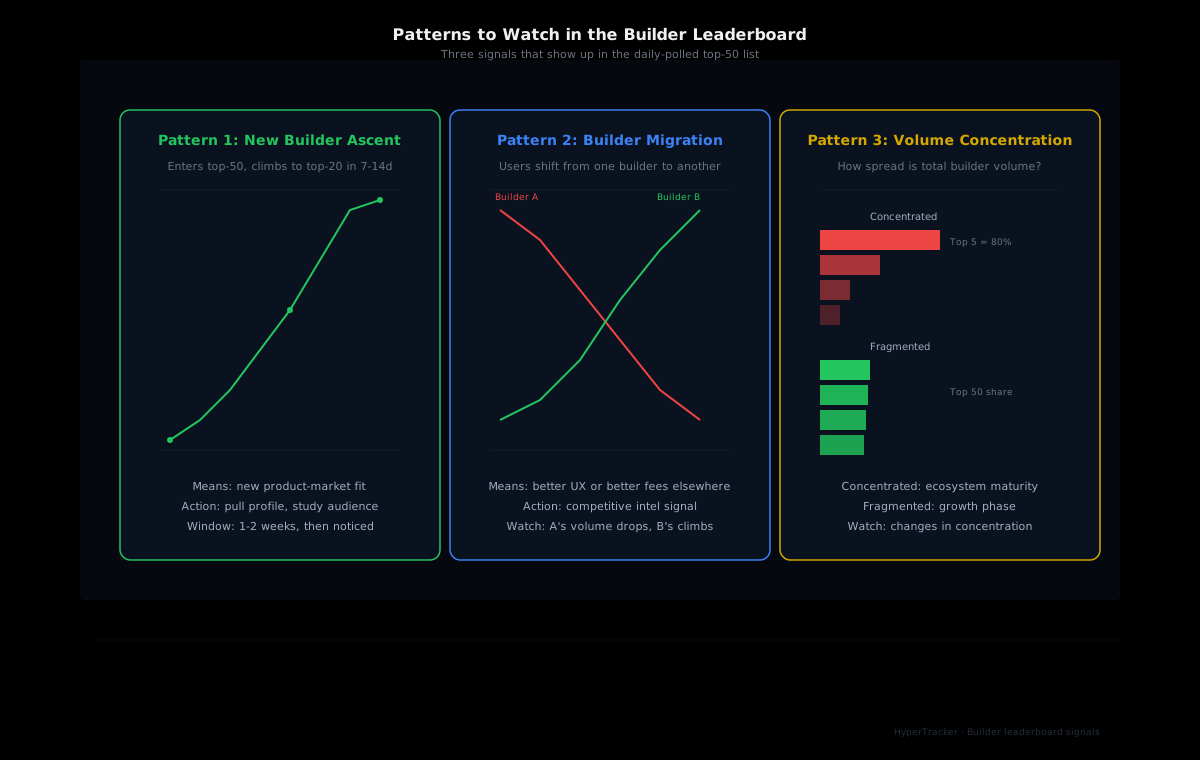
The simplest workflow is daily polling of the builder list endpoint to track composition changes:
- Pull the weekly top 50 builders by volume each day, store the snapshot.
- Compare today's list to yesterday's: who entered the top 50, who dropped out, who jumped or fell more than 5 positions.
- Pull the profile for any new entrants to investigate what kind of flow they are routing.
A few patterns to watch for:
New builder rapid ascent. A builder that enters the weekly top 50 and climbs into the top 20 over 7-14 days is usually a new interface or bot operator that has found product-market fit. By the time they hit the top 10, the entire ecosystem has noticed; catching them in the climb is more useful.
Builder migration. When users start routing through a different builder, the original builder's volume drops while the new one climbs. This often signals that a UI is improving fast or a competitor is offering better economics. Useful for both partnership decisions and competitive intelligence.
Volume concentration. If the top 5 builders account for an outsized share of total volume, the ecosystem is concentrated. If volume is spread across 50+ active builders, the ecosystem is fragmenting. Both regimes have implications for how you think about future growth.
Profiling a specific builder
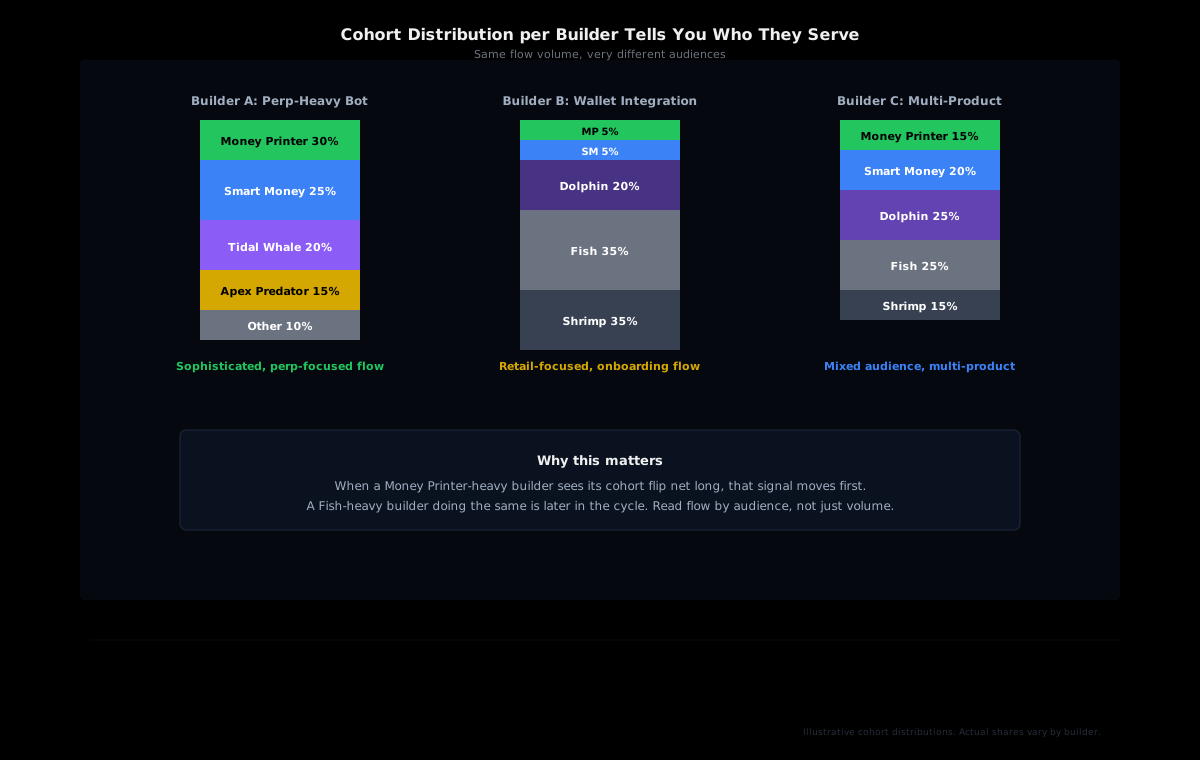
Once you have identified a builder worth investigating, the profile and users endpoints give you the full picture.
The profile endpoint tells you the basics: total volume, fee revenue, user count, perp vs spot mix. The users endpoint tells you the audience composition. Combine the two:
- Perp-heavy builders are usually trading bots, automated strategies, or perp-focused interfaces. Their user lists tend to skew toward more sophisticated cohorts (Smart Money, Money Printer, Tidal Whale).
- Spot-heavy builders are usually wallet integrations, swap UIs, or onboarding flows. Their user lists tend to skew toward smaller cohorts (Fish, Dolphin, Shrimp).
- Mixed builders (significant flow in both) usually indicate a multi-product interface or an aggregator routing diverse strategies.
The cohort distribution within a builder's user list is the most underused signal in the ecosystem. A builder whose users are 30% Money Printers and Smart Money is routing institutional-quality flow. A builder whose users are 90% Fish and Shrimp is running a retail-focused product. These are not better or worse, but they are different businesses, and the analysis you do should match the audience.
Using builder data as a leading indicator
Beyond profiling, builder data can serve as a leading indicator for broader market dynamics.
Volume waves. When a single builder starts routing 10x its normal volume in a 24-hour window, that almost always corresponds to either a new product launch, a referral campaign, or a market event that the builder's audience reacted to. Tracking sudden volume changes per builder gives you early warning of behavioral shifts.
Cohort shifts at the builder level. If a specific builder's user base is suddenly skewing toward higher-PnL cohorts, that builder is being adopted by more sophisticated traders. The reverse is also informative: if a builder's user base is skewing toward newer or smaller wallets, the product is working its way down-market.
Fee compression. If multiple builders simultaneously start lowering their effective fee take, that signals competition for routing. Builders that hold their fees while volume grows are the ones with real product moats.
Combining builder data with cohort positioning
The most powerful combination is builder data plus cohort positioning data. The builder endpoint tells you who is routing flow. The cohort endpoint tells you what positioning that flow represents.
A practical query pipeline:
- Pull the weekly top 25 builders.
- For each, pull the user list and aggregate the cohort distribution.
- Cross-reference with cohort positioning: if Builder X's users are mostly Money Printer wallets, and the Money Printer cohort just flipped to net long BTC, then Builder X's flow is probably about to lean long on BTC.
This is a kind of supply chain analysis for trading flow. Builders are the routers. Cohorts are the strategies. Watching where strategies are getting routed gives you a view of the market that single-wallet tracking cannot provide.
See the builder economy in real time
HyperTracker's API exposes builder lists, profiles, user breakdowns, and revenue data through a single authentication. Track every builder, watch leaderboard composition change daily, and use builder activity as a leading indicator for which interfaces and strategies are about to drive the next volume wave. Start with the free tier.
The visible Hyperliquid leaderboard tells you who is making money. Builder codes tell you who is routing the money. Both views matter; most traders only look at one.