
Hyperliquid Leaderboard API: Pulling Top Traders Programmatically
By CMM Team - 02-May-2026
Hyperliquid Leaderboard API: Pulling Top Traders Programmatically
The Hyperliquid leaderboard is one of the most-watched lists in DeFi. Click through to any session and you will find dozens of traders refreshing the page, scanning for who is up the most this week, who has gone parabolic this month, who keeps showing up across different time windows. The visible UI gives you the names, the PnL, the volume, and not much else.
The API gives you everything else. Programmatic access to the leaderboard means you can rank traders by any criterion you care about, filter by behavioral cohort, monitor leaderboard composition over time, and build alerts on top of changes in the standings. It also means you stop refreshing the page.
This guide covers how to use HyperTracker's leaderboard endpoints to pull top traders programmatically. You will see how the rankings are structured, how to filter by timeframe and cohort, and how to combine leaderboard data with cohort positioning to find traders worth following before everyone else does.
What the leaderboard endpoints expose
HyperTracker's leaderboard data is exposed through a small set of endpoints under /api/external/leaderboards. The core call returns a paginated list of traders ranked by realized PnL across a configurable time window.
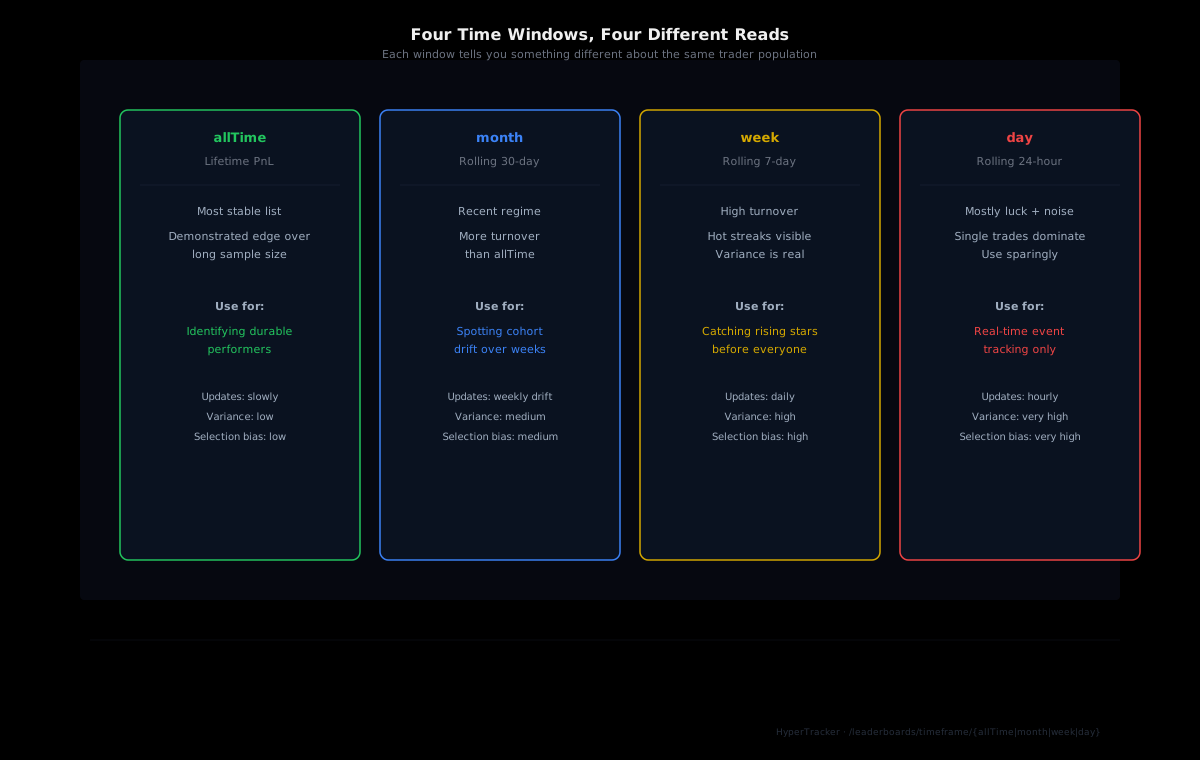
The four time windows available are:
allTime— cumulative PnL since each wallet started trading on Hyperliquidmonth— rolling 30-day windowweek— rolling 7-day windowday— rolling 24-hour window
Each leaderboard entry includes the trader's wallet address, realized PnL for the window, total trading volume, position count, and their cohort assignment. The cohort field is the key piece that you do not get from the public Hyperliquid leaderboard. Every trader on the list is already classified into one of the 16 size or PnL cohorts, so you can filter the rankings by behavioral category instead of just sorting raw numbers.
Pulling the top 100 by all-time PnL
The simplest call is the all-time leaderboard:
GET /api/external/leaderboards/timeframe/allTime?limit=100
This returns the top 100 wallets by lifetime realized PnL on Hyperliquid. The response is sorted descending, so the first entry is the highest-earning wallet. Each entry tells you the wallet address, the cumulative PnL, the total volume traded, and the cohort.
The all-time leaderboard is the most stable. The same names tend to occupy the top positions across weeks, because lifetime PnL changes slowly relative to short-term performance. This list is your starting point for finding wallets with demonstrated edge over a long enough sample size that the result is unlikely to be variance.
Comparing windows to find rising stars
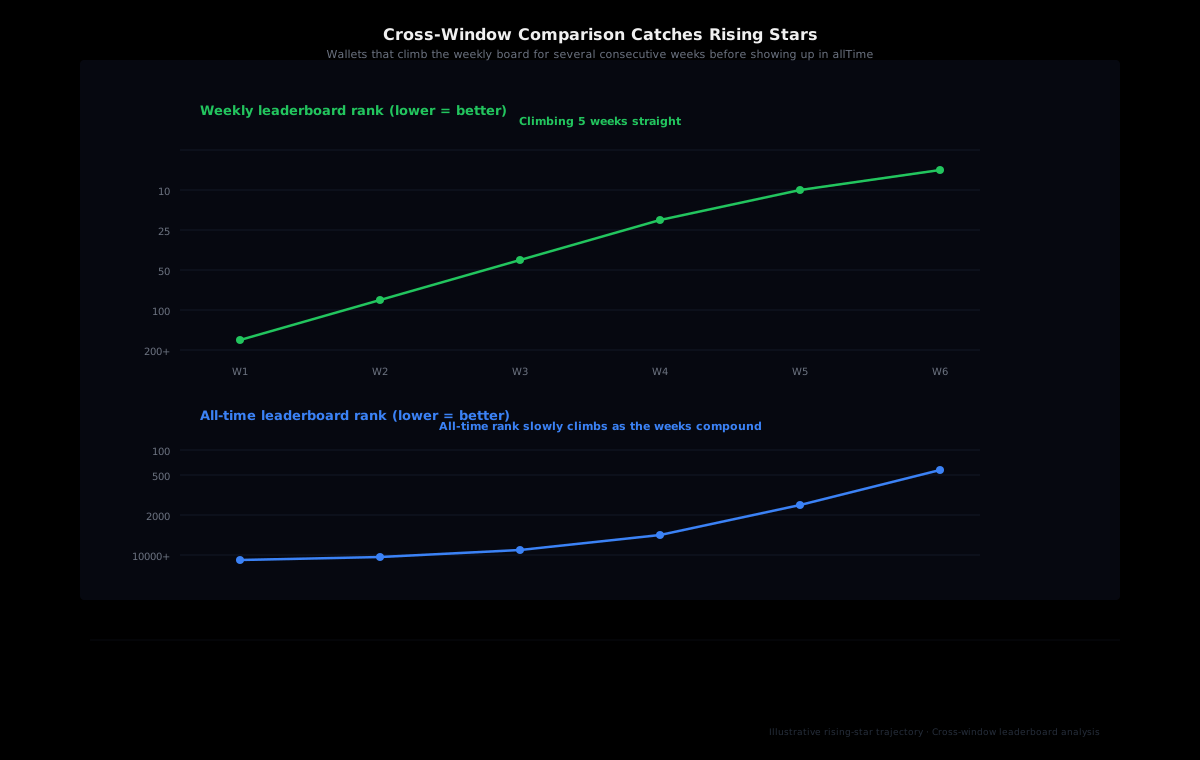
The interesting analysis starts when you compare leaderboards across time windows. A wallet that ranks in the top 100 by all-time PnL but does not appear in the weekly top 500 might be a wallet that had a big run two years ago and has gone quiet. A wallet that does not crack the all-time top 1000 but ranks #5 by weekly PnL might be a rising star, or might be on a lucky streak that will reverse.
A practical workflow:
- Pull the all-time top 500 once a week, cache the wallet addresses.
- Pull the weekly top 100 daily.
- Cross-reference. Wallets that appear in both lists are sustained performers. Wallets that appear in the weekly list but not the all-time list are either new traders or traders running hot. Wallets that drop out of the weekly list while remaining in the all-time list are cooling off.
The rising-star pattern is particularly valuable for early discovery. Wallets that show up in the weekly top 50 for two or three consecutive weeks, while their all-time rank slowly climbs, are demonstrating durable performance rather than a one-off lucky trade. By the time they show up in the all-time top 100, every other tracker has already noticed them.
Filtering by cohort
The leaderboard endpoint accepts a cohort filter, so you can restrict the rankings to a specific behavioral category. Three useful examples:
- Money Printer cohort top 50 — the 50 highest-PnL wallets among those who have crossed +$1M in cumulative profit. This is the elite-of-the-elite list, ranked within an already-elite group.
- Tidal Whale cohort top 50 — the 50 highest-PnL wallets among accounts with $1M to $5M in current equity. Useful for finding traders who manage large capital but are not yet in the Leviathan tier.
- Smart Money cohort weekly leaderboard — the highest-PnL wallets this week among those whose lifetime PnL is between +$100K and +$1M. Useful for catching mid-tier traders on a hot streak.
Cohort-filtered leaderboards remove the noise of cross-tier comparisons. Comparing a Leviathan running 1x leverage to a Dolphin running 20x is not particularly meaningful; both might rank well, but they are running entirely different strategies on different capital bases. Filtering by cohort gives you apples-to-apples comparisons within a behavioral category.
Combining leaderboard data with cohort positioning
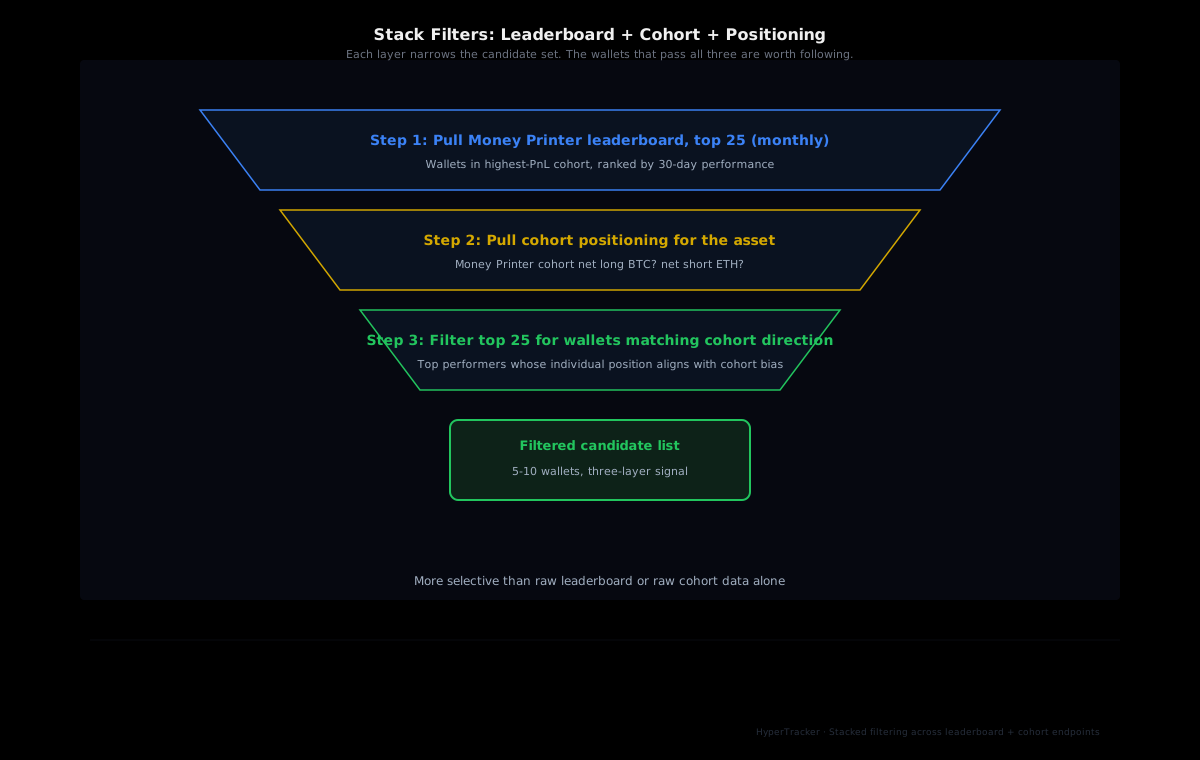
The most powerful combination is leaderboard data plus cohort positioning data. The leaderboard tells you who has performed well. The cohort positioning data tells you what cohorts (and by extension, what kinds of traders) are currently positioned for the next move.
A practical query pipeline:
- Pull the Money Printer cohort's aggregate positioning on BTC. Suppose it is net long.
- Pull the Money Printer leaderboard for the past month, top 25.
- Filter that list for wallets that are currently long BTC. These are the highest-performing wallets within the highest-PnL cohort whose positioning aligns with the cohort consensus.
That is a much more selective list than either the raw leaderboard or the raw cohort data on their own. You are looking at top performers within a top cohort whose specific positioning matches the cohort's directional view. The signal is filtered three times.
Monitoring leaderboard composition over time
Beyond the snapshot, the dynamics of leaderboard composition can themselves be a signal. A few patterns to watch:
High turnover in the weekly top 100 (many new entries each week) usually corresponds to volatile or trending markets where short-term performance varies wildly. The leaderboard is unstable.
Low turnover with the same names occupying positions for weeks corresponds to either grinding markets where edge is hard to find, or to a stable group of dominant traders who have figured out the current regime.
Cohort drift — when the cohort distribution of the top 100 shifts over time. If the leaderboard becomes more dominated by Leviathan-cohort wallets, that means capital is winning. If it shifts toward Money Printer-cohort wallets regardless of size, skill is winning. Both regimes exist and the transitions matter.
You can capture all of these by pulling the leaderboard daily and storing the data. Over weeks, patterns emerge that no single snapshot will show.
Building alerts on leaderboard changes
The leaderboard endpoint, polled regularly, becomes the basis for a useful alerting layer:
- New entry alerts: notify when a wallet joins the top 50 for the first time. Useful for early discovery.
- Cohort tier promotion alerts: notify when a wallet's classification crosses a cohort boundary. A wallet moving from Smart Money to Money Printer is a milestone worth tracking.
- Drop-off alerts: notify when a wallet that has been on the weekly top 100 for several consecutive weeks drops out. Could be a cooling-off signal, could be that they took profits and stopped trading.
- Rank change alerts: notify when a top-100 wallet jumps or falls more than N positions in a day. Big jumps usually mean a single large win or loss; investigating which is informative.
These are all queries against the same leaderboard endpoint with different tracking logic on the client side. The API returns the data; what you do with it is up to you.
Rate limits and pagination
The leaderboard endpoint supports pagination via limit and offset parameters. The Pulse tier ($179/mo) gives you 60 requests per minute, which is enough to pull the full top 1000 across all four time windows once an hour. Higher tiers (Surge, Flow, Stream) raise the rate limit and the monthly request quota for higher-frequency polling or larger leaderboard depths.
Most leaderboard analysis does not need second-by-second updates. Daily or hourly polling is plenty for the kind of pattern recognition described above. Save the higher-frequency polling for situations where you are actively trading off leaderboard moves in real time.
See the live leaderboard right now
HyperTracker exposes the Hyperliquid leaderboard via API across four time windows, with cohort filtering and the full classification metadata for every entry. Pull the top traders programmatically, build your own filters, and run alerts on composition changes. Start with the free tier.
The visible leaderboard tells you who is winning right now. The API tells you which winners are sustained, which are running hot, and which are starting to slip. Those distinctions are where the alpha lives.