
Prediction Markets Just Hit $50B a Month. Hyperliquid Wants In.
By CMM Team - 12-Aug-2026
Prediction Markets Just Hit $50B a Month. Hyperliquid Wants In.
In June 2026, prediction markets posted $50.7 billion in monthly volume, an all-time high. That number was under $5 billion nine months earlier. The sector grew tenfold in less than a year, driven by the 2026 FIFA World Cup, sports betting expansion on Kalshi, and a generational wave of retail interest in event contracts.
And now Hyperliquid is building its way in.
On August 1, the exchange opened permissionless HIP-4 deployments on testnet, letting builders create outcome markets on the same L1 that already processes $6 billion in daily derivatives volume. The timing is deliberate. Prediction markets are the fastest-growing segment in crypto, Kalshi just raised $1 billion at a $22 billion valuation, and Hyperliquid sees an opening that its perp-first architecture is uniquely positioned to exploit.
For perp traders and builders tracking Hyperliquid, this expansion changes the game. Here's how.
The Prediction Market Explosion, by the Numbers
The growth has been staggering. Combined monthly volume across Kalshi and Polymarket rose from under $5 billion in mid-2025 to nearly $24 billion by April 2026. Then the World Cup pushed volumes into a different stratosphere entirely, with Q2 2026 notional volume across all prediction markets hitting $113.8 billion.
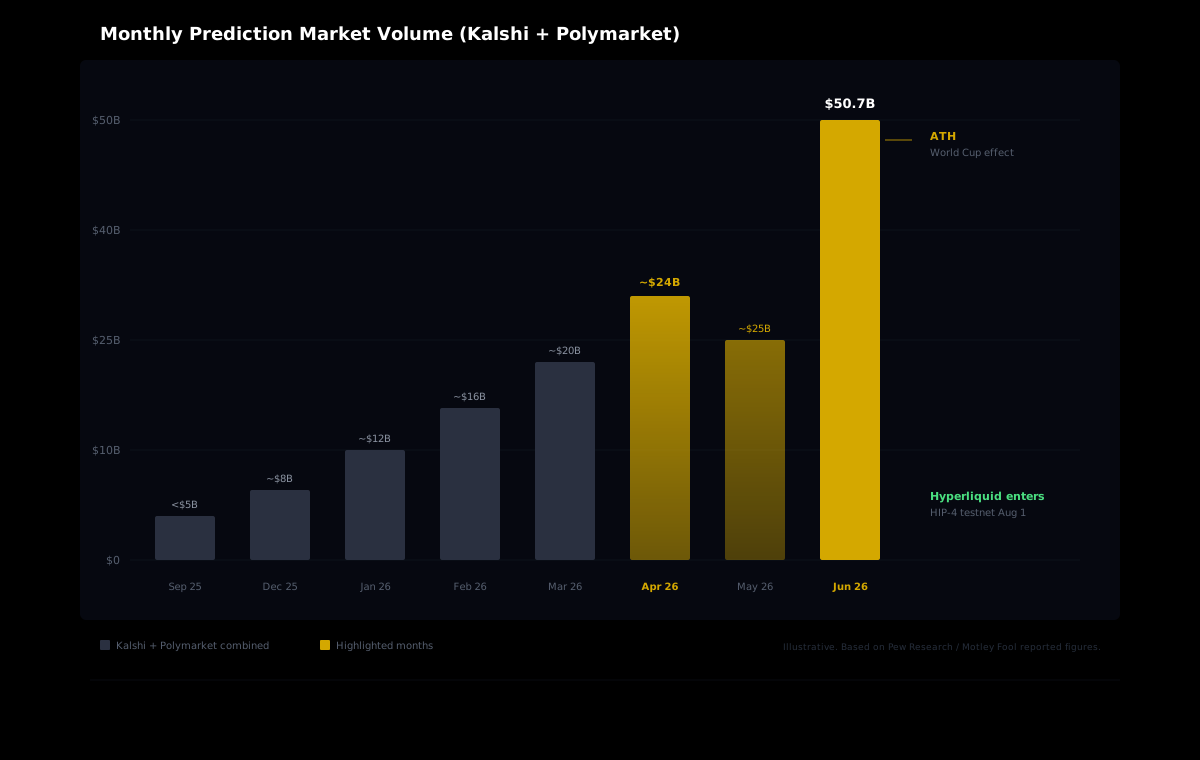
Kalshi now commands 62% of the market, up from 55% in January. Its dominance comes largely from sports, which accounts for roughly 72% of its trading volume. The World Cup alone made prediction market trading equivalent to about 27% of legal U.S. sports-betting volume, up from roughly 9% at the start of the year, according to H2 Gambling Capital estimates.
Meanwhile, Bernstein expects annual prediction market volume to rise from $51 billion in 2025 to approximately $1 trillion by 2030. That projection puts the sector on a trajectory closer to derivatives markets than to niche gambling platforms, which is exactly the framing Hyperliquid is betting on.
How HIP-4 Works (And Why It's Different)
HIP-4 adds outcome trading to Hyperliquid's L1. Instead of only trading leveraged perpetual futures, users can now trade binary outcome contracts on real-world events. But the mechanism design sets it apart from Kalshi and Polymarket in three important ways.
Permissionless deployment
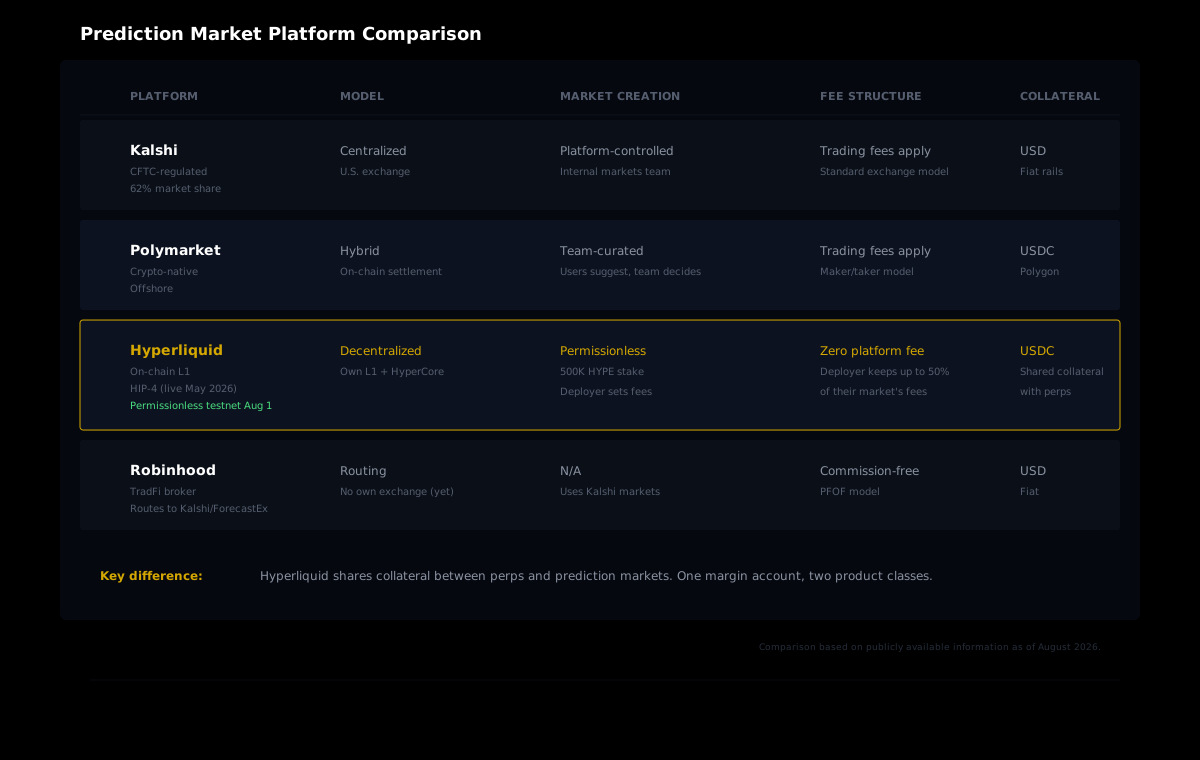
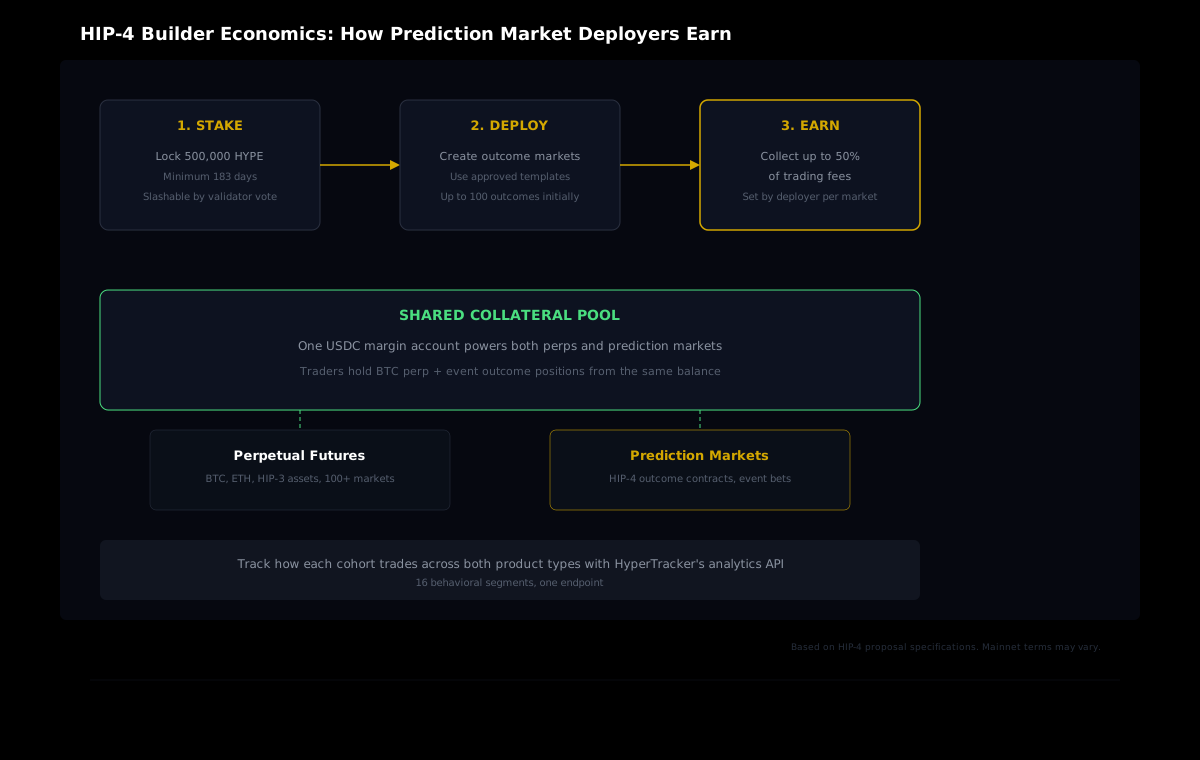
On Kalshi, the markets team creates every contract. On Polymarket, users can suggest markets, but the team decides which ones go live. Hyperliquid takes the opposite approach: anyone who stakes 500,000 HYPE for at least 183 days can deploy outcome markets using approved templates. Each deployer starts with capacity for up to 100 outcomes.
The staking requirement is steep. At recent prices, 500,000 HYPE represents roughly $32 million, which means this is an infrastructure play for well-capitalized builders, exchanges, and market makers. Poorly defined or unsettled markets can be slashed by validator vote, so deployers carry meaningful risk alongside the revenue opportunity.
Builder-first economics
Deployers can set fees and retain up to 50% of trading fees generated by their markets. This turns prediction market deployment into a builder revenue stream, similar to how Hyperliquid's builder codes work for referrals. The remaining fees flow into the protocol, where close to 99% of protocol fees are automatically used for HYPE buybacks.
Shared collateral with perps
This is the structural advantage. On Kalshi, your prediction market funds sit in a siloed account. On Polymarket, you deposit USDC on Polygon. On Hyperliquid, your USDC margin account powers both your perp positions and your prediction market bets. One balance, two product classes. A trader can hold a BTC perp position and an event outcome contract against the same collateral pool.
For builders, this means prediction market activity shows up alongside existing perp activity in the same analytics pipeline. Cohort behavior across both product types can be tracked through a single data infrastructure.
The Competitive Landscape: Four Players, Four Models
Prediction markets aren't monolithic. Each platform has carved out a different structural position, and understanding these distinctions matters for traders deciding where to allocate capital and for builders deciding where to ship products.
Kalshi is the regulated incumbent. As a CFTC-regulated exchange, it has the clearest legal standing in the U.S. market. Its dominance in sports contracts has driven exponential growth, though roughly 72% concentration in sports creates regulatory vulnerability. Kentucky's attorney general has already challenged whether sports-based event contracts constitute sports betting under state law.
Polymarket pioneered on-chain prediction trading but maintains centralized control over which markets go live. Its documentation states that "markets are created by the markets team," with users limited to suggesting ideas. This curated approach ensures quality but limits speed.
Robinhood enters as a distribution layer. It doesn't run its own prediction exchange. Instead, it routes flow into KalshiEx and ForecastEx, with a recently acquired exchange intended to close that gap.
Hyperliquid is building the permissionless infrastructure play. Zero platform fees for the exchange itself, revenue sharing for deployers, shared collateral with the largest on-chain perp exchange. Its first Bitcoin outcome market reportedly did roughly three times the volume of equivalent markets on Polymarket and Kalshi combined, though that was a single market in early days rather than sustained volume.
What This Means for Perp Traders
If you trade perpetual futures on Hyperliquid, HIP-4 changes your opportunity set in concrete ways.
Capital efficiency improves. Prediction market positions and perp positions share the same USDC margin. You don't need to fragment capital across Hyperliquid for perps and Polymarket for event bets. One pool funds everything. For traders running multiple strategies, that consolidation reduces the drag of idle capital sitting in a separate venue.
New hedging combinations emerge. Consider a scenario: you're long BTC perps headed into a Fed meeting, and you want event protection. On Hyperliquid, you could eventually hold a "BTC above $X by date Y" outcome contract alongside your perp position, managed from the same account. Today, doing this requires moving capital between platforms, dealing with different settlement currencies, and managing multiple gas environments.
Cohort behavior expands. When prediction market trading runs on the same chain as perp trading, the on-chain footprint of every wallet gets richer. A wallet that's classified as a Smart Money cohort member on perps now also generates prediction market activity that can be analyzed for conviction, risk tolerance, and directional bias. The behavioral signal surface area grows.
Builder angle: If you're building analytics tools on Hyperliquid, prediction market data adds a new dimension to wallet profiling. The same cohort classifications that track perp positioning can be extended to cover event trading patterns, giving builders a more complete picture of how different wallet segments allocate risk.
The Builder Opportunity (And the $32 Million Gate)
The 500,000 HYPE staking requirement creates a specific kind of competitive landscape. At roughly $32 million, this is the most capital-intensive permissionless deployment barrier in DeFi. That's intentional. Hyperliquid wants well-capitalized deployers who have skin in the game and economic incentive to run clean, properly-resolved markets.
The staking requirement also ties prediction market growth directly to HYPE demand. Every new deployer removes 500,000 tokens from circulation against a circulating supply of roughly 253 million. If ten deployers launch, that's 5 million HYPE locked for at least six months, roughly 2% of circulating supply absorbed by a single product category.
For builders considering deployment, the economics work like this: you stake, you deploy markets using approved templates, you set fees up to 50%, and you earn revenue from every trade in your markets. Poorly constructed markets risk slashing by validator vote, so there's both carrot and stick.
The testnet on August 1 lowered the entry to 100 HYPE for testing. Mainnet permissionless deployment is expected later in 2026. Builders who want to experiment can do so now without committing the full stake.
Open Questions and Risks
Hyperliquid's prediction market push is ambitious, but several things remain unresolved.
Template constraints limit speed. Market templates must be approved by validators, which caps how quickly Hyperliquid can replicate Polymarket's political catalog or Kalshi's deep sports book. The permissionless label applies to deployment, not to template creation. If validator governance moves slowly, it creates a bottleneck for market diversity.
Oracle and resolution risk. Every prediction market lives or dies by its resolution mechanism. Who decides the outcome? How are disputes handled? The slashing mechanism punishes deployers for poorly defined markets, but it doesn't eliminate the inherent ambiguity of real-world events. Oracle reliability at scale has been a persistent challenge across DeFi, and prediction markets surface it in its most consequential form.
Regulatory overhang. Kalshi spent years securing CFTC approval. Polymarket operates offshore. Hyperliquid's permissionless approach raises its own regulatory questions, particularly for deployers who might create sports-related outcome markets that look similar to regulated sports betting. The Kentucky AG's challenge to Kalshi's sports contracts suggests that regulators are paying attention to the category.
Liquidity fragmentation. More platforms competing for prediction market volume doesn't automatically mean deeper markets. If liquidity fragments across Kalshi, Polymarket, and Hyperliquid, each venue could end up with thinner books and wider spreads. Hyperliquid's counter-argument is that shared collateral with its perp market creates natural cross-pollination, but that thesis is untested at scale.
Tracking Prediction Market Behavior with Cohort Data
As prediction market activity grows on Hyperliquid, the ability to analyze who is trading becomes as important as what they're trading. Our cohort analytics already classify every wallet into one of 16 behavioral segments across two dimensions: position size (from Shrimp at under $250 to Leviathan at $5M+) and track record (from Money Printer at +$1M all-time to Giga-Rekt below -$1M).
When prediction market trades run on the same chain, in the same margin system, from the same wallets, they become part of our behavioral dataset. Builders can query our data to see how Smart Money wallets position on events relative to their perp exposure, whether Whale-class wallets are hedging directional bets with outcome contracts, or if the Leviathan cohort uses prediction markets differently than the retail segments.
That visibility is the difference between trading blind and trading informed, and it's our intelligence advantage. Kalshi and Polymarket don't expose wallet-level behavioral analytics.
Track Cohort Behavior Across Perps and Prediction Markets
HyperTracker's API classifies every Hyperliquid wallet into 16 behavioral cohorts. As prediction market activity grows, our data captures the full picture.
The Bottom Line
Prediction markets just had their breakout year. Monthly volume went from under $5 billion to over $50 billion in nine months, and the sector is on a trajectory that makes it relevant to every derivatives trader, including perp-native audiences.
Hyperliquid's entry matters because it collapses the wall between perps and predictions. Same collateral, same chain, same analytics pipeline. For builders, it opens a new revenue stream. For traders, it unlocks capital efficiency and hedging combinations that don't exist when these products live on separate platforms.
The steep staking requirement will filter the field. The template governance will cap early market diversity. The oracle and regulatory risks are real. But the structural bet, that prediction markets belong inside a unified trading L1 rather than on standalone platforms, is the most interesting thesis in DeFi right now. If it works, the builders who moved first will be the ones collecting fees on a trillion-dollar market.