
Robinhood Chain Crossed $400M TVL. Its Perps Volume Is Under $6M.
By CMM Team - 21-Jul-2026
Robinhood Chain Crossed $400M TVL. Its Perps Volume Is Under $6M.
Robinhood Chain just crossed $400 million in total value locked, barely three weeks after its July 1 mainnet launch. That's a tenfold jump from the $39 million sitting on-chain three days post-launch, and it makes Robinhood one of the fastest capital ramps any new Layer 2 has ever pulled off.
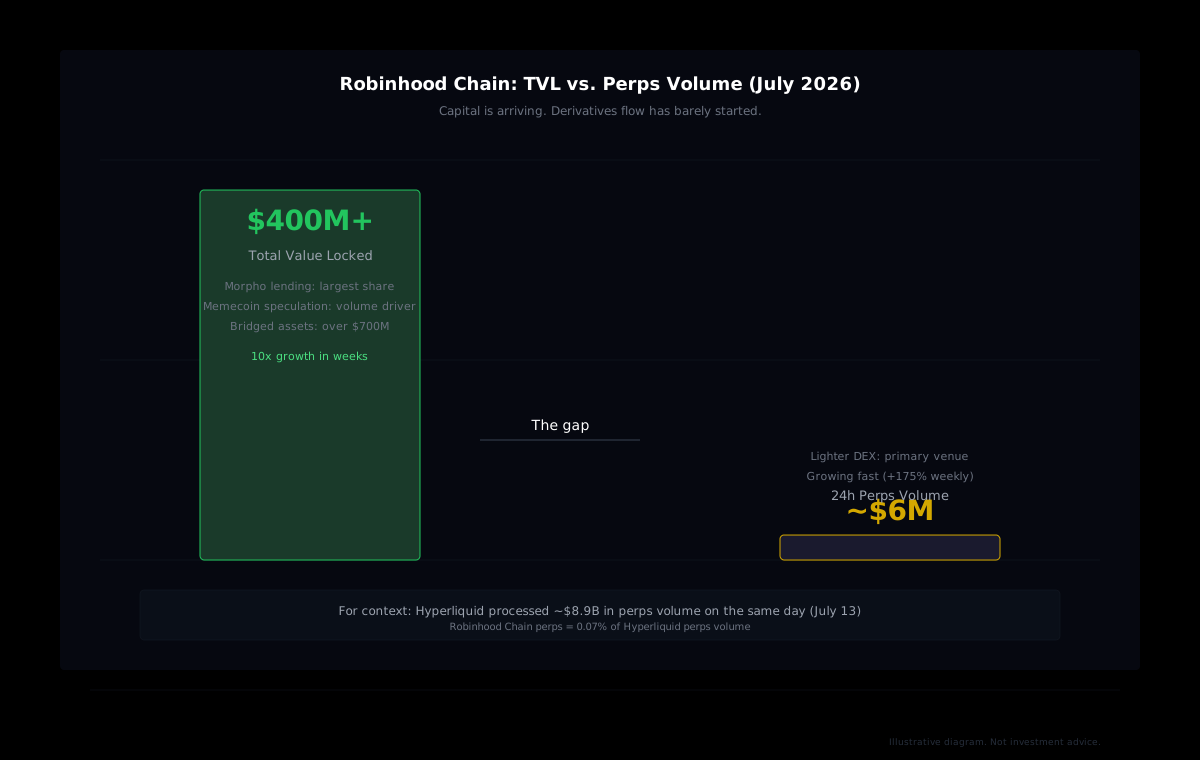
But scroll past the TVL headline and the picture looks different. Perpetual futures volume on Robinhood Chain hit $5.9 million on July 13. Hyperliquid processed $8.9 billion on the same day. That's a 1,500-to-1 ratio. Capital is flooding in, but it's going to memecoins and lending pools, because perps require a level of on-chain comfort most retail users don't have yet.
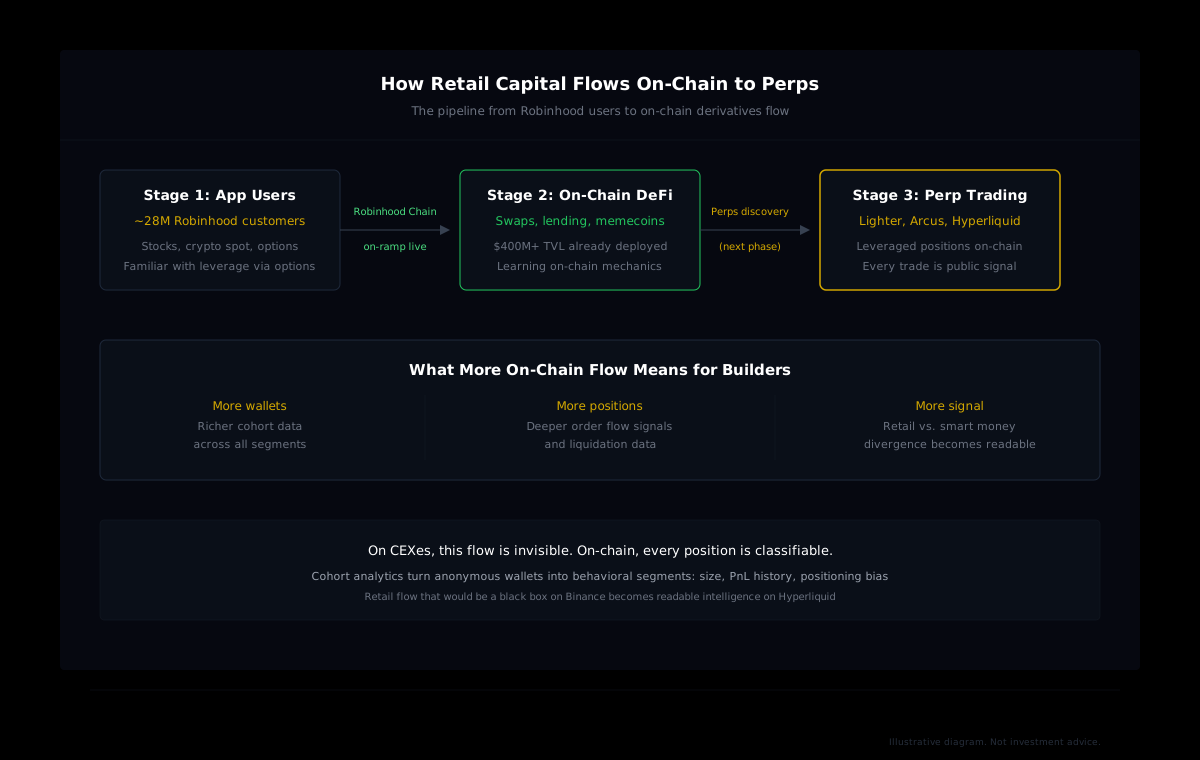
The gap won't last forever. Nearly 28 million Robinhood customers now have a one-click bridge to on-chain trading. When even a fraction of them graduate from spot swaps to leveraged positions, the perp DEX landscape shifts in ways that matter for builders, quants, and anyone watching smart money flows.
The Numbers Behind the TVL Surge
Robinhood Chain launched on July 1, 2026 as a permissionless Ethereum Layer 2 built on the Arbitrum stack. The growth since then has been relentless.
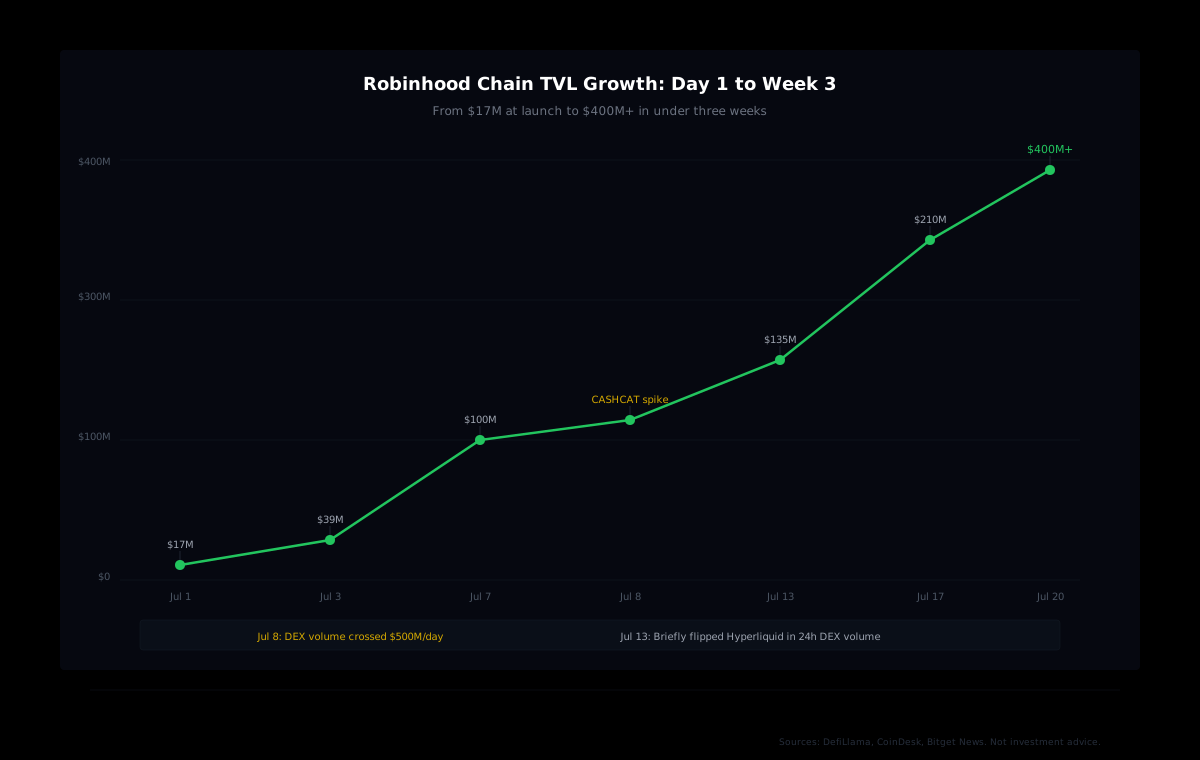
TVL climbed from roughly $17 million at launch to $39 million by day three, crossed $100 million by the end of week one, and reached about $135 million by July 13 according to CoinDesk's analysis of DefiLlama data. By mid-July, Bitget News reported the chain had crossed the $400 million mark.
DEX volume told an even more dramatic story. The chain hit $878 million in 24-hour DEX volume on July 12, briefly leapfrogging both Base and Ethereum mainnet. On July 10, it even overtook Hyperliquid in spot DEX volume for a day. The chain processed over 52 million transactions and approached one million active addresses within its first few weeks.
Where the Capital Actually Went
The TVL headline is real, but the composition reveals what kind of users showed up. According to CoinDesk, roughly $90 million of the initial TVL sat in Morpho's lending protocol, which powers Robinhood Earn's yield product. By mid-July, Morpho had grown to approximately $133 million, with Uniswap holding around $55 million.
The memecoin narrative dominated volume. A cat-themed token called CASHCAT surged over 2,100% in its first week and briefly reached a $156 million market cap, which was 12 times larger than the chain's entire tokenized real-world asset market. On July 8, memecoin speculation drove DEX volume past $500 million in a single day.
Meanwhile, tokenized real-world assets, the stated long-term focus of Robinhood Chain, accounted for just $12.81 million in total. Tokenized stocks made up $10.68 million of that, with U.S. Treasuries at a mere $410,000.
The bridged vs. deployed gap: CoinDesk reported that $734 million had been bridged to Robinhood Chain, but only $211 million was actually deployed into DeFi protocols. Over $500 million was sitting idle in wallets, waiting for the next move.
The Perps Volume Gap
Here's where the story gets interesting for derivatives traders. Despite all that capital and activity, perpetual futures volume on Robinhood Chain barely registered. CoinDesk reported $5.9 million in perps volume on July 13. On the same day, Hyperliquid processed $8.9 billion.
The infrastructure exists. Lighter, a perp DEX backed by Robinhood Ventures, launched as the chain's official derivatives partner on day one. Arcus, built by the former dYdX team, pairs stock tokens with crypto perpetuals. Both are live. But the users haven't migrated to leverage yet.
This isn't surprising if you think about the user journey. Most Robinhood customers came from stock trading. They know buy-and-hold. Some know options. Very few have experience with perpetual futures, hourly funding rates, or cross-margin liquidation mechanics. On-chain perps add another complexity layer: wallet management, gas (even with Robinhood covering fees for 90 days), and the mental shift from custodial to self-custody trading.
So the current state is predictable: retail capital shows up, parks in yield products and memecoins (familiar, low-complexity), and hasn't yet discovered the derivatives surface. The question is when that changes, because the on-ramp already exists.
Why Retail Perp Flow Matters for On-Chain Analytics
When trading happens on a centralized exchange like Binance, the flow is invisible. Positions, fills, and liquidations are locked behind the exchange's walls. When that same activity moves on-chain, every transaction becomes public and classifiable.
This is the structural shift that makes the Robinhood Chain TVL story relevant beyond just "another L2 with fast growth." More users trading on-chain means more signal. More signal means better analytics for everyone building on top of it.
Consider what changes when retail flow goes on-chain at scale:
- Cohort segmentation becomes richer. Right now, on-chain perp analytics classify wallets by size and performance. When millions of retail wallets enter the picture, the lower cohorts (Shrimp and Fish-tier accounts, the sub-$10K wallets) fill out with real behavioral data. The contrast between what small wallets do and what large wallets do becomes sharper and more statistically meaningful.
- Order flow patterns emerge at scale. Retail tends to buy momentum and sell panic. That's well-documented on CEXes, but invisible to outside observers. On-chain, those patterns become readable through fills data, position changes, and stop/take-profit clustering. Builders can quantify retail sentiment instead of guessing at it.
- Smart money signals get cleaner. The value of tracking what experienced traders do depends partly on having a large population of less-experienced traders to contrast against. More retail noise makes the smart money signal clearer, because the divergence between cohorts becomes more pronounced.
The Hyperliquid Comparison
Robinhood Chain briefly flipped Hyperliquid in 24-hour spot DEX volume on July 10, but that comparison obscures more than it reveals. Hyperliquid's TVL sits around $5.9 billion, over 14 times Robinhood Chain's peak. And derivatives, where Hyperliquid dominates with 60-80% market share in decentralized perpetuals, is an entirely different product category from spot memecoin trading.
The two chains serve different functions today. Robinhood Chain is a retail on-ramp with DeFi primitives. Hyperliquid is a purpose-built derivatives exchange with deep liquidity, an on-chain orderbook, and a cohort-level analytics layer that makes its flow data actionable. They're not competitors in any meaningful sense right now.
But the pipeline matters. Robinhood's nearly 28 million users represent the largest untapped pool of potential on-chain derivatives traders in crypto. As those users get comfortable with on-chain mechanics (and the 90-day gas subsidy helps with that), some percentage will seek leverage. Some will discover perps. And when they do, they'll trade on whichever venue has the best execution, liquidity, and product depth.
Hyperliquid's advantage isn't just being first. It's having the infrastructure to process and analyze that flow once it arrives. With 16 behavioral cohorts tracking wallets by size and all-time PnL, smart money positioning data, order flow snapshots, and liquidation risk scoring, Hyperliquid gives builders the tools to actually do something with all that new on-chain signal.
What Builders Should Watch
If you're building trading tools, bots, or analytics products on Hyperliquid, Robinhood Chain's TVL surge is a leading indicator worth tracking. Here's the sequence that matters:
- Bridge volume tells you capital is moving. Over $734 million has already been bridged to Robinhood Chain. That capital has to go somewhere, and lending yields compress as more deposits arrive. Eventually, users look for higher returns, which means leverage.
- Perps volume growth signals user sophistication. The current $5.9 million is a baseline, and weekly perps growth has been accelerating rapidly. When that figure starts crossing $50-100 million consistently, it means retail is graduating from spot to derivatives.
- Cross-chain perp flow creates opportunity. A trader who discovers perps on Robinhood Chain's Lighter or Arcus might eventually compare execution quality across venues. Hyperliquid's sub-second finality, deeper liquidity, and broader asset coverage become the natural upgrade path.
The analytics angle: Our data tracks 16 behavioral cohorts across Hyperliquid, eight by wallet size and eight by all-time PnL. When a wave of retail flow hits on-chain perps, the lower cohorts (Shrimp at $0-$250, Fish at $250-$10K) fill out with statistically significant sample sizes. That makes cohort-level signals more reliable for everyone building on top of our API.
A Market Waiting to Convert
The numbers tell a clear story: capital is arriving on-chain faster than users are discovering derivatives. Robinhood Chain has the TVL, the transaction volume, and the user base to generate meaningful perp flow. It just hasn't happened yet because the typical retail user needs time to progress from swaps and yield farming to leveraged positions.
For perp DEX builders, this is a setup worth monitoring. The same retail wave that drove Robinhood's stock trading business to nearly 28 million customers is now one bridge click away from on-chain derivatives. When that conversion starts at scale, every on-chain analytics layer becomes more valuable, because there's simply more flow to classify, aggregate, and act on.
Track What Smart Money Does Before Retail Arrives
HyperTracker's API classifies every wallet on Hyperliquid into 16 behavioral cohorts by size and PnL. See how Money Printers and Leviathans position before the next wave of retail flow hits.
The gap between Robinhood Chain's TVL and its perps volume won't stay this wide. Retail users always find leverage eventually. The question is whether you'll have the analytics infrastructure in place to read their flow when they do.