
The CLARITY Act Stalled. Perp DEX Builders Can't Afford To.
By CMM Team - 09-Aug-2026
The CLARITY Act Stalled. Perp DEX Builders Can't Afford To.
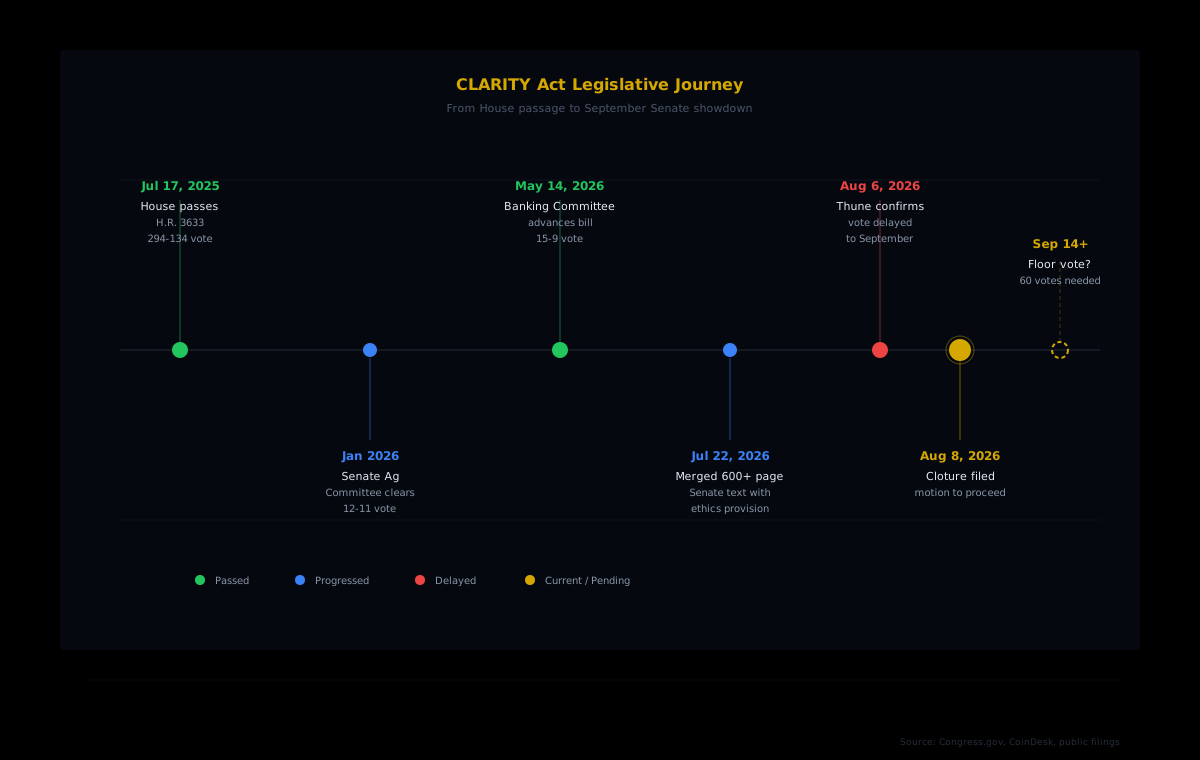
The CLARITY Act was supposed to pass the Senate before August recess. It didn't. On August 6, Senate Majority Leader John Thune confirmed the vote would be delayed, telling reporters "the Dems are insistent on no Clarity vote." Two days later, Thune filed a cloture motion on the motion to proceed to H.R. 3633, a procedural step that keeps the bill alive for a September floor vote when senators return on September 14.
The bill needs 60 votes to clear the Senate. That means at least 10 Democratic senators crossing the aisle. Right now, the votes are not there. Three disputes remain unresolved: ethics rules for federal officials with crypto holdings, stablecoin yield restrictions, and how far DeFi developer protections extend.
If you build on Hyperliquid or any other perp DEX, this is not background noise. The CLARITY Act decides whether the assets traders swap on your platform are "digital commodities" under the CFTC or "investment contracts" under the SEC. That distinction changes who regulates you, what you must register as, and whether your users in the United States can legally access your product. The legislative limbo itself is a risk factor, because your architecture decisions today will either align with the eventual framework or require expensive rewrites later.
The Three-Category Framework That Matters
At its core, the CLARITY Act creates a new legal category called a "digital commodity." This is the category most tokens traded on perp DEXes would fall into, because the definition is tied to blockchain functionality rather than investment expectations.
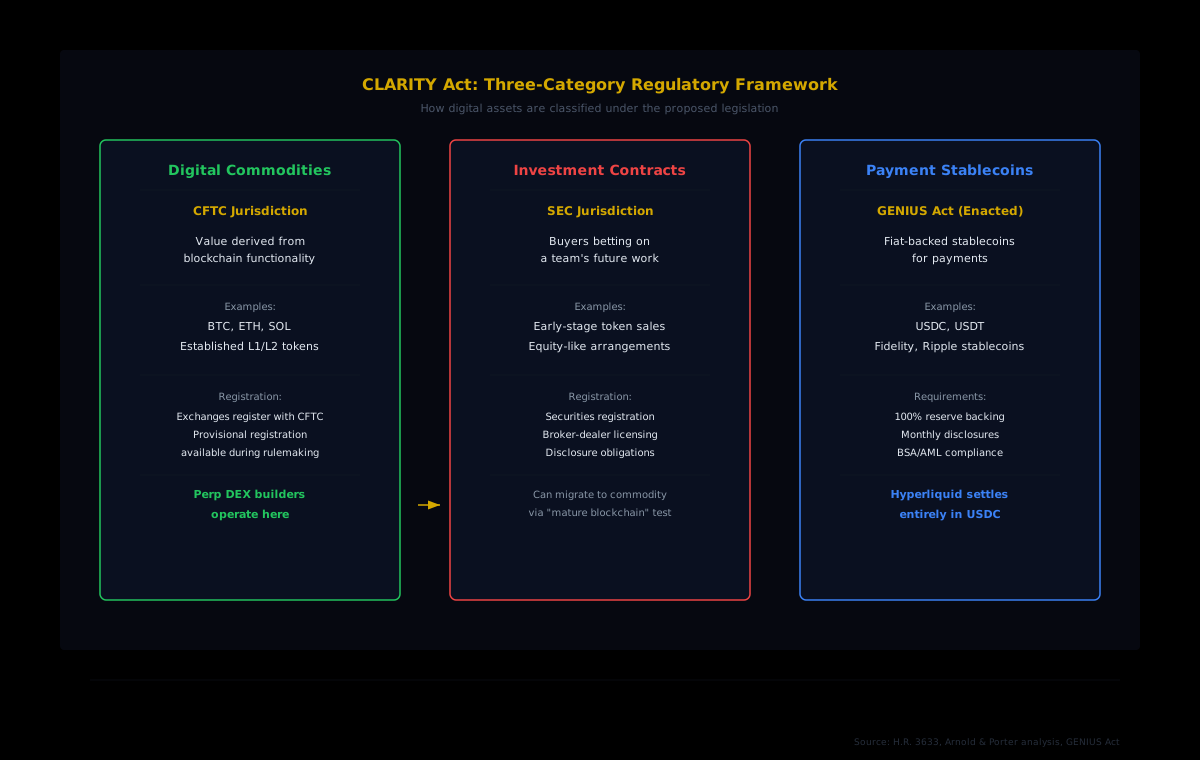
The framework splits digital assets into three buckets:
- Digital commodities (CFTC jurisdiction): Tokens whose value derives from a functioning blockchain. Bitcoin and Ethereum are the obvious examples, but the category could include most established layer-1 and layer-2 tokens. The CFTC would gain exclusive jurisdiction over spot markets for these assets.
- Investment contracts (SEC jurisdiction): Tokens sold to raise capital for a project, where buyers are betting on a team's future work. Early-stage token sales and equity-like arrangements stay with the SEC.
- Payment stablecoins (joint oversight): Already covered by the GENIUS Act, which President Trump signed on July 18, 2025. Requires 100% reserve backing, monthly disclosures, and priority redemption for holders in insolvency.
The key mechanism is the "mature blockchain" test. A token can start as an investment contract (SEC territory) and migrate to digital commodity status (CFTC territory) once the network becomes "sufficiently decentralized" with no single party controlling it. This matters because many tokens listed on Hyperliquid for perpetual trading would need to pass this test to land in the CFTC bucket rather than the SEC's.
Where Perp DEX Builders Sit in the Framework
Perpetual futures are derivatives. The CFTC already regulates crypto derivatives like Bitcoin futures and options. The CLARITY Act does not change that. What it changes is the underlying asset classification, which determines who regulates the spot market that your perp contracts reference.
If a token is classified as a digital commodity, the CFTC supervises its spot market. Perp DEXes listing that token's perpetual contract operate in CFTC territory, a familiar regulatory environment for derivatives platforms. The CFTC under Chairman Michael Selig (confirmed after serving as chief counsel of the SEC's Crypto Task Force) has been actively working to onshore perpetual futures through a 12-month "Crypto Sprint" initiative.
If a token remains classified as an investment contract, the SEC supervises it. Listing perpetual contracts on a token in SEC territory creates a different set of compliance requirements: securities registration, broker-dealer licensing, and disclosure obligations that most DeFi protocols are not built to handle.
The practical question for Hyperliquid builders: which of the tokens your users trade will end up in which category? And how do you architect your product for the uncertainty period before those classifications are finalized?
The DeFi Exemptions You Should Know About
The bill carves out exemptions from registration for specific decentralized activities. If you validate network transactions, provide computational work, operate user interfaces for blockchain systems, or develop trading protocols and wallet software, you may be exempt from regulatory authority under the CLARITY Act.
There is a critical limitation: these exemptions do not restrict anti-fraud or anti-manipulation enforcement by either the SEC or the CFTC. Building a non-custodial protocol does not grant immunity from market manipulation charges. It means you likely would not need to register as an exchange, broker, or dealer, but both regulators retain the power to investigate fraud on your platform.
The bill also defines when a platform retains too much centralized control to qualify for the exemption: if the controlling entity can exclude users, grant itself special privileges, or unilaterally modify the software, the platform is treated as centralized and must comply with full registration requirements.
The DeFi Sandbox Provision
The Senate version includes a proposed DeFi sandbox, a supervised space where decentralized finance projects can operate without immediately triggering full securities law requirements. For builders experimenting with new perp mechanics, liquidation models, or order-matching systems, this could provide regulatory cover during early development phases.
The bill also commissions a joint SEC, CFTC, and Treasury study on DeFi's size, risks, and integration with traditional markets. This means the hardest structural questions about DeFi regulation are being deferred rather than resolved in this legislation. Builders should expect additional rulemaking after the Act passes, whenever that happens.
The Registration Pathway for Exchanges
If your product functions as an exchange (matching buyers and sellers of digital commodity perpetual contracts), the CLARITY Act requires CFTC registration with compliance mandates that include listing standards, trade surveillance, capital adequacy, conflicts of interest policies, reporting, and system safeguards.
Customer protection requirements are substantial: mandatory fund segregation with qualified custodians, risk-appropriate retail disclosures, and futures association membership.
One practical mechanism worth noting is provisional registration. This lets exchanges and brokers register with the CFTC and keep operating while final rules are written, rather than waiting years in legal limbo. For existing Hyperliquid builders who want to serve U.S. users compliantly, provisional registration could bridge the gap between the Act's passage and the finalization of implementing rules.
What the Delay Means for Builders Right Now
The August delay is not just a scheduling issue. Senator Cynthia Lummis has warned that failure to pass the CLARITY Act before the November 2026 midterms could push comprehensive crypto market structure legislation to 2030 or later, because a new Congress would need to restart the process.
Coinbase CEO Brian Armstrong captured the industry sentiment: "The Senate didn't move the CLARITY Act this week. That's disappointing." But he also noted the industry was "closer than we've ever been" to comprehensive legislation.
For builders, the practical implications of the delay are straightforward:
- Regulatory ambiguity continues through at least mid-September. The Senate returns September 14, and the first procedural vote could happen as early as September 15. But even if cloture passes, the bill still needs a final vote, reconciliation with the House version, and a presidential signature.
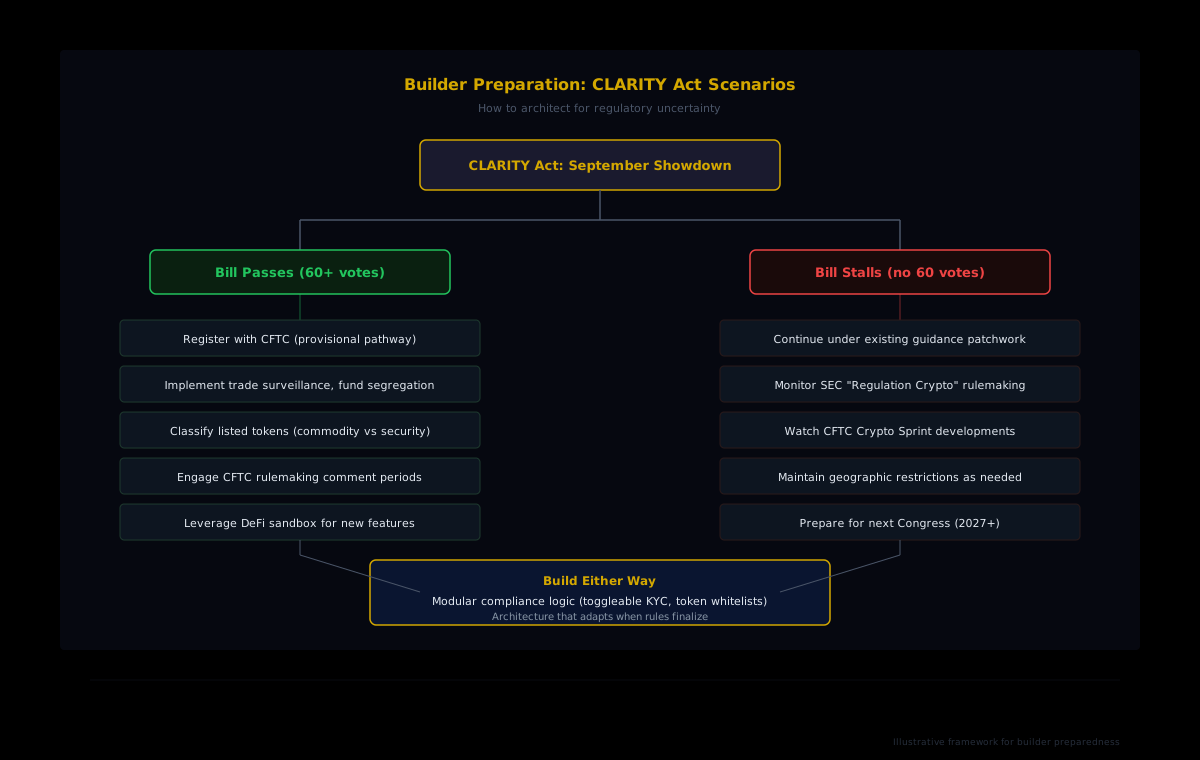
- Build for both outcomes. Design your architecture so that compliance logic (KYC gates, token whitelists, geographic restrictions) can be toggled without rewriting core trading infrastructure. If the bill passes, you need to implement CFTC-aligned compliance. If it stalls, you continue operating under the current patchwork of guidance.
- The CFTC is preparing either way. The CFTC's "Crypto Sprint" is already creating pathways for perpetual futures. Even without the CLARITY Act, the agency is building the institutional infrastructure to regulate perp markets. Builders who engage with that process early will have an advantage when formal rules arrive.
The Resource Gap No One Talks About
Even if the CLARITY Act passes, implementation will take time. The CFTC's current annual budget is approximately $365 million with 535 permanent staff. Its FY2027 request asks for $410 million and 650 staff, but industry analysts consider even that insufficient for national spot market regulation. For comparison, the SEC operates with a budget of over $2 billion and more than 4,000 staff.
What this means for builders: do not expect rapid enforcement clarity after the bill passes. The CFTC will need to hire, train, build systems, and write rules. Multiple legal analyses project full implementation around 2027 at the earliest. This creates a window where builders can shape the rules by participating in public comment periods and engaging with CFTC advisory committees.
Building Intelligence While the Law Catches Up
Regulatory frameworks define the boundaries. What you build inside those boundaries is what actually creates value for traders. Whether the CLARITY Act passes in September or gets pushed to the next Congress, the demand for perp DEX analytics does not pause for legislation.
Traders still need to understand who is positioned where. Which cohorts are accumulating before a move? Where are liquidation clusters forming? What does the order flow look like across different wallet performance tiers? These questions do not wait for a Senate vote.
Build With Cohort Intelligence
HyperTracker's API gives you pre-computed analytics across 16 behavioral cohorts on Hyperliquid: 8 by wallet size, 8 by all-time PnL. Smart money positioning, liquidation risk scoring, order flow analysis. One API call instead of months building your own classification pipeline.
The regulatory landscape will settle eventually. When it does, the builders with the deepest intelligence layer will be the ones positioned to move first. The CLARITY Act defines who regulates your platform. Our data defines what your platform can actually show its users.