
The SafePal Breach Didn't Steal Crypto. It Stole Something Worse.
By CMM Team - 17-Aug-2026
The SafePal Breach Didn't Steal Crypto. It Stole Something Worse.
SafePal disclosed on August 16 that a flaw in its order-tracking plug-in exposed the personal information of 39,798 customers. Names, email addresses, phone numbers, shipping addresses, and purchase details were all accessible through the vulnerability for over a year, between March 2, 2025 and April 11, 2026.
No seed phrases were stolen. No private keys were compromised. No crypto moved. SafePal made that clear in their disclosure, and it's true.
But for anyone trading perpetual futures on a transparent chain like Hyperliquid, that framing misses the point entirely. The breach didn't take your crypto. It handed attackers a map to your front door, with a receipt confirming you hold it.
What Actually Leaked (and Why It Matters More Than Keys)
The SafePal breach exposed order data: customer names, email addresses, phone numbers, physical shipping addresses, and purchase history. A configuration error in SafePal's data-cleanup process meant records dating back to March 2025 were retained when they should have been purged.
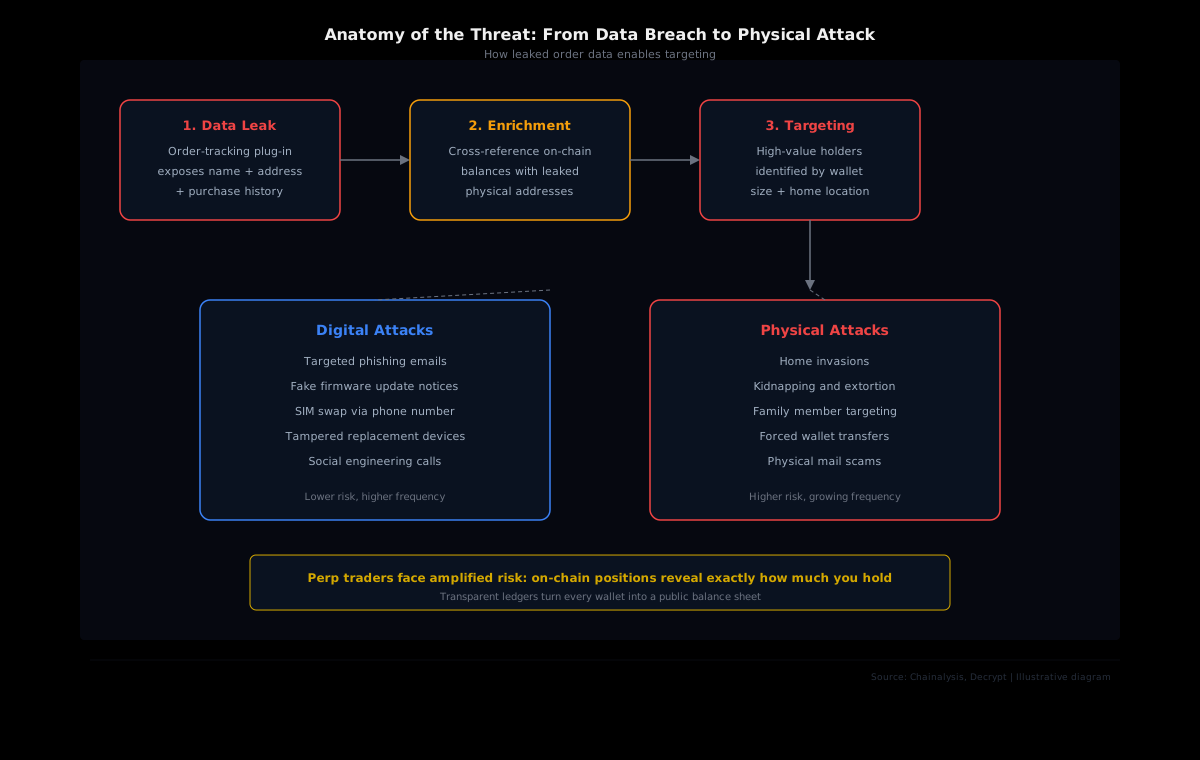
If you ordered a hardware wallet to your home, your name and address are now in a dataset that a threat actor is reportedly selling. That alone is dangerous. But the real threat comes when you combine that information with publicly visible on-chain activity.
Perp traders on transparent chains have their entire position history visible to anyone with a block explorer. Wallet balances, position sizes, leverage, PnL history. All public. The only thing separating that financial data from a physical person has always been pseudonymity. A breach like this strips that layer away.
This Isn't the First Time. It's a Pattern.
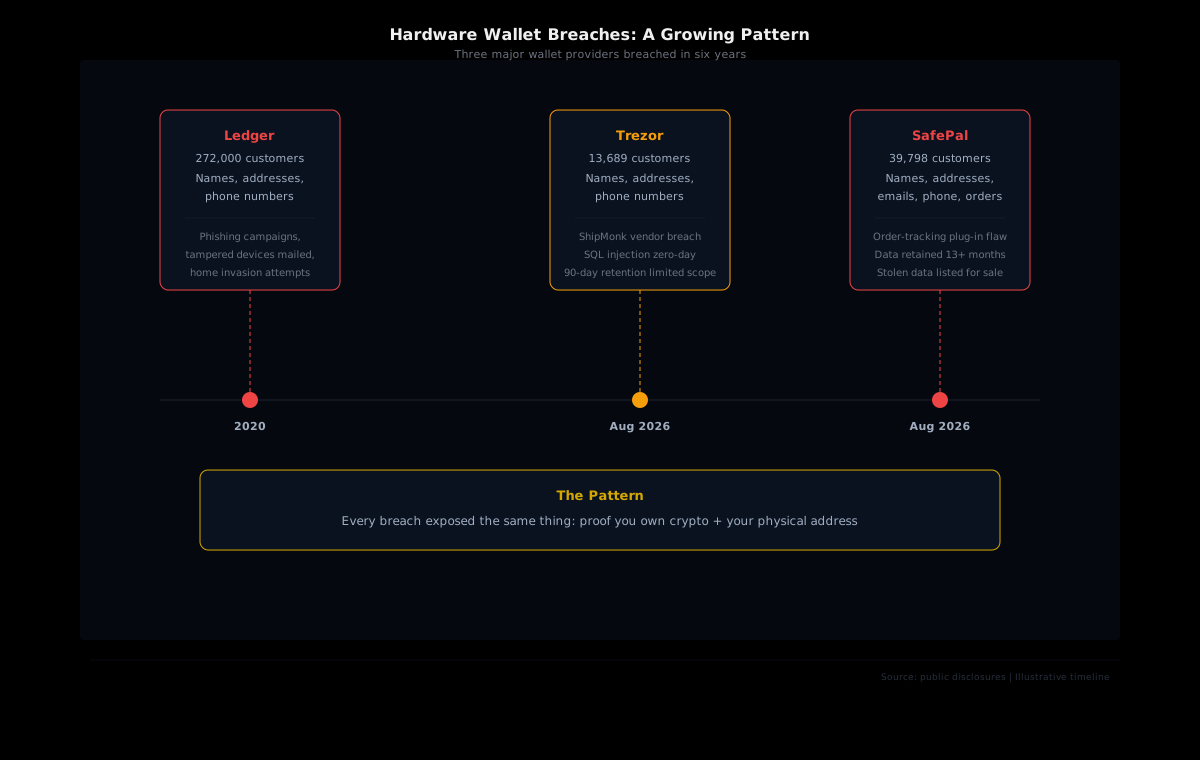
SafePal isn't the first wallet provider to leak customer data. The pattern is well-established and accelerating.
Ledger, 2020: A breach exposed roughly 272,000 customers' names, physical addresses, and phone numbers. The fallout lasted years. Phishing campaigns targeted victims with fake firmware updates. In 2021, criminals mailed physically tampered "replacement" devices to addresses from the leak, with fake letterhead instructing victims to enter recovery phrases on modified hardware. Some customers and Ledger executives faced home invasion attempts.
Trezor, August 2026: Just days before the SafePal disclosure, Trezor revealed that a breach at shipping partner ShipMonk compromised data on roughly 13,689 customers who received orders between May 10 and August 8, 2026. The attack exploited a critical SQL injection zero-day in ShipMonk's analytics platform, Metabase. Trezor's 90-day data retention policy limited the blast radius to recent orders rather than the full customer history.
SafePal, August 2026: The 39,798 customers affected here got a worse deal. SafePal's broken data-cleanup process meant records dating back over a year were retained, giving attackers a much larger window of customer data to work with.
Every one of these breaches exposed the same thing: proof that someone owns crypto, paired with their physical location. The crypto itself stayed secure. The person holding it became the target.
Wrench Attacks Are Surging
There's a reason this pattern matters now more than it did in 2020. Physical attacks targeting crypto holders are on pace for their worst year on record.
Chainalysis documented 46 violent crypto-related incidents through late June 2026, with over $30 million stolen in the first half of the year. If the pace holds, 2026 will surpass the full-year record of $58 million set in 2025.
The shift in tactics is significant. Home invasions climbed from 26% of documented incidents in 2023 to 37% through mid-2026. Attackers are increasingly targeting family members and acquaintances, who represented roughly a quarter of documented cases by early 2026. France alone recorded 30 publicly known violent crypto incidents through mid-2026.
Chainalysis summed up the dynamic clearly: "Criminals have recognized that crypto holders are high-value targets because they possess wealth in an instantly and irreversibly transferrable form."
A data breach like SafePal's doesn't steal your funds directly. It provides the targeting data that makes these physical attacks possible. Name. Address. Proof of crypto ownership. That's the complete toolkit.
Why Perp Traders Face Amplified Risk
If you trade perps on a transparent chain like Hyperliquid, your exposure is measurably higher than a spot holder with a hardware wallet sitting in cold storage.
Every position you open is visible on-chain. Your leverage, your entry price, your unrealized PnL, your liquidation distance. Anyone can see it. Block explorers, analytics dashboards, and cohort classification systems all index this data continuously.
For a spot holder, the attacker needs to guess whether the wallet belongs to a high-value target. For a perp trader, the answer is already public. Our data classifies every wallet on Hyperliquid into one of 16 behavioral cohorts, eight by size (from Shrimp at $0-$250 to Leviathan at $5M+) and eight by all-time PnL (from Money Printer at +$1M to Giga-Rekt below -$1M). If you're trading in the Whale, Tidal Whale, or Leviathan cohorts, your position sizes are visible to anyone who looks.
That transparency is a feature for markets. It makes on-chain trading verifiable, auditable, and resistant to manipulation in ways that centralized exchange books can never be. But it also means that if an attacker can link your wallet address to your real identity (through a data breach, an ENS name, a social media post, or a builder code), they know exactly how much you hold.
The Identity Layer Is Always the Weakest Link
The crypto industry has spent years hardening the cryptographic layer. Hardware wallets, multisig setups, secure enclaves, air-gapped signing. These are real and meaningful improvements. But the identity layer, the connection between a wallet and a person, has received far less attention.
Consider the chain of custody when you order a hardware wallet. You provide your real name. Your home address. Your email. Your phone number. Sometimes your government ID for KYC on the payment processor side. All of this data gets stored by the wallet manufacturer, the payment processor, the shipping partner, and whatever third-party analytics and order-tracking plug-ins they use.
SafePal's breach came from a third-party order-tracking plug-in. Trezor's came from ShipMonk's analytics vendor, Metabase. The wallet firmware and hardware were fine. The vulnerability was in the supply chain around the wallet, the unglamorous infrastructure of e-commerce fulfillment.
The takeaway for builders: If you are building trading tools, bots, or dashboards that handle user data, your security perimeter extends to every vendor in your stack. A vulnerability in your order-tracking plug-in is as dangerous as a vulnerability in your smart contract, because the outcome for the user can be physical harm.
What Perp Traders Should Do Now
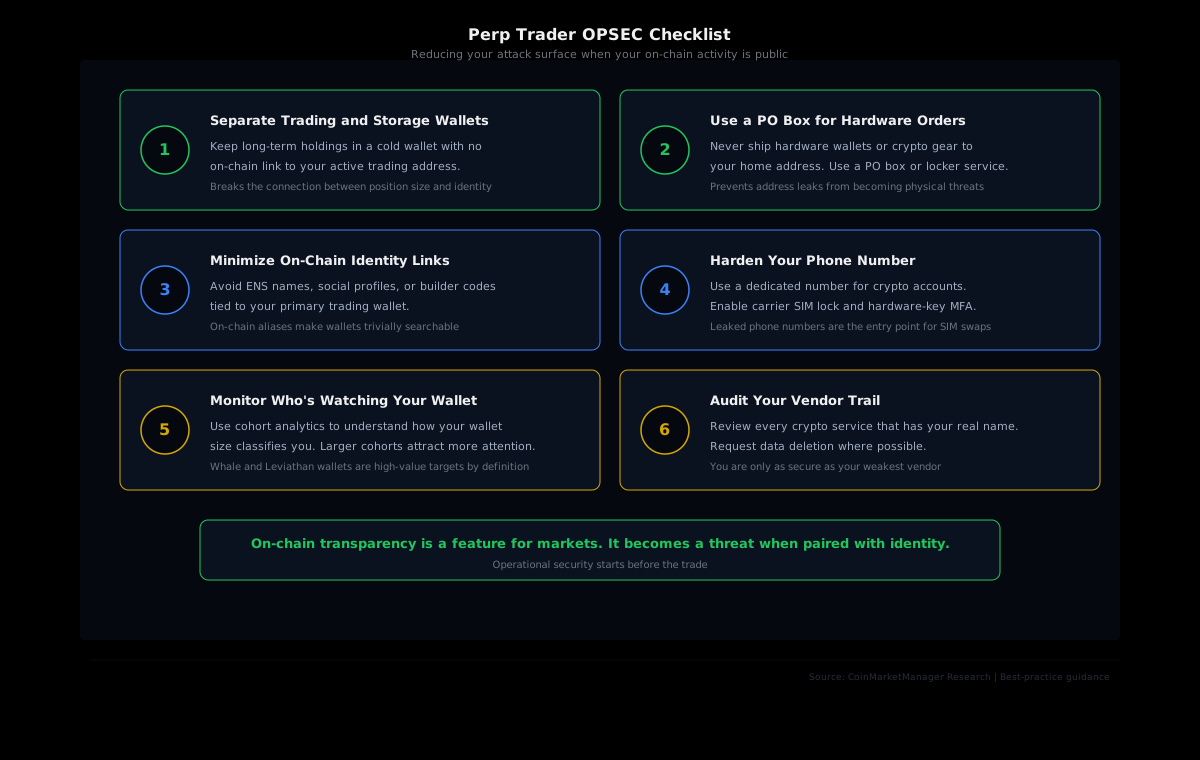
If you've ever ordered a hardware wallet, bought crypto hardware, or signed up for a service that ships physical products, your personal data may already exist in a vendor database you've never thought about. Here's how to reduce your attack surface.
Separate your trading and storage wallets
Keep long-term holdings in a cold wallet that has no on-chain link to your active trading address. Use intermediary wallets and bridges to break the trail. The goal is to prevent an attacker from looking at your perp trading history and tracing it back to a cold storage stack worth multiples of your active trading capital.
Use a PO box or parcel locker for crypto-related orders
This is the single most effective step for preventing data breaches from becoming physical threats. If SafePal's leaked database shows your order shipped to a PO box, the attacker knows you own crypto but doesn't know where you sleep. Trezor is planning an "Anonymous Delivery" option with locker pickup and neutral packaging, targeting EU availability by September 2026.
Minimize on-chain identity links
ENS names, social profiles, builder codes, and public leaderboard appearances all create searchable connections between your wallet and your identity. If you're trading at sizes that would attract attention, consider using dedicated wallets for public-facing activity and separate wallets for your core trading.
Harden your phone number
Leaked phone numbers are the entry point for SIM swaps, which remain one of the most common attack vectors against crypto holders. Use a dedicated number for crypto accounts, enable carrier SIM lock, and move all authentication to hardware keys where possible.
Audit your vendor trail
Review every crypto service that has your real name and home address. Hardware wallet manufacturers, exchanges with KYC, subscription services. Request data deletion where possible. You're only as secure as the weakest vendor in your chain.
Monitoring the Market Through Cohort Data
The SafePal breach is a reminder that the real threat model for perp traders isn't a smart contract exploit or a protocol hack. It's the identity layer. And on transparent chains, the financial data that makes you a target is already public.
Understanding how your wallet is classified matters. Our data classifies every active wallet on Hyperliquid into behavioral cohorts based on position size and all-time performance. If you're building trading tools, risk engines, or portfolio dashboards, cohort-level analytics can help you understand the market structure around your positions: who's accumulating, who's exiting, and where the concentration risk sits.
Know How Your Wallet Is Classified
HyperTracker's API classifies every Hyperliquid wallet into 16 behavioral cohorts by size and PnL. One API call gives you the full picture.
The Breach That Matters Most Is the One You Don't Control
SafePal has patched the vulnerability, hired an independent security firm to audit the fix, shortened data retention to 90 days, and removed over 30 phishing sites. Those are the right moves. But for the 39,798 customers whose data is already out, the damage is done. That dataset doesn't expire.
Ledger's 2020 breach proved this. Six years later, the leaked data is still circulating. Victims still receive phishing attempts. The dataset became a permanent fixture, recycled across email, SMS, and physical mail campaigns.
If you trade perps, your financial activity is already visible on-chain. The only thing standing between that data and a physical threat is the pseudonymity layer. Every hardware wallet order, every KYC form, every shipping address you hand over to a third-party vendor chips away at that layer. The SafePal breach is a reminder: the security of your crypto depends on the security of every vendor that knows your name.
Protect the identity layer as carefully as you protect your keys.