Twelve Minutes, $286 Million Gone: The Case for Push Alerts
By CMM Team - 11-Aug-2026
Twelve Minutes, $286 Million Gone: The Case for Push Alerts
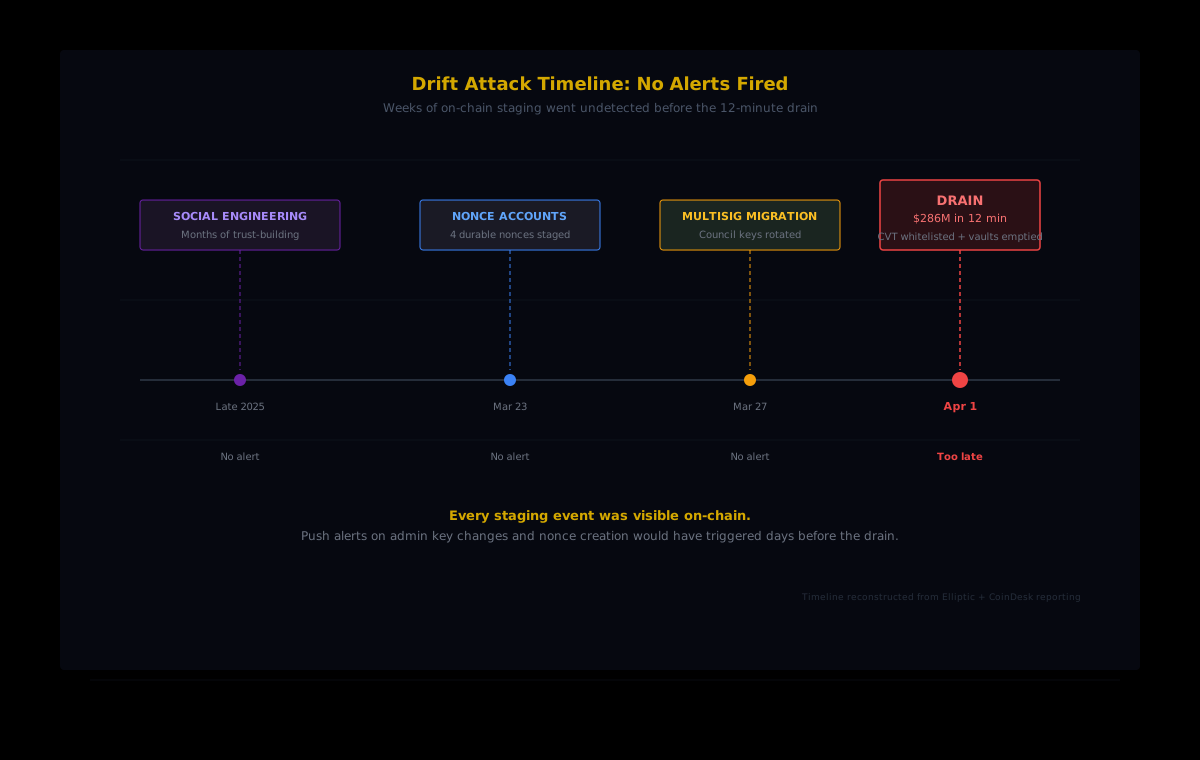
On April 1, 2026, attackers drained $286 million from Drift Protocol in roughly 12 minutes. The drain was fast. The staging was not. Durable nonce accounts appeared on-chain nine days before the exploit fired. A multisig migration executed five days before that. The attacker's wallet itself was created eight days before the drain, complete with a test transfer from a Drift vault.
Every one of those events was visible on-chain. None of them triggered an alert.
This article is about the infrastructure that was missing: push-based monitoring that fires when anomalous on-chain activity appears, instead of waiting for someone to manually check a dashboard. The Drift exploit is the case study. The lesson applies to every builder routing user funds through perp DEX infrastructure.
The staging was louder than the drain
Drift's post-mortem and analysis from Elliptic revealed a deliberate, multi-week preparation phase. North Korean state-affiliated hackers (attributed with "medium-high confidence" to UNC4736, the same group behind the October 2024 Radiant Capital hack) spent months building trust with Drift contributors through social engineering. But the final on-chain preparation left clear fingerprints.
On March 23, four durable nonce accounts were created on Solana. Durable nonces allow transactions to be signed now and executed later with no expiration. On March 27, the Security Council multisig migration executed, changing the signers without a timelock. On April 1, two transactions fired four slots apart, seized admin control, whitelisted a fabricated token called CVT as collateral, and drained the vaults.
The social engineering was invisible. The on-chain staging was not. A push alert system monitoring admin key changes, nonce account creation, and collateral whitelisting would have triggered days before the drain started.
Polling is a false sense of security
Most builders who integrate with DeFi protocols rely on polling: a script that checks an API endpoint at some regular interval and compares the response to previous values. If something looks off, it logs a warning. Maybe someone reads the log. Maybe they don't.
Polling has three structural problems for security monitoring:
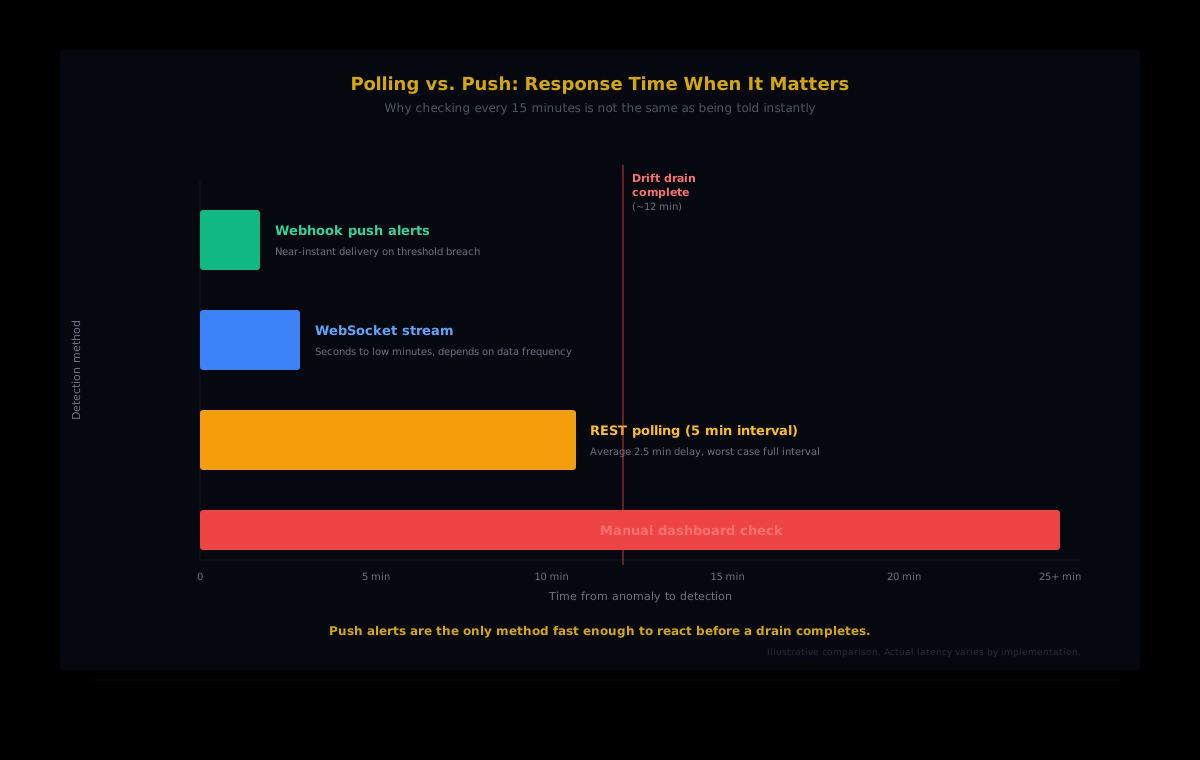
- Latency compounds risk. Consider a typical 15-minute polling interval: you could detect an anomaly anywhere from 0 to 15 minutes after it happens, with an average delay around half the interval. The Drift drain took roughly 12 minutes. At that polling cadence, the money could be gone before the first check runs.
- Polling is pull, and pull requires someone to be looking. If your monitoring script crashes at 2am, nobody is checking until morning. Push alerts deliver to Slack, Discord, Telegram, or a pager regardless of whether anyone is actively watching.
- Polling generates noise. Checking repeatedly and comparing diffs produces false positives during normal market volatility. Webhook-based alerts fire only when a specific threshold is breached, which means every alert is worth reading.
The difference between polling and push is the difference between checking your smoke detector batteries monthly and having a smoke detector that screams when there is smoke. Both involve monitoring. Only one works when you are asleep.
What push alert architecture looks like for builders
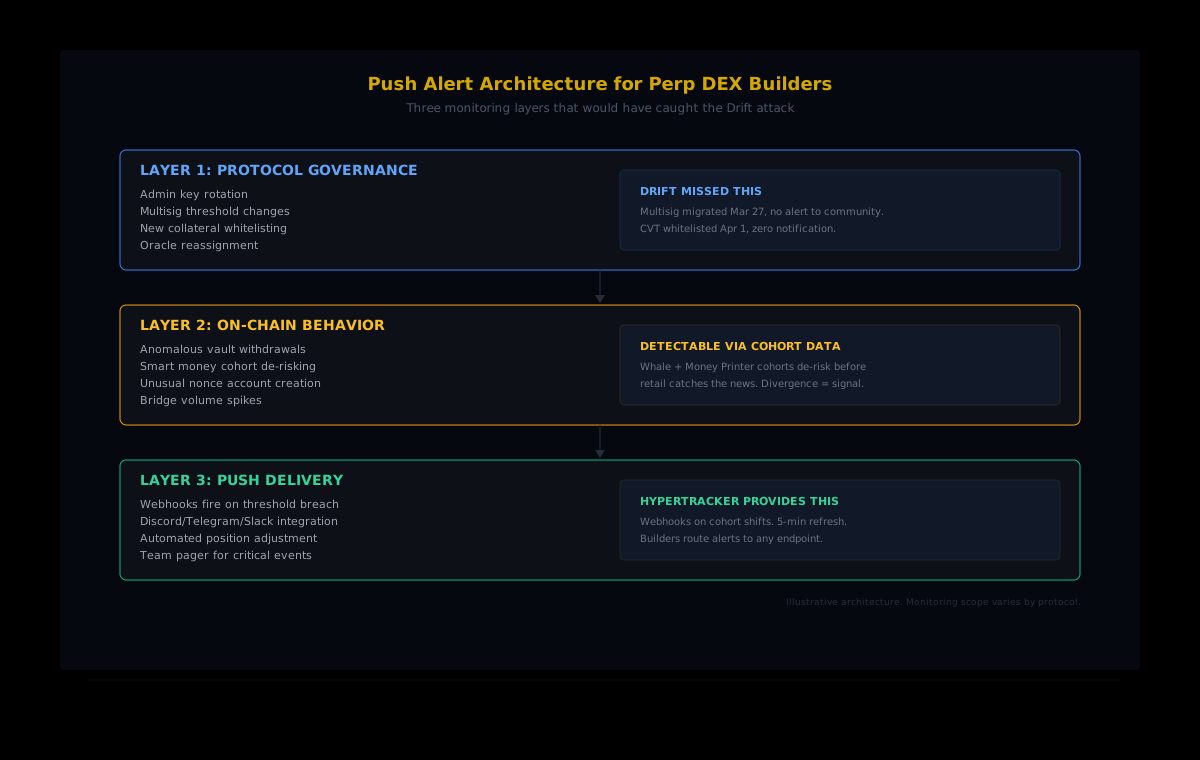
A functional alert system for perp DEX builders needs three layers. Each layer catches a different category of risk, and missing any one of them leaves a gap.
Layer 1: Protocol governance monitoring
This is the layer Drift lacked entirely. It watches for changes to the governance structure of protocols you integrate with:
- Admin key rotations or multisig signer changes
- Timelock modifications
- New collateral type whitelisting
- Oracle provider reassignments
At Drift, the multisig migration on March 27 and the CVT collateral whitelisting on April 1 both would have triggered governance alerts. The Solana Foundation's post-hack STRIDE program now provides 24/7 threat monitoring for protocols exceeding $10 million in total value locked, which is a step in the right direction. But builders should not depend on the Solana Foundation to watch their integrations. That responsibility sits with the team building the product.
Layer 2: On-chain behavior monitoring
This layer watches how traders and wallets behave, which often shifts before exploits are publicly confirmed. When smart money starts exiting a protocol, the pattern is visible in cohort-level data before the news hits Twitter.
HyperTracker classifies every wallet on Hyperliquid into 16 behavioral cohorts: eight by size (Shrimp through Leviathan) and eight by all-time PnL (Giga-Rekt through Money Printer). During contagion events, experienced cohorts like Whales, Tidal Whales, and Money Printers tend to de-risk faster than smaller retail-heavy cohorts. That divergence between cohort groups is a leading indicator of protocol stress.
Our data refreshes every 5 minutes. A webhook configured to fire when Money Printer or Smart Money cohorts reduce exposure beyond a threshold gives builders a behavioral early warning layer that raw price feeds cannot replicate.
Layer 3: Push delivery infrastructure
Detection without delivery is just logging. The third layer is the plumbing that gets the alert to a human (or an automated system) fast enough to act on it.
- Webhooks fire HTTP POST requests to any endpoint the moment a threshold is breached. A builder can route these to Slack, Discord, PagerDuty, or directly into an automated position-closing script.
- WebSocket subscriptions maintain a persistent connection and push updates in near real-time, with latency measured in seconds rather than minutes.
HyperTracker's Flow tier ($799/mo) includes webhook delivery, and the Stream tier ($1,999/mo) adds WebSocket access. Builders at those tiers can wire cohort shift alerts directly into their infrastructure, so the system reacts before anyone opens a dashboard.
The alert rules that would have caught Drift
Here is a concrete set of monitoring rules, applied retroactively to the Drift timeline. Each rule maps to a specific on-chain event that preceded the drain.
| Rule | Trigger event | Drift timeline | Lead time | | --- | --- | --- | --- | | Admin key change | Multisig signer rotation or migration | March 27 migration | 5 days | | Nonce account creation | New durable nonce initialized by known protocol address | March 23 nonce setup | 9 days | | New collateral whitelisting | Previously unknown token added as accepted collateral | April 1, CVT whitelisted | Minutes (same tx chain) | | Vault withdrawal spike | Outflow exceeding historical daily average by an unusual multiple (for example, 5x or more) | April 1, $286M drained | During drain | | Cohort de-risking divergence | Large experienced cohorts reducing exposure while smaller cohorts hold steady | Post-exploit contagion | Hours (secondary effect) |
The first two rules would have fired days before the drain. The third would have fired during the attack chain itself. Combined, they give a builder multiple chances to pause integrations, warn users, or pull funds before the protocol is emptied.
How to wire cohort alerts into your stack
For builders on Hyperliquid, HyperTracker's cohort metrics endpoint returns positioning data for all 16 cohorts on any asset. The implementation pattern for a push alert looks like this:
- Baseline: Query the cohort metrics endpoint at your normal refresh interval. Store the net long/short positioning for Money Printer and Smart Money cohorts as your baseline.
- Threshold: Define a percentage change from baseline that constitutes an alert-worthy shift. The right threshold depends on the asset's normal volatility. Start with a value that triggers infrequently and tighten from there.
- Delivery: When the threshold is breached, fire a webhook to your alert endpoint. On Flow and Stream tiers, HyperTracker's webhook infrastructure handles delivery. On lower tiers, wrap the polling logic in a lightweight service that checks every 5 minutes and fires its own notifications.
# Pseudocode: cohort shift alert
baseline = get_cohort_metrics("BTC", cohort="smart-money")
current  = get_cohort_metrics("BTC", cohort="smart-money")

if abs(current.net_long - baseline.net_long) > threshold:
    fire_webhook({
        "alert": "smart-money-shift",
        "asset": "BTC",
        "direction": "de-risking" if current.net_long < baseline.net_long else "accumulating",
        "magnitude": abs(current.net_long - baseline.net_long)
    })
The pseudocode is simple because the hard part, classifying every wallet into behavioral cohorts and computing segment-level positioning, is handled by the API. A builder who tried to replicate this from raw Hyperliquid data would need to build the entire classification pipeline, which typically costs $10,000+/month in infrastructure before a single alert fires.
Build alert infrastructure on cohort intelligence
HyperTracker's 16 behavioral cohorts classify every wallet on Hyperliquid by size and all-time PnL. Webhooks and WebSocket delivery are available on Flow and Stream tiers. Start with the free tier to explore the data, then wire push alerts into your stack.
The industry is moving toward push
The Drift hack accelerated a shift that was already underway. The Solana Foundation launched STRIDE with 24/7 threat monitoring for qualifying protocols. The Solana Incident Response Network (SIRN) now coordinates rapid response across security firms including Asymmetric Research, OtterSec, and Neodyme.
But institutional response networks protect protocols. They do not protect the builders integrating with those protocols. If you are routing user trades through a perp DEX, your monitoring responsibility extends beyond your own smart contracts to the governance architecture of every protocol in your dependency chain. That means push alerts on admin changes, collateral modifications, and behavioral signals, delivered to your team's endpoints in seconds, running whether anyone is watching or not.
The Drift attackers spent months on social engineering and days on on-chain staging. They needed 12 minutes for the drain itself. A push alert system would not have prevented the social engineering. But it would have turned 12 minutes of silence into 12 minutes of screaming alarms, and for builders who depend on protocol integrity, that is the difference between losing user funds and pulling them to safety before the vault empties.
Build the system that screams.