USDH Is Dead. Coinbase Now Runs Hyperliquid's Stablecoin Vault.
By CMM Team - 14-May-2026
USDH Is Dead. Coinbase Now Runs Hyperliquid's Stablecoin Vault.
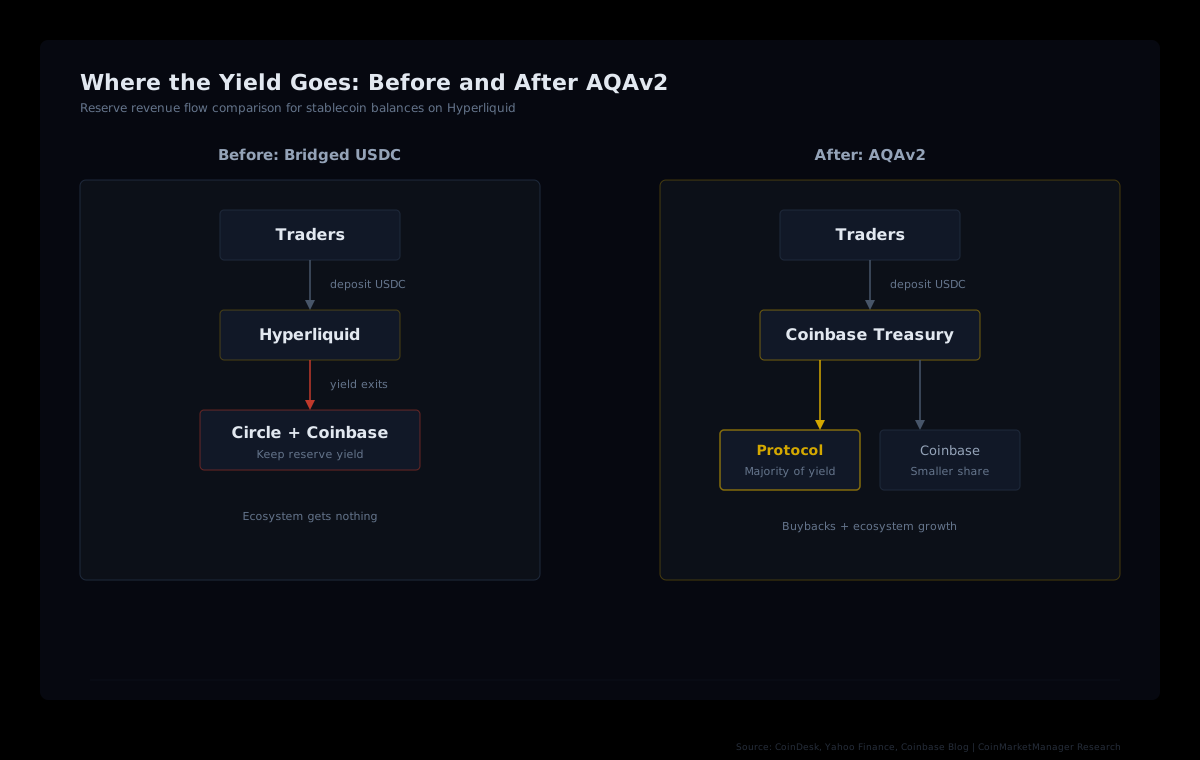
Billions of dollars in USDC sit on Hyperliquid at any given moment. Until today, the yield on those balances flowed almost entirely to Circle and Coinbase, with nothing returning to the ecosystem that generated the trading activity in the first place. That arrangement just ended.
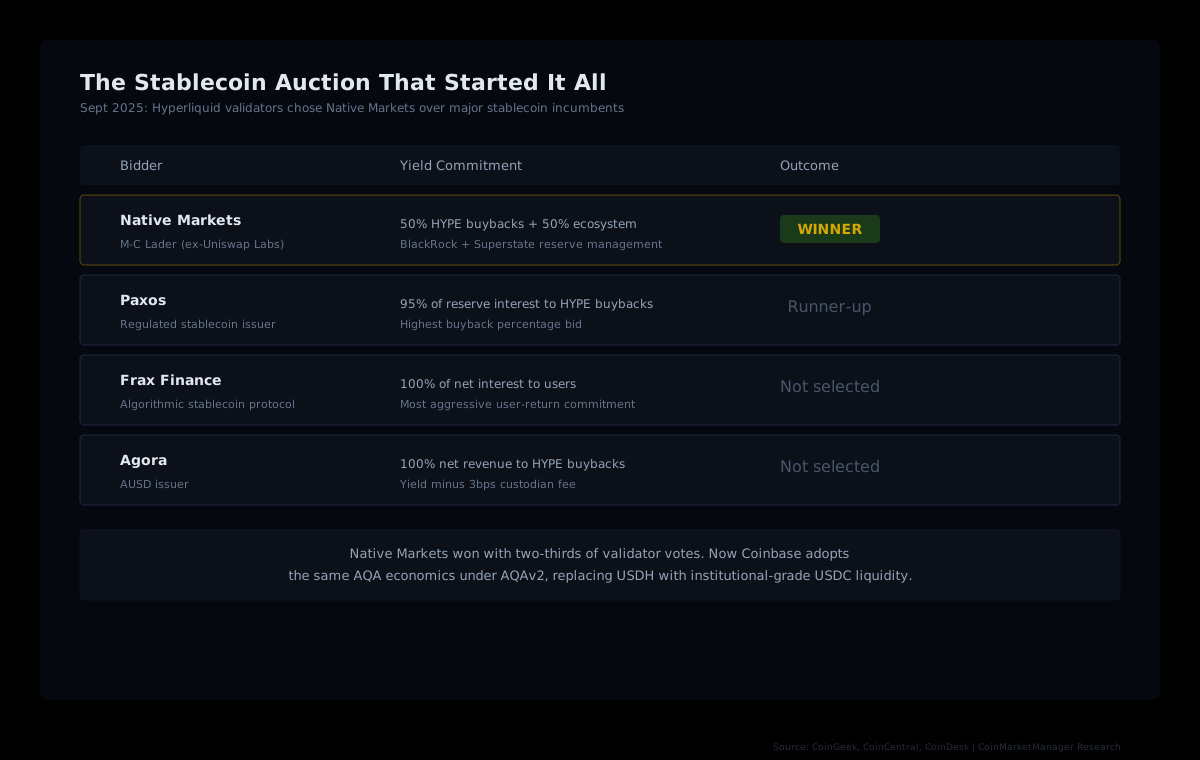
Coinbase is now the official USDC treasury deployer on Hyperliquid, and USDH, the native stablecoin that launched barely eight months ago, is sunsetting. Under the new AQAv2 framework, the majority of reserve yield from Hyperliquid's USDC balances flows back to the protocol itself.
The deal represents one of the biggest stablecoin infrastructure shifts of 2026, because it inverts the traditional revenue model. Instead of an external issuer extracting yield from a DeFi platform, the platform now captures its own reserve income. And Coinbase, the largest U.S. exchange, agreed to make it happen.
How Hyperliquid got here
Hyperliquid launched in 2023 with bridged USDC as its primary quote asset. Traders deposited USDC to trade perps, and that USDC generated yield on the reserves. The problem was straightforward: the yield went to Circle and Coinbase, who managed the reserves, while the Hyperliquid ecosystem saw none of it.
This mattered because Hyperliquid's stablecoin liquidity grew to roughly $5 billion, and at that scale, reserve yield becomes serious money. CoinGeek estimated over $220 million in annual revenue at stake from Hyperliquid's stablecoin reserves alone.
So in September 2025, Hyperliquid validators held an auction. The question: who would issue a native stablecoin that redirected reserve yield back into the ecosystem?
The auction that set the stage
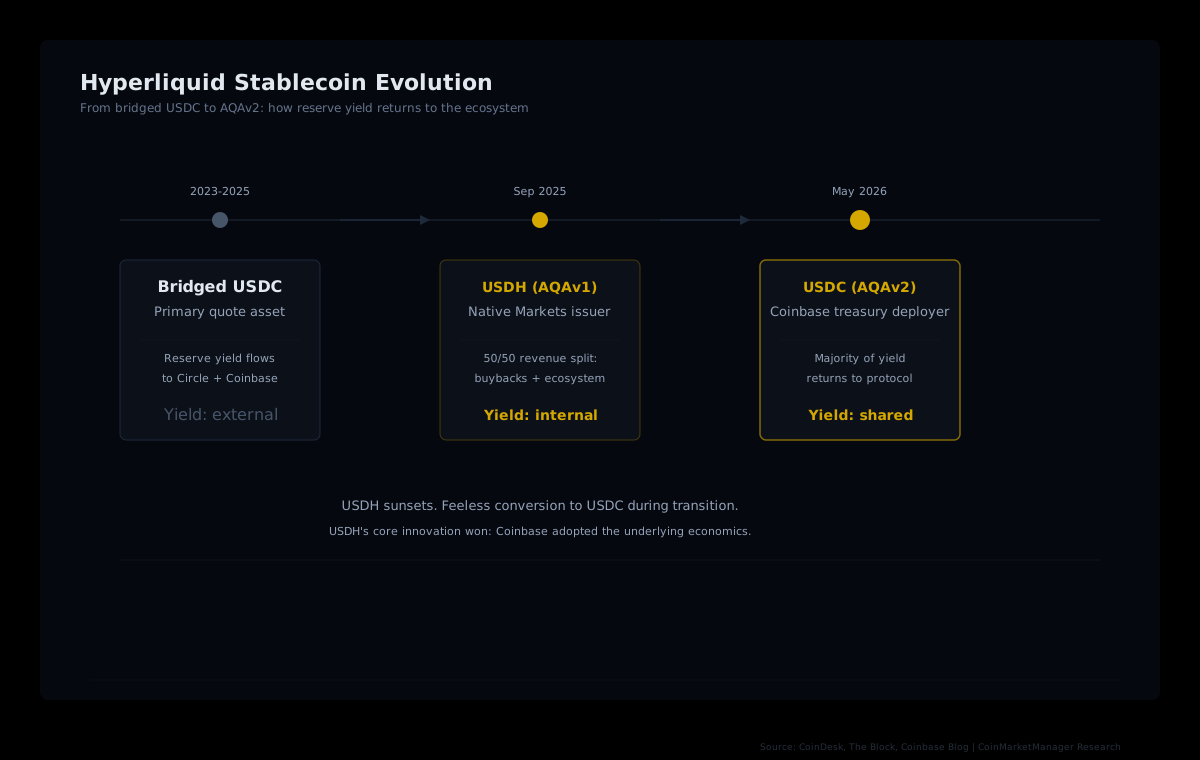
The bidding was fierce. Paxos, Frax Finance, Agora, Ethena Labs, Sky, Curve, OpenEden, and BitGo all submitted proposals. Each competitor tried to outbid the others on how much reserve yield they would return to Hyperliquid.
Paxos offered to allocate 95% of reserve interest to HYPE buybacks. Frax Finance committed 100% of net interest directly to users. Agora proposed sending 100% of net revenue (yield minus a 3 basis-point custodian fee) to HYPE buybacks.
Native Markets won with over two-thirds of validator votes. Their proposal split reserve income 50/50 between HYPE buybacks and ecosystem development, with reserves managed jointly by BlackRock (off-chain) and Superstate (on-chain). The team included Mary-Catherine Lader, former president and COO of Uniswap Labs, and blockchain researcher Anish Agnihotri.
That model became the original Aligned Quote Asset framework, or AQA. USDH launched shortly after and introduced a concept that was new for DeFi: reserve yield recycled directly into the platform that generated it.
What AQAv2 actually changes
USDH is sunsetting. But its economics are not.
Under AQAv2, Coinbase becomes the official USDC treasury deployer on Hyperliquid. Native Markets agreed to grant Coinbase the right to purchase the USDH brand assets, though Native Markets itself remains an independent company.
The critical shift: Coinbase will share the majority of reserve yield revenue generated from Hyperliquid USDC balances with the protocol. That yield can fund HYPE buybacks, ecosystem grants, contributions to the Assistance Fund, and other protocol-level incentives.
For existing USDH holders, the transition is designed to be frictionless. USDH remains fully backed, with feeless conversions to USDC and fiat redemptions available during the migration period.
Mary-Catherine Lader framed the outcome as validation. The thesis behind USDH was that stablecoins should return value to the ecosystems they serve. Coinbase adopting those same economics, at scale, with institutional-grade infrastructure, proves the model works.
Why this matters beyond Hyperliquid
This deal is not just a Hyperliquid story. It sets a precedent for how DeFi platforms negotiate with stablecoin issuers.
The traditional model is simple: DeFi platforms hold stablecoins, issuers earn yield on reserves, platforms get nothing. USDC on Ethereum, USDT on Tron, USDC on Solana. The same dynamic plays out everywhere. Billions in DeFi TVL generate reserve yield that flows to issuers and their banking partners.
Hyperliquid just demonstrated that a platform with enough scale can renegotiate those terms. With around $5 billion in USDC and a dominant share of on-chain perp trading, Hyperliquid had the leverage to demand yield-sharing. Coinbase agreed because USDC adoption on Hyperliquid strengthens its position against Tether's USDT.
Other blockchain ecosystems are watching. If AQAv2 becomes a blueprint, platforms like Solana-based DEXes, Arbitrum protocols, and Base-native applications could push for similar arrangements. The era of DeFi platforms quietly subsidizing stablecoin issuers may be ending.
What perp traders should watch
The stablecoin infrastructure change has direct implications for anyone trading or building on Hyperliquid.
Deeper USDC liquidity
Coinbase's official involvement as treasury deployer means institutional-grade liquidity management for Hyperliquid's USDC reserves. Deeper stablecoin liquidity generally means tighter spreads on perp markets and more efficient capital flow across the platform. Coinbase itself described the partnership as creating a "unified global marketplace" where traders can move between crypto assets and fiat-backed stablecoins without leaving blockchain-based platforms.
Protocol revenue growth
With the majority of reserve yield now returning to Hyperliquid, the protocol has a new recurring revenue stream independent of trading fees. That revenue can fund buybacks of HYPE (which already receives over 95% of trading fees through daily open-market purchases), ecosystem development grants, and enhancements to the Assistance Fund. For traders holding HYPE, this represents additional structural demand.
HIP-3 and HIP-1 migration
Native Markets confirmed it will work with HIP-3 and HIP-1 deployers to ensure the USDH-to-USDC migration completes before the full USDH sunset. If you are building on Hyperliquid with HIP-3 assets or running a vault denominated in USDH, the transition to USDC settlement is coming. Start planning your migration path now.
Cohort positioning shifts
Structural changes to stablecoin infrastructure tend to show up in how different market segments reposition. Our data tracks 16 behavioral cohorts on Hyperliquid, classifying every wallet by size (from Shrimp at $0-$250 to Leviathan at $5M+) and by all-time PnL (from Money Printer at +$1M to Giga-Rekt below -$1M). When major capital flows shift, cohort-level positioning data reveals where smart money is moving before the price tells you.
The bigger picture: stablecoin economics are being rewritten
This deal arrives at an interesting moment. The CLARITY Act working its way through the U.S. Senate includes provisions that would bar exchanges from paying yield on idle stablecoin balances, which puts pressure on the traditional model where Coinbase earns revenue simply from holding USDC. Revenue-sharing with DeFi platforms like Hyperliquid may become not just attractive but necessary as regulatory walls close around the old model.
Coinbase's strategy has been shifting toward this for months. The company's CEO Brian Armstrong has publicly stated a goal of making USDC the world's top stablecoin. Expanding USDC deep into DeFi trading infrastructure, with yield-sharing as the incentive, is a direct play against Tether's dominance.
For Hyperliquid, the timing reinforces a week of major institutional validation. Just yesterday, 21Shares launched THYP, the first U.S. spot ETF tracking HYPE, on Nasdaq. Bitwise and Grayscale are racing to follow. An ETF wrapper plus an institutional stablecoin treasury partner in the same week signals that Hyperliquid's transition from DeFi experiment to core market infrastructure is accelerating.
Track How Stablecoin Shifts Move Perp Markets
HyperTracker's API classifies every wallet on Hyperliquid into 16 behavioral cohorts by size and all-time PnL. When major infrastructure changes reshape capital flows, our data shows which cohorts are accumulating, which are reducing exposure, and where smart money is positioning before the rest of the market catches on.
Explore HyperTracker's Cohort Analytics
USDH lasted eight months. Its economics, the idea that DeFi platforms should capture their own stablecoin yield instead of donating it to issuers, will outlast it by years. Coinbase just validated that thesis with billions of dollars in infrastructure commitment, and every other blockchain ecosystem is taking notes.